Guide
Microgreens Without Soil
Growing microgreens on mats and coir instead of potting mix, and the light question that decides whether it works.
As an Amazon Associate this site earns from qualifying purchases. Links to products may be affiliate links. This costs you nothing extra and does not change what gets recommended. Nothing here is medical advice.
Soil grows the best microgreens. That is the honest starting point, and this page is about the reasons people choose something else anyway.
Soil is heavy, it sheds, it turns a kitchen counter into a small garden, and at harvest it clings to stems in a way that requires washing, which shortens shelf life. For a lot of households the tradeoff goes the other way, and a soilless system produces a slightly less vigorous crop that is dramatically easier to live with.
What soilless actually means
A microgreen lives on its own seed reserves for most of its short life. It needs water, light, air, and something to stand up in. For a crop harvested at seven to fourteen days, nutrition from the growing medium is a minor contributor rather than a necessity.
That is the whole basis of soilless growing. Replace the soil with an inert material that holds water and lets roots grip, and the plant will not notice much until the first true leaves appear, by which point you have usually harvested.
Two practical consequences follow. Fast crops suit soilless growing better than slow ones. And anything you intend to grow past about two weeks will start showing the deficiency, at which point either soil or a dilute nutrient solution becomes necessary.
The medium options
Hemp mats. hemp growing mats cut for 1020 trays are cut to fit, lay flat, and take seed on top. Roots knit into the fibres and lift out in one piece at harvest, which makes cleanup close to trivial. Hemp holds water well and is the most forgiving of the mat options. It is also the most expensive per tray, and that cost recurs with every crop.
Jute mats. Similar handling, usually cheaper, and slightly less absorbent. Jute can carry a faint smell when wet that some people notice and most do not. It performs well with larger seeds and less well with the finest.
Coconut coir. Not a mat but a loose medium, sold compressed into bricks that expand with water. Coir behaves much more like soil: it holds moisture evenly, it supports roots firmly, and it produces noticeably stronger growth than mats do. It also sheds, so you are trading some of the cleanliness advantage back. Coir is the best performing soilless option and the least tidy one.
Paper towel. Works for a first experiment and collapses after a few days. Treat it as a way to find out whether you enjoy this rather than as a system.
The reasonable progression is to try one crop on a mat, one on coir, and pick based on whether cleanliness or vigour matters more to you.
The light question
This is where soilless microgreen growing succeeds or fails, and it has nothing to do with the medium.
Sprouts need no light. Microgreens do, and the difference catches people out constantly. A microgreen grown in inadequate light stretches toward whatever light exists, producing long pale weak stems that flop over and taste of very little. The plant is doing exactly what it should. There is simply not enough energy available.
A genuinely bright windowsill can work for the easier species. Most windowsills that feel bright to a person are not bright to a plant, and north facing windows in winter are not remotely close. A modest grow light run for twelve to sixteen hours a day removes the variable entirely and is the difference between a reliable crop and an occasional lucky one.
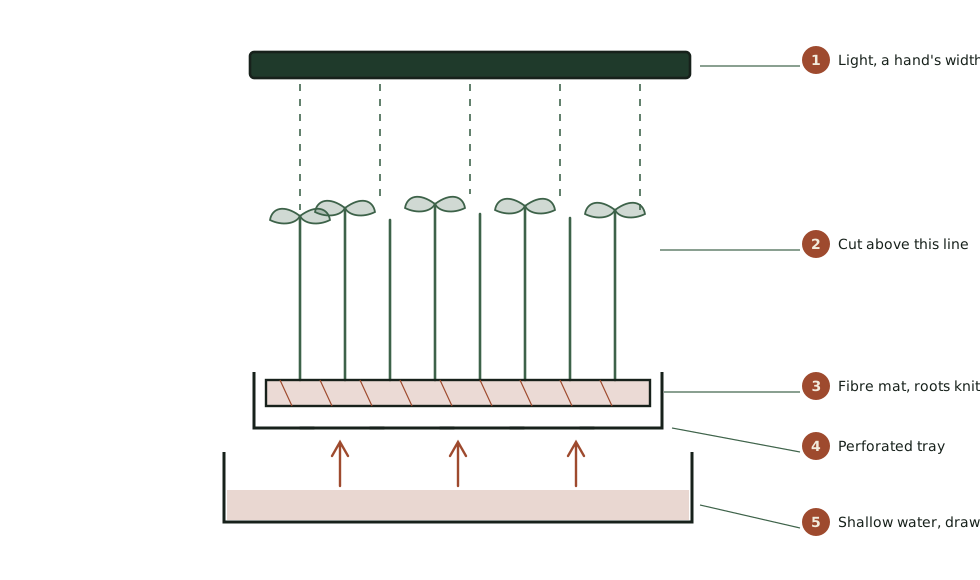
The light does not need to be powerful or expensive. Microgreens are small, they are close to the source, and they are harvested before they need much. A simple LED bar positioned a hand's width above the tray is sufficient for most species. The equipment guide covers where light fits against the other purchases.
One nuance worth knowing: most microgreens spend their first two to four days covered and in darkness, often with a light weight on top. This blackout period encourages even germination and drives stems upward together. Light comes after, not before.
Sowing density
Density is the variable that separates a good tray from a mouldy one, and it is almost never specified precisely because the right figure depends on seed size.
The principle is simple. Seeds should sit shoulder to shoulder in a single layer, with no seed resting on top of another. A microgreen tray is deliberately crowded, far denser than anything you would plant in a garden, because every seedling is harvested young and none of them needs room to mature.
Too sparse wastes the tray and produces seedlings that flop outward instead of supporting each other. A properly dense stand holds itself upright as a mat, which is part of why the harvest is clean.
Too dense is the real danger, and it is the more common error. Seeds piled two deep create pockets that stay wet, and a wet pocket under a blackout cover in a warm kitchen is close to ideal conditions for mould. The seedlings that do emerge from a doubled layer are weaker, and they shade each other badly.
Larger seeds forgive density errors better. Peas and sunflower are physically big enough that you can see when they are stacking. Fine brassica seed like broccoli or mustard spreads unevenly by nature, and the fix is to sow from a height with a shaking motion rather than pouring, then to nudge the clumps apart with a finger before covering.
Weigh rather than guess once you find a density you like. A kitchen scale and a note of grams per tray turns a good result into a repeatable one, and it is the cheapest improvement available to anyone running trays regularly. The hub page covers where a scale sits against the rest of the equipment, and it is consistently underrated.
Watering
Soilless media dry faster than soil, and that is the main ongoing discipline.
Water from below wherever possible. Sit 1020 trays with drainage holes inside solid 1020 trays with no holes, add water to the lower one, and let the medium draw it up. Bottom watering keeps the leaves dry, which matters because wet foliage in a warm covered tray is how mould starts.
Check daily and expect to water more often than you would with soil, particularly with mats. A hemp mat that dries completely will not always recover, and the seedlings standing in it certainly will not.
Do not let the lower tray hold standing water indefinitely. Draw up what the medium wants, then tip the rest away. Roots sitting permanently submerged develop the same problems as a sprouting jar that will not drain.
Species that work well without soil
Fast, vigorous, large seeded varieties suit mats and coir best.
Radish is the most reliable microgreen there is, soilless or otherwise. It germinates fast, grows strongly, and tastes hot and distinctive. Peas produce sweet tendrils and heavy yields, though they want a longer soak first. Sunflower is excellent and requires hull removal, which is fiddly. Broccoli, kale, and mustard all perform acceptably on mats and noticeably better on coir.
Basil, coriander, and other slow herbs are poor candidates for mats. They take long enough that the absence of nutrition becomes visible, and they want the buffering that soil provides.
Harvest
Cut with sharp scissors above the medium line, which is the structural advantage of microgreens over sprouts: the root and seed hull stay behind.
Harvest at the first true leaves for most species. The seed leaves appear first and are perfectly edible, and the true leaves that follow bring the characteristic flavour. Past that window many species turn bitter, and the window is narrower than it looks.
Do not wash until you are about to eat them. Washed microgreens keep a day or two. Unwashed and dry in a breathable container, most hold for a week, which is one of the real advantages over anything you can buy.
RUN THE NUMBERS
Illustrative ranges only. Costs vary by supplier and region, and none of this predicts your results.
| Input | Per tray |
|---|---|
| Seed | Considerably more than a sprouting jar uses |
| Medium | One mat, or a portion of a coir brick |
| Blackout period | 2 to 4 days |
| Light after blackout | 12 to 16 hours daily |
| Total cycle | 7 to 14 days for most species |
| Refrigerated life | Roughly a week, unwashed and dry |
Microgreens use much more seed than sprouts and produce a smaller weight of food. They also taste considerably better and command high prices at retail, which is why the economics work out in favour of growing despite the seed cost.
WHAT GOES WRONG
Long pale floppy stems. Not enough light. This is the single most common failure and no adjustment to watering or medium will fix it.
Mould under the cover during blackout. Too wet, too warm, or too little air. Reduce watering, lift the cover briefly each day, and sow less densely.
Uneven germination. Usually uneven watering, sometimes an uneven sowing density. Bottom watering solves most of it.
A mat that dried out completely. Often unrecoverable. Mats need checking daily, which is the cost of their cleanliness.
Bitter flavour. Harvested past the true leaf window. Cut a day or two earlier next time.
DO THIS NOW
- Sow one tray of radish on a hemp mat. It is the most forgiving combination available and will tell you quickly whether your light is adequate.
- Cover the tray for three days and keep it dark before exposing it to any light at all.
- Set the tray up for bottom watering now rather than improvising later.
- Assess your light honestly. If the seedlings stretch and pale in the first days after uncovering, the window is not enough and no other change will compensate.
Next
If you are weighing trays and light against a simpler setup, jars, trays, and automatic sprouters puts this purchase in context against the rest of the equipment question.
If you want the version of this crop that needs no light and no medium at all, broccoli sprouts covers the same seed grown a completely different way.