Hub
Superfood Powders, Made and Bought
Make the powders you can from food you already dry, buy the few you cannot, and read the labels on the rest with a clear head.
As an Amazon Associate this site earns from qualifying purchases. Links to products may be affiliate links. This costs you nothing extra and does not change what gets recommended. Nothing here is medical advice.
Start with a jar you assembled yourself.
Four parts dried mushroom powder, two parts dried tomato powder, one part dried garlic, one part dried onion, and a good pinch of dried herbs. Blitzed fine, sieved, and kept in a small airtight jar next to the stove. A spoonful goes into anything savoury and disappears.
That is the house jar, and it is the example this hub is built around. It costs the price of some reduced mushrooms and an afternoon, it is more useful than most things sold as superfood powders, and it demonstrates the whole principle: a powder is just a dried food with its structure removed.
The rest of this hub is about which powders are worth making, which few are worth buying, and how to read a label without being either credulous or cynical.
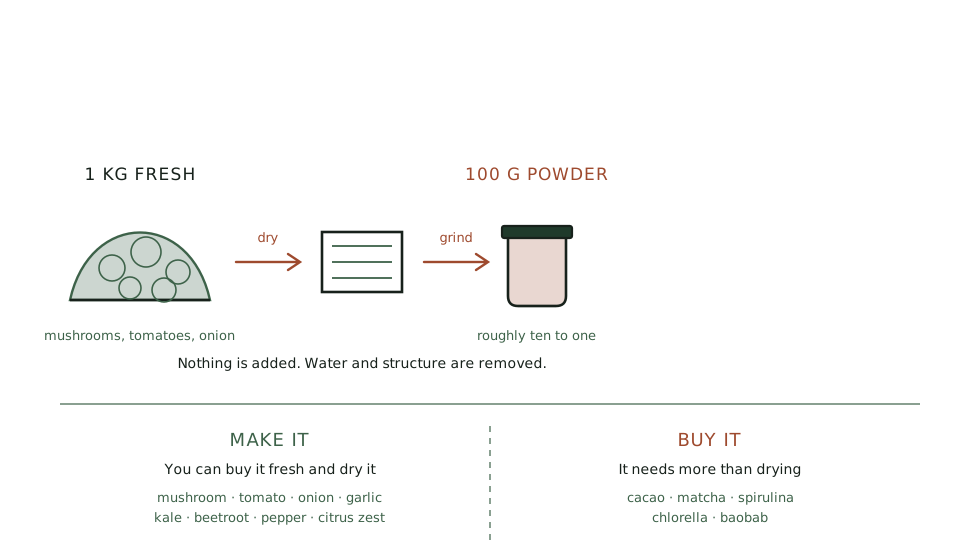
What a powder actually is
Two operations. Remove the water, then remove the structure.
Drying concentrates whatever was in the food by taking away the part that made up most of its weight. Grinding then makes that concentrate soluble, dispersible, and easy to dose.
Nothing is added. Nothing is created. A gram of mushroom powder is roughly ten grams of fresh mushroom with the water gone and the pieces broken down.
That framing does two useful things. It explains why powders are genuinely convenient: you can put the useful part of ten grams of vegetable into a sauce without adding volume, water, or texture. And it sets a ceiling on what any powder can be, because you cannot get more out than went in.
The dehydrating hub covers the drying half in full. This hub picks up at the grinder.
What powders are genuinely good at
Four things, all practical rather than magical.
Concentration without volume. A spoonful of mushroom powder adds savoury depth to a stew without adding liquid or bulk. This is the single most useful property and the reason the house jar earns its place.
Shelf stability. Properly dried and sealed, powders keep for months in a cupboard where the fresh version would last days.
Getting more plants into food people will eat. Vegetable powder in a sauce, a dough, or a smoothie is genuinely more plant matter consumed. This is unglamorous and it is the main honest benefit of the whole category.
Dosing precision. A measured spoonful is repeatable in a way that a handful of leaves is not.
Waste reduction. Mushrooms that are opening, tomatoes going soft, broccoli stalks, herb stems, and celery leaves all become powder. This is where the economics are strongest.
Make what you can, buy what you cannot
This is the organising principle of the hub and it saves the most money.
Make at home. Mushroom, tomato, onion, garlic, celery, carrot, beetroot, kale, spinach, broccoli, pepper, citrus zest, ginger, herbs. All of these dry and grind easily, cost very little as fresh produce, and taste noticeably better home made than the commercial equivalents.
Home made garlic powder in particular is a revelation to anyone who has only used the supermarket version.
Buy, because you cannot practically make them. Cacao, matcha, spirulina, chlorella, baobab, and anything that requires processing beyond drying and grinding. Also anything grown in a climate you do not have.
Buy or make, depending. Turmeric and ginger both grind well at home if you can get the fresh root cheaply. Berry powders are makeable and expensive in fresh form.
The test is simple. If it is a plant you can buy fresh and dry, make it. If it requires fermentation, extraction, shade growing, or a tropical climate, buy it.
Grinding at home
The tool. A blade grinder sold for coffee or spices is the right tool and costs very little. a small electric blade grinder handles small batches. a larger grinder with a detachable bowl has a detachable bowl, which matters more than it sounds because it makes cleaning between garlic and berries actually possible.
A high powered blender works for larger volumes and struggles with small ones, since the blades cannot reach a small quantity.
A pestle and mortar works and is genuine labour.
Dry it properly first. This is the step that decides everything. Food must be brittle enough to snap before grinding. Anything still leathery will smear rather than powder, gum the blades, and produce a paste that never dries. Take drying past the point you would stop for slices.
Grind in short bursts. Continuous running heats the powder, which drives off aromatics and can cause clumping. Two or three seconds at a time, shaking between.
Sieve. Pass the result through a fine sieve. Return the coarse fraction to the grinder or keep it as flakes. Sieving is what turns a homemade powder from gritty to good.
Let it settle before opening. Fine powder hangs in the air and a lungful of chilli or garlic dust is genuinely unpleasant. Wait thirty seconds after the motor stops.
Clean between strong flavours. Grind a spoonful of rice or dry bread to scour the bowl, then wipe. Garlic will otherwise haunt every subsequent batch.
Reading a label without being credulous or cynical
Powders attract more marketing than anything else on this site. A clear method for reading a label is worth more than a list of verdicts.
Look at the ingredient list, not the front. A blend that lists twenty ingredients contains meaningful amounts of perhaps three. Ingredients are listed by weight, so anything after the halfway point is present in small quantities.
Look for proprietary blends. A single combined weight for a group of ingredients means you cannot know how much of any one is present. This is a choice the manufacturer made and it tells you something.
Check what is being compared. Claims of the form "more of X than Y" are usually comparing a dried powder against a fresh food by weight, which is not a fair comparison since one has had its water removed. Ten grams of any vegetable powder will beat ten grams of the fresh version on almost any measure.
Check the serving size. A generous claim on a serving you would never realistically take is a common pattern.
Check for testing. Some powders, particularly those grown in soil that concentrates metals, carry a real question about heavy metal content. Reputable suppliers test and will say so. This is worth asking about specifically for algae products and for anything sourced opaquely.
Treat health claims as marketing until shown otherwise. Some of these plants have genuine research behind them and some of that research is early or in animals. Neither is a reason to dismiss the food or to treat it as medicine.
Nothing on this site is medical advice, and anyone taking a powder for a specific health reason should raise it with a clinician. Powders can interact with medication, and concentrated forms of some plants are meaningfully different from eating the food.
Storage, which matters more than for slices
Powders age considerably faster than the dried pieces they came from, and understanding why makes the storage rules obvious.
Grinding multiplies surface area enormously. Every particle is exposed to oxygen and humidity, so oxidation and moisture absorption both accelerate.
Airtight and small. A small jar that gets used up beats a large one opened repeatedly. The dried storage guide covers containers in more depth and the same principles apply with a shorter clock.
Dark and cool. Light degrades colour and aroma quickly in powders. Green powders fade visibly.
A desiccant is genuinely useful here, unlike for dried slices. Powders pull moisture from the air and clump, and a small silica sachet in the jar prevents it.
Grind small batches. Keep the bulk as dried pieces and grind what you will use in a month or two. This single habit does more for quality than any container.
Expect six months to a year of good flavour from a home made powder, and less for anything aromatic. It remains safe for longer and stops being worth using.
Using them
Savoury powders go in early. Mushroom, tomato, onion, garlic, and vegetable powders want heat and liquid to bloom. Add them at the start of a sauce or stew rather than the end.
Green and berry powders go in cold or at the end. Heat destroys colour and some of what you are after. Into a smoothie, a yoghurt, or stirred into something off the heat.
Start with less than a recipe suggests. Powders are concentrated and easy to overdo. A teaspoon of most things is a serving.
Some dissolve, most disperse. Cacao and matcha need whisking or blending. Vegetable powders suspend rather than dissolve and will settle.
Mix with a little liquid first. A paste made with a spoonful of water or oil disperses far better than powder tipped into a full pot, which clumps.
Powders in dough and batter work well and add colour without adding moisture, which is genuinely useful in bread, pasta, and pancakes.
Cost, honestly
The gap between home made and bought is large for anything you can make and small for anything you cannot.
Home made mushroom powder from reduced mushrooms costs a fraction of the retail equivalent, and dried mushroom is among the more expensive things in a supermarket. The same is true of tomato, garlic, and onion powder.
Bought powders vary enormously and price correlates poorly with quality. The premium is frequently for packaging and marketing rather than for the material, and a plain bag from a bulk supplier is often the same product.
Blends are usually poor value. You pay for a long ingredient list where most items are present in trace amounts, and you cannot adjust the ratio. Buying two or three single ingredients and combining them yourself costs less and gives you control.
RUN THE NUMBERS
Illustrative figures. Yields vary by produce and drying.
| The house jar | |
|---|---|
| Mushroom powder | 4 parts |
| Tomato powder | 2 parts |
| Garlic powder | 1 part |
| Onion powder | 1 part |
| Dried herbs | A good pinch |
| Made from | Roughly 1 kg mixed fresh produce |
| Yields | A small jar, 100 to 150 g |
| Use | 1 teaspoon into anything savoury |
| Keeps | 2 to 3 months at best quality |
| Powder | Make or buy | Fresh needed for 100 g |
|---|---|---|
| Mushroom | Make | About 1 kg |
| Tomato | Make | About 1.4 kg |
| Onion | Make | About 1 kg |
| Garlic | Make | About 400 g |
| Kale or spinach | Make | About 1 kg |
| Beetroot | Make | About 900 g |
| Cacao | Buy | Not practical |
| Matcha | Buy | Not practical |
| Spirulina | Buy | Not practical |
Roughly ten to one is the working ratio for most vegetables, which is worth knowing before you buy produce for a batch.
WHAT GOES WRONG
A paste rather than a powder. Not dried enough. It must snap before it will grind.
Clumping in the jar. Humidity. Smaller jars, a desiccant, and grinding smaller batches.
Everything tastes of garlic. Grinder not cleaned between batches. Grind rice to scour it.
Faded green powder. Light. Dark jars or a cupboard.
Gritty texture. Not sieved. One pass through a fine sieve fixes it.
Clumps in a sauce. Powder tipped in dry. Make a paste with a little liquid first.
Disappointing bought blend. Long ingredient list, trace quantities. Buy single ingredients and combine.
The powders worth making, one by one
Ranked by how much difference they make in a kitchen.
Mushroom. The most useful powder there is. Deep savoury flavour that dissolves into anything liquid and disappears completely. Made from mushrooms that are opening and reduced, it costs almost nothing. A spoonful improves gravy, mince, stew, and risotto.
Tomato. Replaces tomato paste with no opened tube going off in the refrigerator. Stir a spoonful into warm water for paste, or use it dry for colour and depth in rubs, doughs, and spice mixes.
Onion and garlic. Both far better home made than bought. Garlic in particular, because commercial garlic powder is often old and flat. Neither should be blanched before drying.
Celery. Combined with salt it makes celery salt, which is a genuinely useful seasoning and expensive to buy.
Beetroot. Striking colour for doughs, icings, and smoothies, with an earthy sweetness. Drying and grinding nine hundred grams of beetroot is a real afternoon, so a ready made organic beetroot powder is a reasonable shortcut if you want the powder rather than the project. Also the powder with the most legitimate research interest behind it, since dietary nitrate and exercise performance is a reasonably well studied area. Worth checking current evidence rather than taking any claim on trust.
Kale, spinach, and broccoli. The basis of a home made green powder. Dry at herb temperatures rather than vegetable temperatures to preserve colour, and expect a grassy flavour that needs something bright alongside it.
Citrus zest. Dries and grinds beautifully, keeps for a year, and transforms baking and rubs. Made from peel that would otherwise be composted.
Ginger and turmeric. Both grind well from fresh root and are cheaper than the ground versions when root is in season.
Chilli. Whole dried chillies ground to flakes or powder, with the heat under your control rather than a manufacturer's.
Herb blends. Covered in the dehydrating hub, and the same grinder does the job.
The powders worth buying, and what to look for
Five that are genuinely impractical to make and worth understanding before you buy.
Cacao. Fermented, dried, roasted, pressed, and milled, which is why an organic unsweetened cacao powder is a buy rather than a make. The fermentation step alone puts it out of reach at home. Raw cacao and cocoa differ in processing temperature. Both are food rather than medicine.
Matcha. Shade grown tea, steamed, dried, and stone milled to a very fine particle size. The shade growing and the milling are both specialised. Grade matters a great deal for flavour, and the distinction between a ceremonial grade matcha in a small sealed tin and a culinary grade matcha for lattes and baking is real rather than only marketing.
Spirulina and chlorella. Cultivated algae, harvested and dried, sold singly as a spirulina powder on its own or together as a spirulina and chlorella blend. These are the products where sourcing and testing matter most, because algae concentrate whatever is in the water they grow in. Buy from suppliers who publish testing, and treat this as the specific question to ask rather than a general concern.
Baobab, acai, camu camu, and similar tropical fruits. Simply not available fresh in most places. a camu camu powder, a baobab fruit powder, and an acai powder are the pattern: single ingredient whole fruit powders. Check whether what you are buying is the whole fruit or an extract, since the two are different products.
Wheatgrass powder. You can make this, since the sprouting hub covers growing wheatgrass. Drying and grinding it is straightforward. Whether it is worth the tray space rather than juicing it fresh is a personal call.
For all bought powders, the useful questions are the same: what exactly is in it, where did it come from, has it been tested, and is the claim on the front comparing like with like.
Building a blend that works
A blend you assemble yourself beats a bought one on cost, control, and freshness, and there is a simple structure to it.
Pick a base. The bulk ingredient, usually mild. Home made vegetable powder, oat flour, or a plain green powder.
Pick a flavour driver. The thing that makes it taste of something. Cacao, berry powder, cinnamon, or mushroom for savoury blends.
Pick a bright note. Citrus zest, ginger, or a sour fruit powder. This is the element most bought blends lack and the reason many taste flat and muddy.
Keep it to five ingredients or fewer. A blend of twenty things tastes of nothing in particular and costs more. This is the single biggest improvement over commercial blends.
Weigh the ratios and write them down. Otherwise a blend you liked is irreproducible, which is a genuinely annoying way to lose a good result.
Make small batches. Blends age at the pace of their most fragile component, which is usually the greenest or most aromatic thing in the jar.
The house jar at the top of this page follows exactly this structure: mushroom as the driver, tomato as the base, alliums and herbs as the bright note.
Green powders, made properly
Green powder is the category most people buy and the one most worth making, so it deserves its own treatment.
Dry at herb temperature, not vegetable temperature. Around thirty eight degrees rather than fifty two. Leafy greens hold their colour and their aromatic compounds only at low heat, and a green powder dried hot comes out khaki and tastes of hay. This is the single biggest quality difference between a good home made green powder and a bad one.
Choose leaves with body. Kale, spinach, chard, and broccoli leaves all work. Lettuce does not, since there is almost nothing left after drying.
Include stems. Broccoli stalks, chard stems, and kale ribs all dry and grind perfectly well, and they are the parts most often composted.
Add something bright. Pure green powder tastes grassy and flat. Citrus zest, ginger, or a little dried mint transforms it, and this is exactly what commercial blends are trying to achieve when they add fruit.
Sieve twice. Leaf material grinds unevenly and a second sieving makes a noticeable difference to texture in a drink.
Use it cold. Heat destroys both the colour and the aromatics. Into a smoothie, stirred into yoghurt, or added to a juice at the end.
Expect it to fade. Green powders lose colour faster than anything else in this category. Small jars, dark cupboard, and make it in batches you will finish in a couple of months.
A home made green powder from produce bought cheap costs a fraction of a retail equivalent, and you know exactly what is in it.
Powders in cooking and baking
Beyond stirring into drinks, powders do things in cooking that fresh ingredients cannot, and this is where they earn regular use.
In doughs. Colour and flavour without moisture. Beetroot powder in pasta, tomato powder in bread, spinach powder in a dumpling wrapper. Fresh purée would change the hydration; powder does not.
In rubs and seasonings. Dry blends need dry ingredients. Garlic, onion, tomato, chilli, and citrus zest powders are the backbone of any rub, and home made versions are noticeably better.
As a thickener with flavour. A spoonful of vegetable powder thickens a sauce slightly while adding depth, which a starch cannot do.
In coatings. Powder mixed into flour for dredging adds colour and flavour to fried food.
Stirred into butter or oil. Compound butters and infused oils take powders readily, and the fat carries the flavour.
In pasta and pizza dough. Tomato and herb powders in the dough itself rather than only on top.
The general rule is that powders belong wherever you want the flavour of a vegetable without its water. That covers a surprising amount of cooking.
Powders are not a substitute for food
One thing stated once, because it is the honest frame for the whole category.
A powder is a concentrated food, and concentration is genuinely useful for getting more plant material into meals people will actually eat. It is not a replacement for eating vegetables, and no quantity of green powder in a smoothie does the job of a plate of greens.
The reason is partly fibre, which survives drying and grinding but arrives in a very small volume, and partly that a spoonful is a spoonful regardless of what it is concentrated from.
Used as a seasoning, a colour, a depth of flavour, and a way to waste less produce, powders are excellent and this hub recommends them wholeheartedly. Used as a shortcut around a diet, they underperform, and that is worth knowing before spending on an expensive blend.
Where to start
All ten guides are live. Make the house jar first: dry mushrooms, tomatoes, garlic, and onion, grind them fine, sieve, and combine.
Three habits decide whether a home powder is good or gritty: grinding and sieving covers drying past brittle, short bursts, and why one sieve pass changes everything.
Then the jars worth making. Mushroom powder is the most useful of all and costs almost nothing from reduced mushrooms. Tomato, onion, garlic covers the four that beat the supermarket versions outright. Green powder that is actually green turns on one number: thirty eight degrees rather than fifty two.
For what you cannot make, a method rather than a verdict. Buying powders without being sold to covers reading a label and the comparison trick. Cacao and matcha covers the two whose processing genuinely puts them out of reach. Spirulina and chlorella covers the one category where sourcing is the whole question rather than a detail.
Then combining, using, and keeping them. Building a blend worth keeping sets out four roles and five ingredients maximum. Cooking with powders covers the heat rule, the paste technique, and doughs. Storing powders explains why a ground powder lasts months where the slices it came from last a year.
The sprouting hub, the juicing hub, the dehydrating hub, and the fermenting hub are all complete. Drying and grinding are the same project, and juice pulp dries and grinds into a perfectly good vegetable powder.
Guides in this hub
- Spirulina and Chlorella, and the Question to AskAlgae concentrate whatever is in the water they grow in, which makes sourcing the whole question rather than a detail.
- Buying Powders Without Being Sold ToA method for reading a label rather than a list of verdicts, and the four questions worth asking about any powder you cannot make.
- Cacao and Matcha, Two You Cannot MakeBoth require processing that is genuinely out of reach at home, which makes knowing what to buy the whole skill.
- Green Powder That Is Actually GreenThirty eight degrees rather than fifty two is the whole difference between a bright green powder and a khaki one that tastes of hay.
- Grinding and Sieving, Where Powder Quality Comes FromDry it past brittle, grind in short bursts, sieve once. Three habits separate a good home powder from a gritty one.
- Mushroom Powder, the Most Useful JarA spoonful adds savoury depth to almost anything and dissolves completely. Made from reduced mushrooms it costs close to nothing.
- Building a Blend Worth KeepingFive ingredients or fewer, chosen for a job, weighed and written down. That beats any twenty ingredient blend on cost, freshness, and taste.
- Storing Powders, Which Age Faster Than You ThinkGrinding multiplies surface area enormously, so a powder ages in months where the dried slices it came from would last a year.
- Cooking With PowdersPowders do one thing fresh ingredients cannot: deliver the flavour of a vegetable without its water. That is worth more in a kitchen than any smoothie.
- Tomato, Onion, Garlic: The Vegetable Powders Worth MakingFour powders that beat the supermarket versions outright, made from produce at its cheapest, with one that replaces an opened tube of tomato paste for good.