Guide
Storing Powders, Which Age Faster Than You Think
Grinding multiplies surface area enormously, so a powder ages in months where the dried slices it came from would last a year.
As an Amazon Associate this site earns from qualifying purchases. Links to products may be affiliate links. This costs you nothing extra and does not change what gets recommended. Nothing here is medical advice.
A jar of dried apple slices keeps for a year. Grind those same slices into powder and you have perhaps three months of good quality.
Nothing changed except surface area, and that is the entire explanation. Understanding it makes every storage rule on this page obvious rather than arbitrary.
The powders hub covers what to make and what to buy. This page covers keeping it worth having.
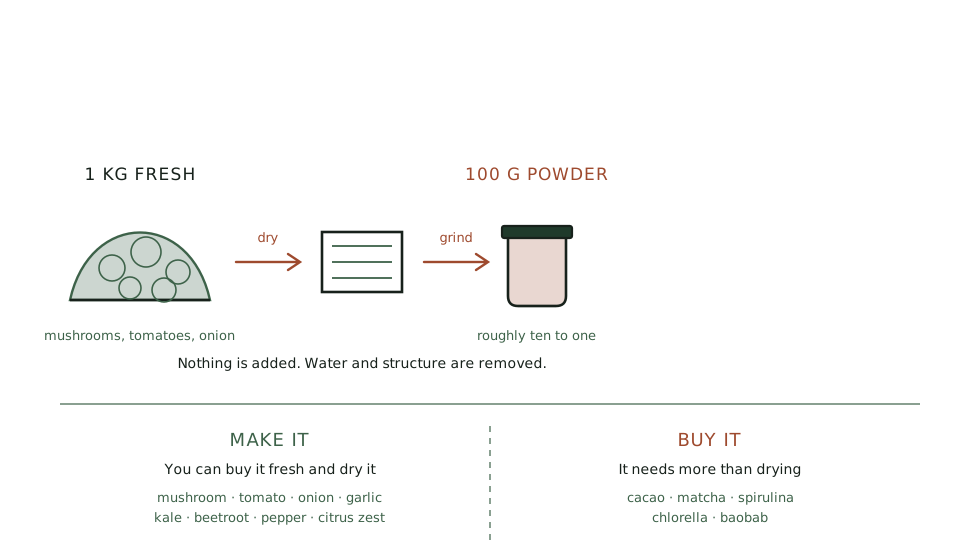
Why surface area changes everything
A dried slice presents a small outer surface to the air. Everything inside is protected by everything outside it.
Grinding turns that slice into thousands of particles, and every particle presents its full surface. The total area exposed to oxygen and humidity increases by orders of magnitude.
Three consequences follow, and they are the whole of powder storage.
Oxidation accelerates. Colour fades, aromatics leave, and any fat content turns rancid faster.
Moisture absorption accelerates. Powders pull humidity from the air and clump. Some, like onion, do this aggressively.
Aroma loss accelerates. Volatile compounds have far more exposed surface to escape from.
None of this makes powder go bad in the sense of becoming unsafe. It makes it stop being worth using, which is a different and more common failure.
The four enemies, ranked
Same list as for dried food, different order of importance.
Humidity comes first for powders. Clumping is the most visible failure and the most common. A clumped powder has already absorbed moisture, which means oxidation is accelerating too.
Oxygen second. Slower and relentless. It is why a jar that was excellent in October is dull by March.
Light third, and much more damaging to powders than to slices. Green powders in particular fade visibly within weeks in a clear jar on a shelf.
Heat fourth, accelerating all three.
Address humidity and oxygen and the rest largely follows.
The single best habit
Keep the bulk as dried pieces and grind small batches.
This does more for powder quality than every container and desiccant combined, and it costs nothing.
Dried slices are stable for a year or more. Powder is not. So the sensible arrangement is a large sealed jar of dried mushroom slices in the cupboard and a small jar of mushroom powder next to the stove, refilled every few weeks from the bulk.
Grinding takes two minutes. The difference in what you are cooking with is substantial.
This applies to bought powders too, in the sense that buying small and often beats buying a large bag that will fade before you finish it.
Containers
Small, always. A jar you empty in six weeks stays good. A large jar opened for six months does not, because every opening exchanges the air inside and admits humidity.
Airtight, genuinely. A screw lid with a liner, or a clamp lid with an intact gasket. Powders find their way past a loose seal and moisture finds its way in.
Glass over plastic. Non porous, no flavour transfer, no staining, and you can see the condition. Plastic holds aroma from previous contents, which for garlic or chilli is permanent.
Dark, or in a cupboard. Both work. A clear jar in a cupboard is fine. A clear jar on a windowsill is not.
Narrow rather than wide for anything you spoon from, since a wide mouth exposes more surface each time you open it.
Wipe the rim before closing. Powder in the thread stops the seal closing properly, which is a small thing that undoes the container entirely.
Desiccants, which genuinely help here
For dried slices a desiccant is unnecessary. For powders it is worth using.
A small food safe silica gel sachet in the jar absorbs the humidity that enters each time you open it, and it prevents the clumping that otherwise sets in within weeks in a normal kitchen.
Use food grade sachets rather than the ones that come in packaging. 300cc oxygen absorbers in individually sealed packs address a different problem, removing oxygen rather than moisture, and are worth adding for anything kept past a few months.
One small sachet per jar is sufficient.
Replace or dry them out periodically. Many can be regenerated in a low oven, which is worth doing if you use several.
A grain of rice is the traditional improvised version and it works to a limited degree. A proper desiccant works considerably better.
Do not confuse desiccants with oxygen absorbers. A desiccant removes moisture, an absorber removes oxygen, and powders benefit more from the first.
Realistic shelf life
Stored properly, meaning airtight, small, dark, and cool.
Mushroom and other savoury vegetable powders. Two to three months at best quality, usable for six or more. Flavour flattens gradually.
Onion and garlic. Similar, and both clump sooner than they fade.
Tomato and beetroot. Three to four months at best. Colour holds reasonably.
Green powders. Two months at best. The shortest lived in this category and the most visibly degraded, since fading is obvious.
Chilli and spices. Six months to a year, since capsaicin and many spice compounds are relatively stable.
Citrus zest. Around a year, and it holds aroma unusually well.
Cacao. A year or more, one of the more stable.
Matcha. Weeks to a couple of months after opening. The most perishable thing in this hub.
None of these become unsafe on those timescales. They become dull, and dull powder in a jar is how a good habit quietly stops.
Labelling
Two pieces of information, and this matters more for powders than for anything else on this site.
What it is. Once ground, a great many powders look identical. Mushroom, celeriac, and onion are all beige. Beetroot and paprika are both red. Kale and spinach are indistinguishable. Identifying by taste is not pleasant when you get it wrong.
When it was made or opened. Since these are quality dates rather than safety dates, this tells you what to use first rather than what to discard.
Write on the lid as well as the side, since jars in a cupboard are seen from above.
For blends, write the ratio too. A blend you liked and cannot reproduce is a genuinely annoying loss.
Reviving and rescuing
Clumped powder is usually recoverable. Break it up, spread it on a tray, and give it an hour in a very low oven or the dehydrator at forty degrees. Then re-grind briefly and put it in a smaller jar with a desiccant.
Faded green powder cannot be recovered. The colour is gone and so is most of the aroma. Use it in something cooked where neither matters.
Flat savoury powder still works as bulk in a stew where it contributes body if not much flavour. Not a total loss.
Rancid smell from anything with fat content means discard. Nuts, seeds, and cacao are the candidates.
Solid caked powder that will not break up has taken on real moisture. Dry it, re-grind, and check whether it is still worth keeping.
Freezing powders
A reasonable option for surplus and one with a specific trap.
Freezing slows oxidation and aroma loss considerably, and for anything you have made in quantity and cannot use within a few months it genuinely extends useful life.
The trap is condensation. A jar taken from the freezer into a warm kitchen pulls moisture onto every cold surface the moment it is opened, and that moisture goes straight into the powder. Do this a few times and you have a solid cake.
Two ways to avoid it. Portion into small containers before freezing, so a container is opened once and used entirely. Or let the container reach room temperature fully before opening it, which takes longer than people expect for a sealed jar.
Freezing works best for the powders that keep worst: green powders, aromatic blends, and anything you ground in a large batch.
It is unnecessary for chilli, cacao, and citrus zest, all of which hold up well in a cupboard.
Vacuum sealing before freezing is better still, since it addresses oxygen and condensation together.
The simpler answer for most households remains grinding smaller batches more often, but freezing is a genuine option for a seasonal glut.
RUN THE NUMBERS
Illustrative figures for properly stored powders.
| Powder | Best quality | Usable | First failure |
|---|---|---|---|
| Green | 2 months | 6 months | Colour fades |
| Mushroom | 2 to 3 months | 6 months plus | Flavour flattens |
| Onion, garlic | 2 to 3 months | 6 months | Clumping |
| Tomato, beetroot | 3 to 4 months | 8 months | Colour dulls |
| Chilli, spices | 6 months | A year plus | Aroma fades |
| Citrus zest | A year | Longer | Aroma fades |
| Cacao | A year | Longer | Aroma fades |
| Matcha, opened | Weeks | 2 months | Colour and flavour |
Compare against the dried pieces these came from, which mostly hold for a year or more. That gap is the argument for grinding in small batches.
Where the jars live
Proximity decides use, and the best storage conditions are rarely the most convenient location.
The compromise that works is the same one the dried pantry uses. A small working jar of each powder you actually cook with, kept next to the stove where you will reach for it. The bulk stored properly, cool and dark, somewhere less convenient.
A working jar turns over fast enough that its slightly worse conditions barely matter. A jar that lasts six weeks is not going to fade appreciably on a kitchen shelf.
The reserve is where the rules apply properly: sealed, dark, cool, and opened rarely.
Powders kept entirely in a cupboard in another room are stored beautifully and used almost never, which is the wrong optimisation.
WHAT GOES WRONG
Solid clumps in the jar. Humidity. Smaller jar, desiccant, and grind less at a time.
Faded to khaki. Light, and time. Dark cupboard.
Unidentifiable beige jars. No labels. Write on the lid.
Flat flavour after two months. Normal for aromatic powders. Grind smaller batches more often.
Rancid smell. Fat content oxidising. Discard, and store anything fatty cool.
A large bag of bought powder gone dull. Decant into a small working jar and keep the rest sealed.
Powder in the lid thread stopping the seal. Wipe the rim before closing.
DO THIS NOW
- Move your powders out of any large jar into small ones you will finish within two months.
- Put a food grade desiccant sachet in each, particularly onion and anything ground fine.
- Write contents and date on every lid, since ground powders are indistinguishable by sight.
- Keep the bulk as dried pieces and grind a few weeks' worth at a time.
Next
The grinding habits that decide quality in the first place, including why a powder ground while warm clumps sooner, are in grinding and sieving.
For the four vegetable powders most worth making, and which of them clumps fastest, see tomato, onion, garlic.