Guide
Cacao and Matcha, Two You Cannot Make
Both require processing that is genuinely out of reach at home, which makes knowing what to buy the whole skill.
As an Amazon Associate this site earns from qualifying purchases. Links to products may be affiliate links. This costs you nothing extra and does not change what gets recommended. Nothing here is medical advice.
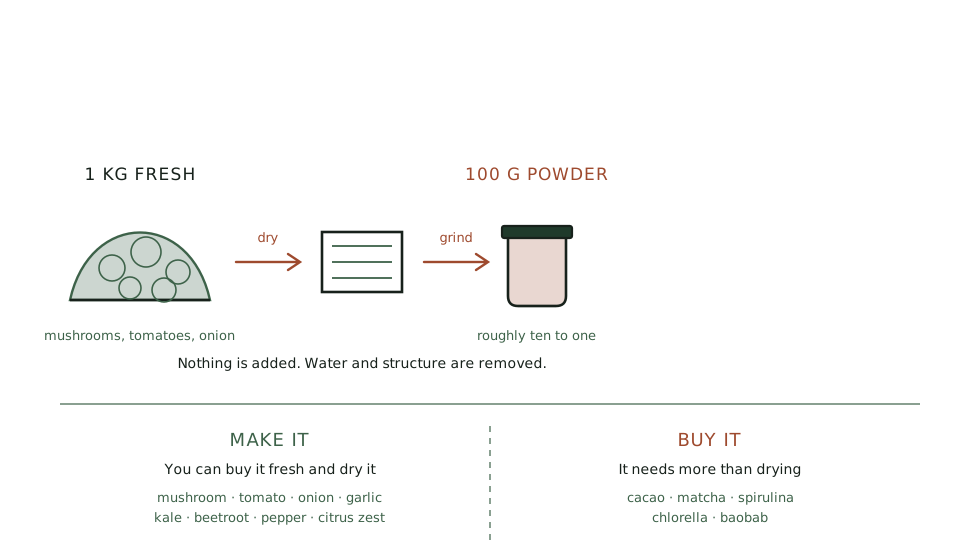
Almost everything in the powders hub argues for making rather than buying. These two are the clearest exceptions, and for the same underlying reason: the processing is the product.
Cacao requires fermentation. Matcha requires shade growing and stone milling. Neither is a drying-and-grinding job, which means the skill here is buying well rather than making at all.
Why cacao cannot be made at home
Cacao beans arrive inside a pod surrounded by white pulp. Before they taste of anything recognisable, that pulp has to ferment, over roughly a week, in a heap or a box.
Fermentation is where the flavour precursors develop. Unfermented cacao tastes bitter, astringent, and flat. No amount of roasting or grinding afterwards recovers what fermentation would have produced.
After fermenting comes drying, roasting, cracking, winnowing to remove the shell, grinding into a liquor, and usually pressing to separate the butter from the solids that become powder.
That chain requires a crop you almost certainly do not have and equipment you certainly do not. Buying is the only route.
Cacao, cocoa, and what the words mean
The terminology is used loosely and the distinctions are real.
Cocoa powder is what remains after most of the fat has been pressed out of roasted cacao. Standard, widely available, and what most baking uses.
Dutch process cocoa has been treated with an alkali to reduce acidity. Darker, milder, and it behaves differently in baking because it does not react with bicarbonate of soda in the same way. Recipes are usually written for one or the other.
Natural cocoa is untreated, lighter, more acidic, and more sharply flavoured.
Cacao powder, as marketed, generally means beans processed at lower temperatures. The word raw is applied loosely and is not a regulated term in most places, since some heating occurs during fermentation regardless.
Cacao nibs are cracked roasted beans, unpressed. They retain the fat and have a texture rather than being a powder.
The practical difference for cooking is fat content, acidity, and intensity. Cacao and cocoa are largely interchangeable in a drink and not interchangeable in a recipe with a chemical raising agent.
Buying cacao
Check whether it is Dutch process or natural if you are baking. This affects the outcome more than any quality difference.
Check the fat content if it is stated. Higher fat powders make richer drinks and behave differently in baking.
Origin matters for flavour in the same way it does for coffee. Single origin powders differ noticeably from blends.
Fair trade and similar marks address labour and grower price rather than product quality, and cacao is one of the categories where that consideration is genuinely live.
Price tracks quality more than in most of this hub, because the processing is real work. This is not a commodity in the way that vegetable powder is. an organic unsweetened cacao powder is a reasonable unsweetened starting point.
Store it airtight and dark. Cacao holds up better than most powders and still loses aroma over a year.
Why matcha cannot be made at home
Matcha is green tea, and the difference between it and any other green tea is entirely in how it is grown and processed.
Shade growing. The plants are covered for several weeks before harvest. This changes the leaf chemistry, raising certain compounds and lowering others, and it is what produces matcha's characteristic sweetness and colour rather than the bitterness of unshaded leaf.
Steaming and drying immediately after picking, to halt oxidation.
Removing stems and veins, leaving only leaf tissue.
Stone milling. Very slowly, on granite wheels, to a particle size far finer than any kitchen grinder achieves and without the heat that a blade grinder generates. This is the step that puts it out of reach at home more than any other.
Grinding ordinary green tea in a spice grinder produces green tea dust. It is not matcha, and the difference is immediately obvious in both colour and flavour.
Buying matcha
Grade is a real distinction, not only marketing. Ceremonial grade uses younger leaves from the first harvest and is intended to be drunk with water alone. Culinary grade uses later harvests and is intended for lattes, baking, and anything where other flavours are present.
Using culinary grade in a plain bowl of matcha will taste harsh and bitter, and people frequently conclude they dislike matcha on that basis. Using ceremonial grade in a cake is a waste of money. For drinking, look for a ceremonial grade matcha in a small sealed tin; for lattes and baking, a culinary grade matcha for lattes and baking is the sensible choice.
Colour is the fastest indicator. Good matcha is a vivid, almost fluorescent green. Dull, yellowish, or olive powder indicates older leaf, later harvest, or oxidation from poor storage.
Origin. Japan is the reference, and specific regions have reputations in the way wine regions do. Matcha from elsewhere varies widely.
Packaging matters more than for most powders. Matcha oxidises quickly. Small tins, opaque, sealed. A large clear bag is a bad sign.
Check the harvest or packing date where given. Matcha is at its best fresh and declines noticeably within months of opening.
Buy small. A large tin will fade before you finish it unless you drink it daily.
Preparing matcha
Worth knowing because most disappointment traces to preparation rather than the powder.
Sift it. Matcha clumps in the tin and lumps do not disperse in the bowl. A small sieve solves this and it is the step most often skipped.
Water temperature around eighty degrees, not boiling. Boiling water makes matcha bitter. This is the single most common error.
Whisk rather than stir. A bamboo whisk in a W motion, or a small electric frother. The aim is a fine foam and no lumps, which stirring will not achieve.
Ratio. Roughly two grams to sixty millilitres of water for a traditional thick preparation, or the same powder in more water for a lighter drink.
For a latte, whisk the matcha with a little water first to a smooth paste, then add milk. Adding milk directly to powder guarantees lumps.
Drink it promptly. Matcha settles and the flavour flattens within minutes.
What the research does and does not say
Both of these carry substantial health marketing, and the honest position is worth stating once.
Both are foods containing compounds that are genuinely studied. Cacao contains flavanols; matcha contains catechins and theanine. There is real research interest in both, some of it in humans.
The gap between that and the claims is wide. Marketing frequently extrapolates from laboratory work, from studies using isolated extracts at doses far above what a drink provides, or from single studies.
Processing changes things. Alkalising cocoa reduces flavanol content substantially, which means Dutch process cocoa and natural cocoa are not equivalent on that measure.
Matcha contains caffeine, in meaningful amounts, which is worth knowing rather than assuming.
Both are worth drinking because they taste good. Any specific health claim is worth checking against current evidence, and nothing on this site is medical advice.
Using cacao well
A few points that make a noticeable difference and are rarely stated.
Bloom it. Whisking cocoa with a small amount of boiling water or hot milk before adding the rest deepens the flavour considerably. The same principle as making a paste, with a flavour benefit on top.
A pinch of salt. Salt sharpens chocolate flavour in the way it does most things, and a small pinch in a hot chocolate or a cake batter is the difference between flat and rounded.
Coffee. A teaspoon of instant coffee or a splash of espresso in a chocolate cake deepens the cocoa without tasting of coffee. This is a standard professional technique.
Fat carries it. Cocoa is more expressive in something containing fat, which is why hot chocolate made with milk beats the same powder in water.
In savoury cooking. A spoonful of cocoa in a chilli, a mole, or a beef stew adds depth and bitterness that balances richness. Use unsweetened cocoa rather than a drinking chocolate blend.
Sift for baking. Cocoa clumps in the packet and lumps survive into the batter.
Cacao nibs are worth knowing as a separate ingredient. They keep the fat, they have crunch, and they work scattered over yoghurt or folded through a cookie dough where powder would not.
RUN THE NUMBERS
Illustrative comparison. Prices vary too widely to be useful.
| Cacao | Matcha | |
|---|---|---|
| Why not home made | Fermentation | Shade growing and stone milling |
| Key distinction | Dutch process or natural | Ceremonial or culinary grade |
| Quality indicator | Origin, fat content | Colour, harvest date |
| Storage | Airtight, dark, keeps well | Small opaque tin, fades fast |
| Preparation error | Few | Water too hot, not sifted |
| Price tracks quality | Reasonably | Strongly |
| Buy in | Moderate quantities | Small quantities |
Matcha is the more perishable and the more sensitive to grade, which makes buying small and buying well matter more than for anything else in this hub.
WHAT GOES WRONG
Bitter matcha. Water too hot. Eighty degrees, not boiling.
Lumpy matcha. Not sifted, or milk added directly to the powder.
Disappointing plain matcha. Culinary grade used where ceremonial was needed.
Faded, yellowish matcha. Old, poorly stored, or a later harvest. Colour is the fastest check.
A cake that did not rise. Dutch process cocoa in a recipe written for natural, or the reverse. The acidity difference matters with bicarbonate.
Flat, dusty cacao. Old. It keeps better than most powders and not indefinitely.
Paying a premium for a large bag. Both of these are better bought small and fresh.
DO THIS NOW
- Check whether the cocoa in your cupboard is Dutch process or natural, and note which your usual recipes assume.
- Sift matcha before whisking, every time, and use water at about eighty degrees.
- Buy matcha in the smallest tin available until you know you will drink it regularly.
- Judge matcha by colour before anything else. Vivid green is the signal; dull or yellowish is not.
Next
The label reading method that applies to both of these, and to everything else you buy rather than make, is in buying powders without being sold to.
For the powder these two are most often blended with, and the one you should make rather than buy, see green powder that is actually green.