Guide
Green Powder That Is Actually Green
Thirty eight degrees rather than fifty two is the whole difference between a bright green powder and a khaki one that tastes of hay.
As an Amazon Associate this site earns from qualifying purchases. Links to products may be affiliate links. This costs you nothing extra and does not change what gets recommended. Nothing here is medical advice.
Green powder is the thing most people buy in this category and the thing most worth making, because the home version can be genuinely better and costs a fraction as much.
It is also the powder most often made badly at home, and there is one reason: temperature. A green powder dried at vegetable temperature comes out khaki, smells of hay, and tastes of nothing much. Dried at herb temperature it stays bright and keeps its aroma.
That single number is most of this page.
Thirty eight degrees, not fifty two
Leafy greens hold their colour in chlorophyll and their flavour in volatile aromatic compounds, and both are damaged by heat.
Chlorophyll degrades as temperature rises, shifting from bright green toward olive and then brown. Aromatics simply evaporate, which is the same mechanism that ruins hot dried herbs.
So green material dries at herb temperature, around thirty five to forty degrees Celsius, rather than the fifty to fifty five that suits root vegetables and mushrooms. Greens sit at the very bottom of the drying temperature range for exactly this reason.
The cost is time. Low temperature drying takes longer, typically four to eight hours for leaves rather than two to four. That is the trade and it is worth making.
If your machine will not go below fifty, air drying in a dark, well ventilated spot is a better option than drying hot.
What to use
Kale. The workhorse. Sturdy, dries well, mild enough not to dominate, and cheap.
Spinach. Milder still and it reduces dramatically, so buy far more than looks reasonable.
Chard, including the stems. Stems dry more slowly than leaves, so separate and dry them apart or cut them small.
Broccoli leaves and stalks. Usually discarded and perfectly good. Stalks need slicing thin.
Cabbage. Works, and the flavour is more assertive.
Herb leaves. Parsley, mint, and coriander all contribute aroma. Mint in particular transforms a green blend.
Nettle, if you gather it. Traditional, free, and it dries into an excellent deep green powder. Handle with gloves; drying removes the sting.
Not lettuce. It is almost entirely water and leaves nearly nothing behind.
Not the tough outer leaves of anything that would be unpleasant fresh. Drying does not improve them.
Preparation
Wash and dry thoroughly. Any water on the leaves extends the drying time considerably at these low temperatures. A salad spinner then twenty minutes on a towel.
Remove thick central ribs from kale and chard, or dry them separately. They take twice as long as the leaf and will still be leathery when the leaf is brittle.
Tear rather than chop. Large pieces dry more evenly and there is no benefit to cutting small, since it is all going in a grinder anyway.
Single layer, with gaps. Leaves are light and will overlap if crowded, and the overlapping parts stay damp.
Use a mesh liner. Dried leaves are extremely light and will lift into the fan. This is a real problem with greens specifically.
Drying and testing
Thirty five to forty degrees. Four to eight hours depending on the leaf and the load.
Check from three hours. Greens go from not quite ready to overdried faster than most things, and overdried greens lose colour just as hot dried ones do.
They are ready when a cooled leaf crumbles completely between finger and thumb with no flexibility anywhere, including the small veins.
Cool before testing. Warm leaves feel more pliable than they are.
Colour is your other indicator. A properly dried leaf stays close to the colour it went in. Noticeable darkening means the temperature was too high.
Grinding greens
Greens are the most awkward thing to grind in this hub, and two adjustments help.
Crumble by hand first. Break the dried leaves down roughly before they go in the grinder. Whole leaves fly around the bowl without engaging the blades.
Grind in very short bursts and shake often. Leaf material packs against the sides.
Sieve twice. This matters more for greens than anything else, because the veins and stem fragments never fully break down and they are what makes a drink gritty. Two passes make a noticeable difference.
Keep the coarse fraction. It is perfectly good stirred into soups and sauces where texture does not matter.
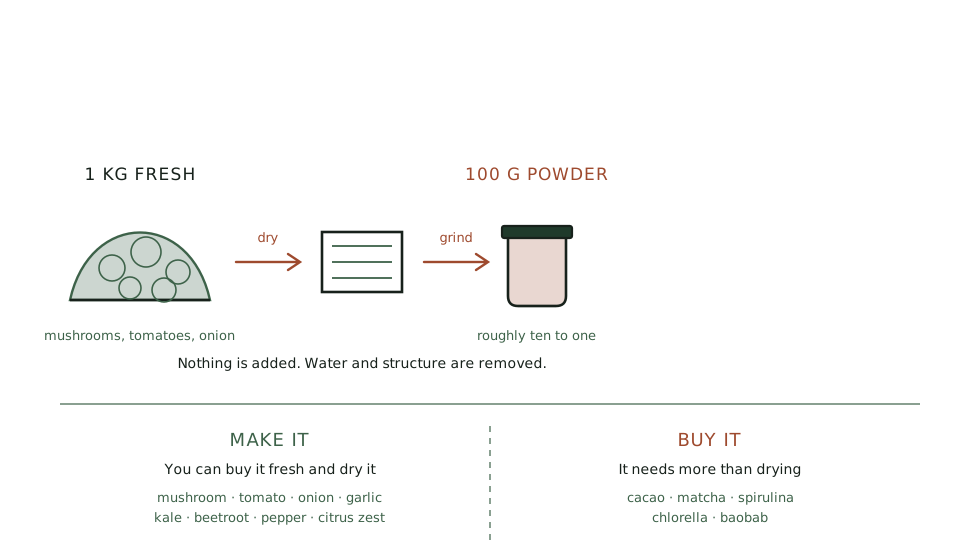
Expect roughly a hundred grams of powder from a kilogram of fresh leaves, and it will look like a startlingly small amount.
Adding the bright note
This is the difference between a home green powder you use and one that sits in the cupboard.
Pure green powder tastes grassy, flat, and slightly bitter. That is not a fault in your technique; it is what dried leaves taste like.
Commercial blends solve this by adding fruit, and you can do the same more cheaply and with more control. If you want an algae component alongside, a spirulina and chlorella blend blends in at a small proportion.
Citrus zest. Dried and ground, it is the single best addition. Bright, aromatic, and it cuts the grassiness directly.
Ginger. Warm and assertive. A little goes a long way.
Mint. Dried mint in a green blend is transformative and costs nothing if you grow it.
A little dried berry or apple. Adds sweetness and softens the edge.
Lemon balm, lemongrass, or lemon verbena if you have them.
A blend of roughly eight parts green to one part zest and one part ginger is a reasonable starting point. Adjust from there and write down what you did.
Using it
Cold, or added at the end. Heat destroys both the colour and the aromatics you worked to preserve. Everything about this powder argues against cooking it.
In smoothies. The obvious use and the best one. It disperses readily in a blender.
Stirred into yoghurt or kefir. The sourness balances the grassiness well.
Into a juice at the end. A spoonful stirred in after juicing works well, added at the end rather than at the start. The powders hub covers where this sits against the rest of the category.
In cold sauces and dressings. Pesto style sauces, herb dressings, and dips take it well.
In doughs, accepting the colour change. Pasta and bread work, and the green will dull with baking. Use it for colour rather than for aroma there.
Start with a teaspoon. Green powder is assertive and easy to overdo.
Make a paste with a little liquid first rather than tipping it into a full glass, where it clumps.
Storage
Green powders fade faster than anything else in this hub, and storage is not optional.
Dark, always. Light is the main enemy. A clear jar on a windowsill will fade visibly in a fortnight. Dark glass or a cupboard.
Small jars. A jar you finish in six weeks stays good; one you open for six months does not.
Airtight, with a desiccant. Leaf powder absorbs humidity readily and clumps.
Cool. Every degree matters more here than for root vegetable powders.
Grind small batches. Keep the bulk as dried leaves, which hold their colour far better than powder does, and grind a few weeks' worth at a time. This single habit does more than any container.
Expect two months of genuinely good colour and aroma, and usable material for six.
Nettle, and other free greens
The cheapest green powder is one you did not buy the leaves for, and several worthwhile ones grow wild or get discarded.
Nettle. Traditional, abundant, and free. Pick young tops in spring using gloves, and drying removes the sting completely. Nettle dries to a deep green powder with a mineral, slightly savoury flavour that works well in savoury applications as much as in drinks. Pick away from roadsides and from any area likely to have been sprayed.
Broccoli and cauliflower leaves. Usually removed at the shop or in the field and perfectly good. Ask a greengrocer and you will frequently be given them.
Beetroot and radish tops. Sold attached and thrown away by most people. Both dry well and beetroot tops in particular have a good flavour.
Carrot tops. Divisive fresh and useful dried, with a parsley-like character.
Celery leaves. The pale inner leaves are intensely flavoured and belong in a savoury green blend rather than a smoothie one.
Outer cabbage leaves. Tougher than the heart and fine once ground.
Identification matters for anything foraged rather than bought, and it is a matter for a proper guide rather than a website. For garden and shop material there is no such question, and that is where most of the free volume is.
RUN THE NUMBERS
Illustrative figures. Yields vary considerably by leaf.
| Detail | |
|---|---|
| Fresh leaves | 1 kg, mixed |
| Preparation | Washed, dried thoroughly, ribs removed |
| Temperature | 35 to 40 C |
| Drying time | 4 to 8 hours |
| Ready when | Crumbles completely, colour unchanged |
| Yield | Roughly 100 g |
| Sieving | Twice |
| Blend | 8 parts green, 1 zest, 1 ginger |
| Keeps | 2 months at best, 6 usable |
Kale bought cheap in season produces a jar for a small fraction of the price of a retail green powder, and you know exactly what is in it.
WHAT GOES WRONG
Khaki rather than green. Dried too hot. Thirty eight degrees, not fifty two. This is the defining failure.
Smells and tastes of hay. Same cause. The aromatics left with the heat.
Gritty in a drink. Not sieved twice, or the ribs were left in.
Leaves in the fan housing. No mesh liner. Dried greens are extremely light.
Faded within a month. Light. Move to a dark cupboard or use dark glass.
Tastes flat and grassy. No bright note. Add citrus zest and ginger.
Clumping. Humidity. Smaller jars and a desiccant.
Barely any powder from a lot of leaves. Normal. Ten to one is the ratio and greens are at the extreme end of it.
DO THIS NOW
- Set the machine to 38 C rather than the vegetable setting, and expect it to take twice as long.
- Wash and dry the leaves thoroughly, remove thick ribs, and use a mesh liner so nothing lifts into the fan.
- Test by crumbling a cooled leaf, and check the colour has not darkened.
- Sieve twice, then blend eight parts green to one part dried citrus zest and one part ginger.
Next
The grinding technique matters more for greens than for anything else in this hub. Grinding and sieving covers bursts, shaking, and why two sieve passes are worth it.
For the powders you cannot make, and how to read a label without being credulous or cynical, see buying powders without being sold to.