Guide
Citrus Juicing, and the Machine You Do Not Need
Citrus is the one thing a full juicer handles worse than a tool costing a fraction as much. Here is which press to buy for which job.
As an Amazon Associate this site earns from qualifying purchases. Links to products may be affiliate links. This costs you nothing extra and does not change what gets recommended. Nothing here is medical advice.
Buying a full juicer to make orange juice is one of the most common and most expensive mistakes in this whole category. Citrus is the single fruit where a dedicated tool beats a general purpose machine on every measure that matters: yield, speed, cleaning, cost, and counter space.
If citrus is most of what you drink, stop reading the juicer comparisons and buy a press. This page covers which one.
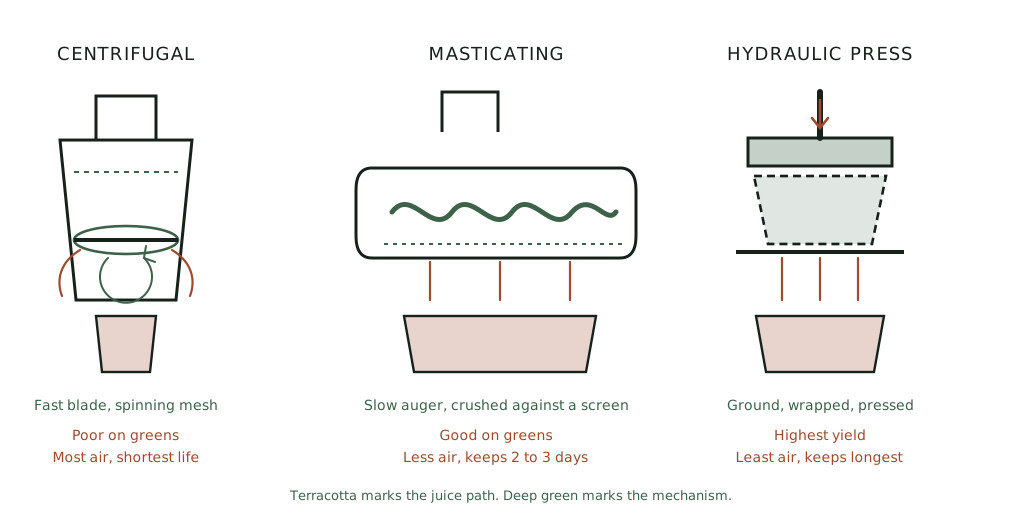
Why a full juicer is the wrong tool here
Citrus is structurally different from everything else you might juice. The liquid sits in discrete membrane-walled sacs rather than dispersed through fibrous flesh, and the fruit is wrapped in a peel carrying intensely bitter oils.
That combination causes three problems in a general purpose machine.
You have to peel it first. Whole citrus with the peel on turns a glass bitter, and the oils are strong enough that a small amount ruins the whole thing. So the convenience of a wide feed chute disappears immediately, since you are peeling by hand anyway.
Yield is mediocre. Both auger and centrifugal designs are built to break down fibrous tissue. Citrus segments squash rather than shred, and a meaningful share of the liquid stays in the pith and membrane.
Cleaning is disproportionate. Four to six components, a screen to brush, and two minutes at the sink, for a drink that a press produces in twenty seconds and cleans in ten.
A press does the one job the fruit is shaped for. A reamer enters the cut half and twists, rupturing the sacs directly against the membrane, and the peel stays in your hand.
The three tools
Handheld squeezer. A hinged press that takes a cut half, peel side up, and inverts it as you squeeze. The best everyday tool for lemons and limes, which is what most kitchens actually need most often.
a handheld citrus squeezer with a pour spout handles lemons and limes comfortably and small oranges at a push. It filters seeds automatically, it rinses in seconds, and it lives in a drawer rather than on a counter. Anyone making the standard glass with half a lemon in it will use this daily and never miss having a machine for the job.
Buy aluminium or stainless. The cheap painted ones chip, and hand wash rather than dishwashing aluminium, which darkens it.
Lever press. A cast iron countertop press with a long handle that multiplies your force considerably. This is the tool for volume orange juice and for anything with a tough peel.
a cast iron lever press is the pattern: heavy, slow to move, and capable of pressing a large orange or half a grapefruit in one stroke with almost no effort. It also handles pomegranates, which nothing else on this page will. The drawbacks are weight and counter space, and the fact that it does one thing.
Electric citrus juicer. A motorised reaming cone. Press a cut half onto the spinning cone and it does the work.
an electric citrus juicer with a reaming cone suits anyone making orange juice daily for more than one person. It is faster than a lever press for volume, it takes almost no force, and it has more parts to clean than either manual option, though far fewer than a full juicer. Look for a model with interchangeable cones so it handles limes and grapefruit as well as oranges.
Which one to buy
Lemons and limes, a few at a time, most days. Handheld squeezer. Nothing else is worth the space.
A jug of orange juice at weekends. Lever press. It is fast, it takes no electricity, and it will outlive you.
Orange juice daily for a household. Electric. The volume justifies the parts.
Pomegranates. Lever press, and it is genuinely the only practical home option.
You already own a masticating juicer and juice citrus occasionally. Peel it and use what you have. A press is a convenience rather than a necessity at low volume.
Most kitchens are best served by a handheld squeezer plus whatever full juicer they already own. The press handles the daily half lemon, the machine handles everything else.
Technique that raises yield
Small things make a large difference with citrus, and most of them cost nothing.
Bring the fruit to room temperature. Cold citrus is stiff and gives up noticeably less. Twenty minutes out of the refrigerator is enough.
Roll it firmly under your palm first. Pressing the fruit against a worktop and rolling ruptures the internal membranes before you cut. This is the single highest yield technique available and it takes three seconds.
Cut across the segments, not along them. Halving through the equator exposes every segment. Halving pole to pole leaves membranes intact and the reamer works against them.
Squeeze the handheld press with the peel facing up. This inverts the half and turns the peel into the pressing surface, which is how the tool is designed to work. A surprising number of people use these upside down and blame the tool.
Do not squeeze to complete exhaustion. The last fraction comes with pith and bitterness. Stop when the flow slows.
Peel and pith
The peel is the reason citrus needs a different approach, and it is also worth keeping.
Zest before you juice, always. Zesting a squeezed half is difficult and zesting a whole fruit takes seconds. Freeze zest in small portions if you are not using it immediately.
Do not put peel through any juicer. The oils are intensely bitter, and unlike most flavour mistakes this one cannot be diluted out of a glass.
Pith is bitter but far less aggressively so. A little in the juice is normal and harmless.
Spent halves have uses beyond the compost. Rubbed on a chopping board they lift stains and smells, and simmered with water they make a reasonable kitchen deodoriser.
Buying citrus for juicing
The fruit matters more than the tool, and a few habits raise both yield and flavour without costing anything.
Heavy for its size is the single best indicator. Two oranges of identical appearance can differ substantially in juice content, and weight tells you which one to take. Pick both up.
Thin skinned fruit yields more. Thick pith is weight that is not juice. Navel oranges have thicker skins than Valencia, which is why Valencia is the traditional juicing orange. For lemons, the thin skinned ones give noticeably more.
Give slightly under pressure. Rock hard citrus is underripe and stingy. Soft spots are the other way. A little give is right.
Buy loose rather than bagged where you can, so you can weigh each one by hand. Bagged fruit is priced for convenience and sorted for appearance.
Store at room temperature for the week you will use it, and refrigerate the rest. Cold fruit yields less, and taking it out twenty minutes ahead recovers most of that.
Slightly tired citrus is perfectly good for juicing even when it has stopped being pleasant to eat, which makes the reduced section genuinely worth checking.
Storage
Citrus juice holds better than most, because the acidity that makes it taste bright also slows the browning reactions.
Even so, the two hour rule is the standard across this site and it applies here too. Fresh orange juice at twenty minutes and fresh orange juice at four hours are noticeably different drinks.
If you are storing, the same method applies as for any juice: six ounce glass jars, filled to the rim so the juice meets the lid with no air, capped, refrigerated immediately.
Citrus juice freezes better than any other juice covered on this site. Ice cube trays work well, and thawed citrus juice is close to indistinguishable from fresh in cooking, cocktails, and dressings. Leave a small gap for expansion.
RUN THE NUMBERS
Illustrative comparison only. Prices vary by region and this is not a promise about your results.
| Handheld squeezer | Lever press | Electric | Full juicer | |
|---|---|---|---|---|
| Best for | Lemons, limes | Oranges, grapefruit, pomegranate | Daily orange juice | Everything else |
| Cost | Lowest | Middle | Middle | Highest |
| Effort per fruit | Moderate | Very low | None | Moderate |
| Peeling needed | No | No | No | Yes |
| Cleaning | 10 seconds | 20 seconds | About a minute | 2 minutes |
| Counter space | None, drawer | Permanent | Permanent | Permanent |
| Seeds filtered | Yes | Yes | Usually | Yes |
The gap between a handheld squeezer and a full juicer for a single lemon is roughly two minutes of cleaning against ten seconds, every single day. Over a year that is the clearest efficiency argument anywhere on this site.
WHAT GOES WRONG
Bitter juice. Peel oils. Something with peel went into the machine, or the fruit was squeezed to exhaustion and pith came with it.
Poor yield from a handheld press. Fruit used cold, not rolled first, or cut pole to pole rather than across the segments.
A darkened aluminium squeezer. Dishwasher. Hand wash aluminium.
Seeds in the juice from an electric juicer. Filter basket not seated, or a cone too large for the fruit.
Buying a full juicer for orange juice. The mistake this page exists to prevent. A press is faster, cheaper, higher yielding, and cleans in a fraction of the time.
DO THIS NOW
- Roll your next lemon firmly under your palm before cutting it, and cut across the segments rather than pole to pole.
- If you own a full juicer and squeeze a lemon most days, buy a handheld press. It will pay for itself in cleaning time within a month.
- Zest before juicing, every time, and freeze what you do not use.
- If you are shopping for a machine to make orange juice, buy a press instead and keep the difference.
Next
If you also juice vegetables and are choosing a main machine, masticating or centrifugal covers the four things that genuinely differ between them.
The cleaning gap is the strongest argument on this page. Cleaning a juicer in two minutes covers the routine that narrows it for everything a press cannot handle.