Guide
Masticating or Centrifugal: Which Juicer to Buy
The two machines most people choose between, compared on the four things that actually differ: greens, yield, shelf life, and cleaning.
As an Amazon Associate this site earns from qualifying purchases. Links to products may be affiliate links. This costs you nothing extra and does not change what gets recommended. Nothing here is medical advice.
Almost every home juicer decision comes down to these two. Presses are a separate commitment and citrus squeezers solve a different problem. This is the fork nearly everyone stands at.
The marketing makes the comparison sound complicated. It is not. Four things genuinely differ, and once you know which of them matters to your glass, the answer arrives on its own.
How each one works
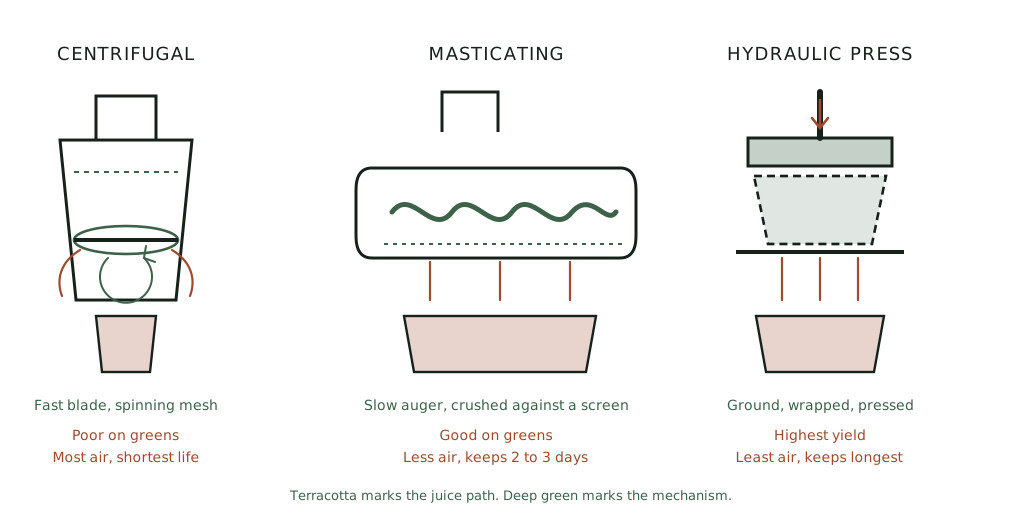
A centrifugal juicer spins a flat blade at high speed. The blade shreds produce against a fine mesh basket, and centrifugal force throws the liquid outward through the mesh while the pulp stays behind. Everything happens in about two seconds per item.
A masticating juicer turns a heavy auger slowly, crushing produce against a screen and pressing the liquid out. The word cold press describes this, since the low speed generates very little heat. Horizontal designs push produce along the length of the auger. Vertical designs feed downward.
Both produce good juice. The differences are in what they do well.
Difference one: greens and cabbage
This is the single biggest divide, and for most people it settles the decision.
Leafy greens and cabbage have no free liquid to fling. They need crushing, and a fast blade shreds them into fragments that pass through the basket largely intact. A centrifugal machine fed a bag of kale returns a disappointing amount of juice and a bin full of damp green confetti.
A masticating auger crushes those same greens against a screen and presses the liquid out. Yields on cabbage, kale, spinach, herbs, and wheatgrass are dramatically better.
If your glass is built on the vegetable-led structure described in the juicing hub, with cabbage or another green doing real work, this alone points to masticating. If you juice mostly carrots, apples, beetroot, and citrus, the gap narrows considerably and centrifugal becomes a reasonable choice.
Difference two: yield
Masticating machines extract more from the same input across nearly all produce, and the gap widens as produce gets softer or leafier.
The practical test is the pulp. Squeeze a handful over the sink. Pulp from a well fed masticating machine feels damp and holds together. Pulp from a centrifugal machine on greens is often wet enough to drip, which is juice you paid for and threw away.
Over a year of regular juicing, that difference is real money in produce, and it is the strongest financial argument for the more expensive machine. It does not apply if you juice occasionally.
Difference three: shelf life
Speed introduces air. A fast blade whips the juice as it extracts, and dissolved oxygen drives the browning, separation, and flavour change that follow.
Juice from a centrifugal machine is at its best immediately and holds acceptably for around a day. Masticating juice commonly holds two to three days, which is the difference between juicing every morning and juicing twice a week.
For anyone who wants to batch, this matters more than the yield difference, and the juicing hub covers the habits that protect either kind.
Difference four: cleaning
This is the one that decides whether a machine survives its first month, and it does not split neatly along the two categories.
The hardest component in this whole category to clean is a centrifugal mesh basket. It is fine, it is conical, and it fills with packed pulp that has to be brushed out from the outside.
Masticating machines vary enormously. Older designs have a screen that is nearly as fussy. Newer ones, particularly the strainer-free designs, rinse clean in a couple of minutes with no scrubbing at all. If cleaning is what has stopped you juicing before, this is the specific feature to look for rather than any headline about nutrients. Look for a compact strainer-free slow juicer, which is the least demanding thing to live with day to day.
Either way, the cleaning routine matters more than the machine. Rinsing before you drink turns a ten minute job into a two minute one on any design.
The things that differ less than advertised
Nutrient claims. Marketing in this category makes strong comparative claims about nutrient retention. The oxidation difference is real and observable in colour and shelf life. Specific numerical claims about vitamin retention vary by study, produce, and method, and are worth treating as directional rather than precise.
Noise. Masticating machines are quieter, which is a genuine quality of life difference at seven in the morning and not a reason to choose one on its own.
Speed. Centrifugal is faster at the machine and slower at the sink. Total time from produce to clean kitchen is closer than the spec sheets suggest.
The other options, briefly
Two machines dominate the decision, and three others are worth knowing about so you can rule them out with confidence.
Hydraulic press. Produce is ground, wrapped in a cloth, and squeezed under high force. Norwalk is the reference brand and these are bought direct or used rather than off a shelf. Yield and juice quality are the highest available, and the juice keeps longest. It is a two stage process with a cloth bag to launder after every batch. This makes sense for a household juicing daily at volume and for very few others.
Twin gear, also called triturating. Two interlocking augers crush produce between them. Yield is excellent, particularly on wheatgrass and hard greens, and these machines are expensive, heavy, and have the most parts to clean of anything in this category. They are a specialist choice for someone who already knows they want one.
Citrus press. A completely different tool, and the right one if citrus is most of what you drink. Manual or electric, it takes seconds, cleans in seconds, and costs very little. Buying a full juicer to make orange juice is a common and expensive mistake.
A blender. Worth naming here because a meaningful share of people shopping for a juicer actually want a blender. If what you want is thick, filling, fruit based, or contains banana or avocado, a blender is cheaper, faster, easier to clean, and correct. A juicer separates and discards fibre. A blender keeps everything.
The test is simple. If your answer involves fullness, breakfast as a meal, or fruit, buy a blender. If your answer is vegetable volume in a form you will drink quickly, one of the two machines above is right.
Which to buy
Buy masticating if greens or cabbage are the point, if you want to batch two mornings at once, or if you juice several times a week and the yield difference will compound. Consider a self-feeding horizontal cold press juicer, which handles the whole vegetable-led glass without much pre-cutting. For a smaller kitchen or a lighter routine, a compact strainer-free slow juicer is easier to live with.
Buy centrifugal if you juice mostly hard fruit and root vegetables, if you want to spend less, or if speed at the machine matters more than yield. Look at a dual-speed centrifugal juicer with a 3 inch chute, which takes whole apples with no cutting at all. For a small counter, a compact centrifugal juicer for small kitchens is the tighter footprint.
Buy neither yet if you have not established that you will juice weekly. A cheap centrifugal machine is a reasonable way to find out, and reselling one costs little.
Buying used
Juicers are among the most commonly resold kitchen appliances, and that fact is worth using rather than ignoring.
Second hand listings are full of machines used a handful of times, which means a well specified masticating juicer often costs a fraction of new. If cost is what is stopping you buying the machine that suits your glass, this closes most of the gap.
Three things to check. Ask whether the screen is intact, since a torn mesh lets pulp through and cannot be repaired. Confirm the seller still has all the parts, particularly the pusher and the rubber seal, which are the pieces most often lost. And check that replacement parts are still available for that model, because a discontinued machine with a cracked chamber is scrap.
Run it once before committing if you can. The sound tells you a great deal, and a labouring or grinding motor is not worth any discount.
The same market works in the other direction. If you buy a cheap centrifugal machine to test whether the habit sticks, you will recover much of the cost reselling it when you upgrade. That makes starting cheap a genuinely low risk way to find out.
RUN THE NUMBERS
Illustrative comparison only. Prices vary by region and retailer, and this is not a promise about your results.
| Centrifugal | Masticating | |
|---|---|---|
| Cabbage and leafy greens | Poor yield | Good yield |
| Carrots, apples, beetroot | Good | Good |
| Overall yield | Lower | Higher |
| Juice keeps | Around a day | 2 to 3 days |
| Time at the machine | Faster | Slower |
| Time at the sink | Longer | Varies by design |
| Noise | Loud | Quiet |
| Entry cost | Lower | Higher |
| Pre-cutting needed | Little | More |
The honest summary: the machines converge on hard produce and diverge sharply on greens. Decide what your standard glass contains, and the machine follows.
WHAT GOES WRONG
Buying centrifugal then building green juices. The most common mismatch. The machine is not faulty; it is the wrong tool for that glass.
Buying masticating and feeding it whole apples. Most need produce cut smaller. Self-feeding hopper models reduce this considerably.
A clogged auger. Long fibrous stems fed in whole. Cut short and alternate soft with hard.
Disappointment at the yield on a new masticating machine. Feed more slowly. Rushing an auger reduces extraction noticeably.
Choosing on nutrient marketing. Choose on greens, yield, shelf life, and cleaning. Those four are observable in your own kitchen.
DO THIS NOW
- Write down your standard glass. If a green or cabbage appears in it, you want masticating.
- If you are unsure whether the habit will stick, start cheaper and upgrade once you know.
- Whichever you buy, check the screen design before ordering. Strainer-free is the single best predictor of whether cleaning stays quick.
- Measure your pulp once. Squeeze a handful over the sink and see how much juice you are leaving behind.
Next
The machine matters less than the routine. Cleaning a juicer in two minutes is the habit that decides whether any of these stays on your counter.
For what actually goes in the glass, and the structure that works with either machine, see green juice built on vegetables.