Guide
Green Juice Built on Vegetables
A five part structure that lets you build a good glass from whatever is in the shop, without a recipe and without a fruit base.
As an Amazon Associate this site earns from qualifying purchases. Links to products may be affiliate links. This costs you nothing extra and does not change what gets recommended. Nothing here is medical advice.
Most green juice recipes are apple juice wearing a costume. Read the ingredient list and the first item by weight is frequently fruit, with a handful of spinach added for colour and a name.
There is a better way to build a glass, and it does not require a recipe at all. Once you know the five roles a juice needs filled, you can walk into any shop in any season and assemble something good from whatever is cheap that week.
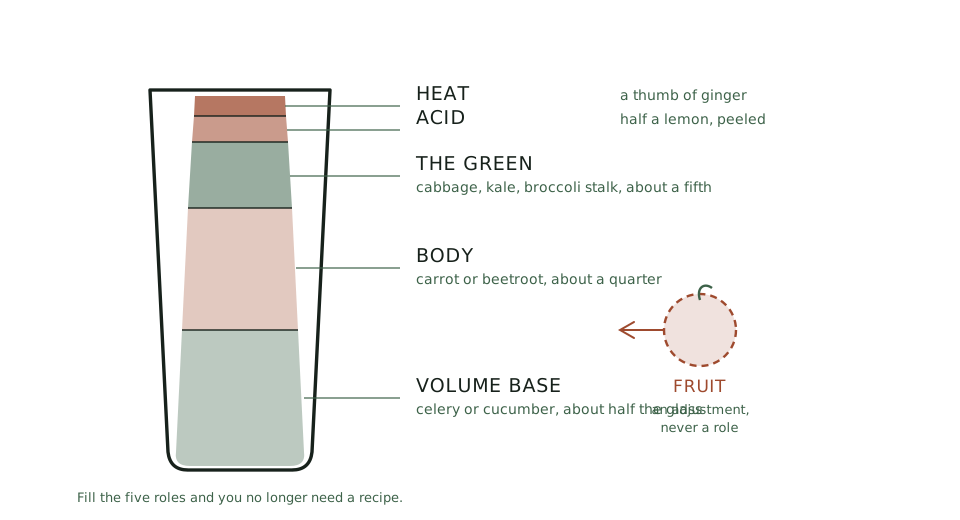
The five roles
Every juice worth drinking fills these, in roughly this proportion.
Volume base, about half the glass. Celery or cucumber. Both are mostly water, both yield generously, and both are mild enough to carry everything else without arguing with it. This is what makes the glass a drink rather than a shot.
Body, about a quarter. Carrot or beetroot. Dense, sweet without being sugary, and they give the juice weight on the tongue. Carrot is the more versatile of the two. Beetroot brings an earthiness that some people love and some do not.
The green, about a fifth. Cabbage, kale, spinach, broccoli stalk, chard. This is the reason you are drinking it rather than eating an apple.
Acid, a small but decisive amount. Half a lemon or a whole lime. This does more work than any other single ingredient. It lifts the whole glass, cuts the earthiness of beetroot, and slows the browning in storage.
Heat, a thumb. Ginger, or a small piece of turmeric root. It gives the finish something to be, and a juice without it tastes flat in a way that is hard to place until you add it.
Fruit is not on this list because it is not a role. It is an adjustment. One green apple in a glass this size balances the whole thing. Three make a soft drink.
The breakfast glass
Here is the structure filled in, and it is the standard example used across this site.
Four carrots, a wedge of green cabbage, three sticks of celery, one green apple, a thumb of ginger, half a lemon.
Feed in this order: lemon, ginger, celery, carrot, cabbage, carrot, apple, carrot. Alternating soft with hard raises yield noticeably, because the hard items push the soft ones through the screen. Ending on a carrot clears the auger and shortens the cleaning.
That glass takes about four minutes to make. It is overwhelmingly vegetable, it tastes bright rather than sweet, and it sits alongside breakfast rather than replacing it.
Why cabbage is the best green
Cabbage is the most underused ingredient in home juicing, and it beats kale on three counts that all matter.
Yield. Leafy greens give up very little liquid for their bulk. Cabbage is denser and juicier, delivering several times the volume for the same money.
Keeping. A cabbage lasts weeks in a cool place. A bag of spinach declines within days and is the item most often thrown away half used.
Flavour. Raw cabbage juice is milder than people expect, and it sits comfortably under ginger and lemon without the grassy insistence of kale.
The one requirement is a machine that can crush it. A centrifugal juicer handles cabbage poorly and a self-feeding horizontal cold press juicer handles it well, which the juicing hub and the machine comparison both cover.
Getting more from the same produce
Yield is where the running cost lives, and three habits change it without changing what you buy.
Feed order. Alternate soft with hard rather than sending all the greens through together. A handful of cabbage followed by a carrot lets the harder item press the softer one against the screen. Sending all the cabbage through in one go leaves a mass with nothing behind it, and much of it exits as damp pulp.
Feed slowly. This applies to masticating machines particularly. Pushing produce down faster than the auger wants to take it reduces extraction noticeably, because the crush is incomplete. There is no prize for finishing thirty seconds sooner.
Check the pulp. Squeeze a handful over the sink at the end of every few batches. Pulp from a well fed machine feels damp and holds its shape. If liquid runs out freely you are throwing away juice, and the fix is almost always to slow down.
Two smaller adjustments help as well. Cut fibrous stems short so they cannot wrap the auger, since a wrapped auger stops pressing and starts pushing. And keep produce at room temperature rather than juicing straight from the refrigerator, as cold produce is stiffer and gives up slightly less.
Weigh your input and measure your output once. Most people have never done this and are surprised by the ratio, and the number tends to change what they buy more than any advice does. Cabbage against kale is the comparison that surprises people most.
Adjusting to taste
Almost every complaint about vegetable juice has a specific fix.
Too earthy. Beetroot is doing it. Halve the beetroot, or drop it and use carrot for body instead. More lemon helps immediately.
Too bitter. Usually too much kale, or cabbage that was old. Reduce the green fraction and add more acid.
Too sweet. Too much fruit or too much carrot. Move to celery or cucumber for a larger share of the volume.
Too thin and watery. Not enough body. Add a carrot or a beetroot.
Flat and dull. Missing acid, missing heat, or both. This is the most common gap and the easiest to fix.
Too strong to finish. Increase the volume base. Celery and cucumber can go well past half the glass without anything being lost.
Change one thing at a time. Changing three at once tells you nothing about which change worked.
Making it for someone else
Getting a sceptic to drink vegetable juice is mostly a matter of the first glass, and the first glass should not be the one you have worked up to.
Start them sweeter than your own. Two apples rather than one, more carrot, less cabbage. This is not a compromise on principle, it is a starting point, and the ratio can move over a few weeks without anyone noticing. A first glass that tastes aggressively green confirms every suspicion they arrived with.
Lead with colour. A carrot and beetroot heavy juice looks like something you would want to drink. A dark green one has to overcome its appearance before anyone tastes it. Save the greenest versions for people already convinced.
Serve it cold and in a proper glass. Room temperature vegetable juice in a plastic beaker is a hard sell that has nothing to do with the contents.
Keep the ginger. It is the ingredient most likely to make someone say the drink tastes like something rather than like vegetables, and a slightly larger piece works well for a first attempt.
Do not explain the health case while they are drinking it. The juice either tastes good or it does not, and a lecture attached to the glass makes it a treatment rather than a drink.
Seasonal versions
The structure holds through the year. Only the contents move.
Winter. Carrot, beetroot, cabbage, ginger, lemon, and a pear rather than an apple. Every item on that list keeps for weeks, which makes it a practical glass in months when greens are expensive and poor.
Spring. Celery, carrot, fennel, spinach, lemon, ginger. Fennel brings an aniseed note that suits the lemon particularly well.
Summer. Cucumber, celery, one carrot, mint, lime. Lighter and more refreshing, and it wants drinking immediately rather than storing.
Autumn. Carrot, cabbage, apple, ginger, lemon, plus broccoli stalks if you have them. Broccoli stalks are usually free, since most people discard them.
Herbs are underrated
A small handful of soft herb changes a glass more than another vegetable does, and almost nobody uses them.
Mint suits cucumber and lime particularly well and turns a summer juice into something you would order. Parsley is assertive and pairs with carrot and lemon. Coriander divides people entirely and is worth one trial. Basil works with cucumber and a little apple.
Use less than you think. A small handful in a full glass is plenty, and herbs are strong enough that doubling the quantity does not double the effect, it simply dominates.
Feed them between two hard items so they are pressed rather than passed through, since soft leaves on their own yield very little in any machine.
What to leave out
Banana, avocado, mango. No free liquid. They clog machines and belong in a blender.
Whole citrus with peel. The peel oils are intensely bitter and a small amount changes the whole glass. Always peel.
Very large amounts of any brassica. Cabbage, kale, and broccoli are excellent in the proportions above. A glass that is mostly brassica is unpleasant rather than harmful.
Berries, usually. They juice acceptably and cost a great deal per millilitre. Better eaten whole.
RUN THE NUMBERS
Illustrative only. Quantities scale with your machine's capacity and your appetite.
| Role | Ingredient | Amount | Share of glass |
|---|---|---|---|
| Volume base | Celery | 3 sticks | About half |
| Body | Carrot | 4 medium | About a quarter |
| Green | Cabbage | One wedge | About a fifth |
| Acid | Lemon, peeled | Half | Small |
| Heat | Ginger | A thumb | Small |
| Adjustment | Green apple | 1 | Small |
Prep and juicing runs about four minutes. Cleaning runs about two, provided you rinse before you drink. Buying by season and by weight rather than by recipe keeps the produce cost sensible, since you are never shopping for one specific missing item.
WHAT GOES WRONG
A glass that tastes like a soft drink. Fruit has become the base rather than the adjustment. Rebuild on celery or cucumber.
Barely any juice from a bag of greens. Expected. Switch the green to cabbage and the volume problem disappears.
Bitter, harsh finish. Old greens, or peel left on the citrus.
Separation within minutes. Normal. Stir it. Separation is not spoilage.
Losing interest after two weeks. Usually the cleaning rather than the juice. Fix the routine before changing the recipe.
DO THIS NOW
- Make the breakfast glass exactly as listed, once, before improvising.
- Feed in order: lemon, ginger, celery, carrot, cabbage, carrot, apple, carrot.
- Taste it, then change one single thing next time.
- Buy cabbage instead of a bag of leafy greens for your next three glasses and compare both the yield and the bill.
Next
If your machine struggles with the cabbage in this glass, the machine is the constraint. Masticating or centrifugal covers which one handles greens properly.
If you want to make two mornings at once, juice storage and oxidation covers how long it actually keeps and what protects it.