Guide
Storing What You Ferment
Cold slows fermentation rather than stopping it, which means every jar keeps changing. Here is how long each kind actually lasts.
As an Amazon Associate this site earns from qualifying purchases. Links to products may be affiliate links. This costs you nothing extra and does not change what gets recommended. Nothing here is medical advice.
Dried food is finished when it comes out of the machine. A ferment never is.
Refrigeration slows the bacteria to a crawl and does not stop them, which means every jar in your refrigerator is still slowly changing. That is the central fact about storing ferments, and understanding it explains everything else on this page.
Cold slows, it does not stop
At room temperature a vegetable ferment develops over days. At refrigerator temperature it develops over months.
The practical consequence is that refrigeration is how you choose a flavour and hold it, roughly. A kraut moved to the cold at week two will still be mild at week four and noticeably sourer at week ten.
Three things follow.
Refrigerate when it tastes right, not on a schedule. Taste is the instrument.
Expect drift. A jar you loved in October will be sharper by January. This is not spoilage.
Some ferments improve in the cold. Sauerkraut in particular often peaks at one to two months refrigerated rather than at the moment you put it away.
The rules that carry over from the counter
Two things matter as much in storage as during fermentation.
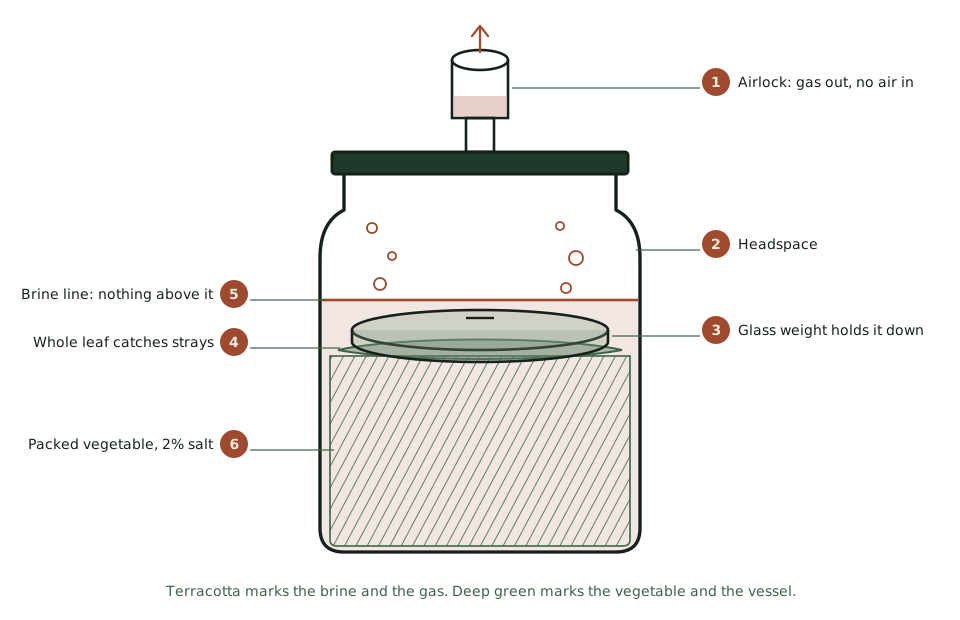
Keep everything under the brine. This is the same rule and the same reason. Vegetables exposed to air in the refrigerator will develop surface growth, just more slowly. Press the contents down every time you take some out, and keep a weight in the jar if it is a large one.
Use a clean utensil every time. This is the main way a good jar goes wrong in the second month. Crumbs, a used fork, or fingers introduce organisms the ferment then has to deal with. A dedicated fork kept for the purpose costs nothing.
Beyond those, storage is straightforward.
Containers
The fermenting jar itself is usually fine, once the airlock is swapped for a solid lid. Most airlock kits include a silicone stopper for exactly this, including waterless silicone airlock caps that need no topping up.
Decant into smaller jars if the batch is large. A litre jar opened daily ages faster than three smaller jars opened in sequence, for the same reason a large juice bottle ages faster than several small ones.
Leave the brine with the vegetable. Do not drain a ferment for storage. The brine is the protection.
Glass, always. Non reactive, non porous, and you can see the level.
Loose rather than rigid, for the first week in the cold. Ferments continue producing a little gas as they slow down, and a rigidly sealed jar taken straight from a vigorous counter ferment can build pressure even refrigerated. After a week or two, a solid lid is fine.
How long each kind keeps
Realistic figures for refrigerated storage.
Sauerkraut and firm vegetable ferments. Six months or more. Texture softens gradually and flavour deepens. Many people find these better at two months than at two weeks.
Kimchi. Indefinitely, in the sense that it does not spoil so much as change role. Fresh at two weeks, ripe at two months, and specifically desirable for cooked dishes when very old.
Brine pickles. Two to four months. Cucumbers are the shortest lived because texture declines faster than flavour.
Fermented hot sauce. Several months, and it continues developing. Blend and refrigerate rather than leaving it as whole chillies if you want it stable.
Yoghurt. One to two weeks. It sours and separates gradually.
Kefir. One to two weeks, and it continues fermenting more actively than yoghurt. Expect separation.
Kefir grains between batches. One to two weeks in fresh milk in the cold. Change the milk when you can. The milk ferment guide covers keeping them healthy.
Ferments do not have a moment of expiry. They have a window during which they are at their best, and a long tail during which they remain safe and progressively less appealing.
Reading a stored jar
The same signs apply as during fermentation, with a slower clock.
Normal. Continued slow souring. Brine staying cloudy. Occasional small bubbles. Colour continuing to dull. Softening over months.
Kahm yeast can still appear in storage if something rises above the brine. Skim, press down, continue.
Mould means discard, exactly as it does on the counter. Fuzzy and raised, rather than flat and skinnable.
A jar that has gone quiet and clear is usually just very cold and very slow. Not a problem.
The distinction between harmless film and mould does not change once the jar is cold, and the fermenting hub sets out why.
Freezing
Possible for all of these and rarely the right choice.
Vegetable ferments survive freezing with a substantial texture loss. Sauerkraut comes out soft. The flavour holds and the live cultures largely do not. Acceptable if you have far more than you can eat and no refrigerator space, and inferior to simply eating it.
Kimchi freezes better than most, since much of its use at that age is cooked anyway.
Hot sauce freezes well, and ice cube trays give convenient portions.
Yoghurt and kefir freeze poorly for eating and acceptably for preserving a culture. Frozen yoghurt as a starter will usually revive; frozen kefir grains often survive and sometimes do not.
The general principle: freezing preserves flavour and destroys texture and cultures. If those are why you ferment, freezing defeats the purpose.
Cellar and cold storage without a refrigerator
Worth knowing, because this is how the practice worked for most of its history.
A cool cellar at eight to twelve degrees slows fermentation considerably without stopping it, and traditional kraut and pickles were kept exactly this way through winter. Crocks in a cold room, checked periodically, with the contents kept under brine.
The requirements are a genuinely cool and stable temperature, a vessel that keeps air out, and regular checking. A garage that swings between two and twenty degrees is not suitable.
For most modern households a refrigerator is simpler and more reliable, and this matters mainly if you are fermenting at a scale that will not fit in one.
The brine is not waste
When a jar empties, the brine left behind is a useful ingredient rather than something to pour away.
As a starter. A splash into a new batch introduces an established population and shortens the lag before fermentation begins.
In dressings. Sour, salty, and complex. It replaces both the vinegar and part of the salt in a vinaigrette.
In cooking. A splash into a bean soup, a braise, or a potato salad.
As a marinade. The salt and acid together tenderise, and it works particularly well on chicken.
In drinks. The savoury cocktail use is well established.
Strain it before reuse to remove sediment and spices, so the next batch is seasoned deliberately rather than inheriting the last one.
Refrigerator space, the real constraint
Almost everyone who takes up fermenting hits the same wall, and it is not safety or technique. It is that a litre of sauerkraut takes up a litre of cold storage for several months.
Four jars is a shelf. That is a genuine household negotiation, and it is worth planning for before making six jars at once.
Decant to smaller jars once fermented. A large jar packed down loses a surprising amount of volume, and repacking into two smaller jars often frees space and gives you a sealed reserve and a working jar.
Press everything down hard. Air pockets waste space, and pressing down also serves the submersion rule.
Stagger production. Three jars finishing in March and three in May is easier to house than six in April.
Eat what you make. This sounds obvious and it is the actual answer. A jar consumed at a forkful a day empties in a month, and the pantry stays in balance.
Consider a cool room for the surplus. Ferments tolerate eight to twelve degrees well, so a genuinely cold garage or cellar in winter can hold the overflow.
Scaling ambition to storage is the single most useful planning habit in this hub. A very productive autumn that produces more kraut than will fit is a common and avoidable frustration.
RUN THE NUMBERS
Illustrative figures for refrigerated storage. Actual life depends on temperature and handling.
| Ferment | At its best | Still good | Note |
|---|---|---|---|
| Sauerkraut | 1 to 3 months | 6 months plus | Often improves in the cold |
| Kimchi | 2 weeks to 2 months | Indefinitely | Old kimchi is a cooking ingredient |
| Brine pickles | 1 to 2 months | 4 months | Texture declines first |
| Fermented hot sauce | 1 to 3 months | 6 months plus | Blend before storing |
| Yoghurt | 1 week | 2 weeks | Sours and separates |
| Kefir | 1 week | 2 weeks | Separates, shake it |
| Kefir grains | Fed daily | 2 weeks refrigerated | Change the milk |
A litre of sauerkraut occupies real refrigerator space for months, which is the practical constraint most people hit before any question of shelf life.
WHAT GOES WRONG
Surface growth in the refrigerator. Something rose above the brine. Press it down and keep a weight in large jars.
A jar that turned unpleasantly sour. Stored longer than you like. Not a fault, and old ferments have uses.
Contaminated at week three. A used utensil. Keep a clean fork for the purpose.
Pressure building in a sealed jar in the cold. Still active. Loosen the lid for the first week after refrigerating.
Texture gone soft over months. Normal and gradual. Firmer vegetables and higher salt slow it.
Drained the brine before storing. The brine is the protection. Keep it.
DO THIS NOW
- Refrigerate when it tastes right rather than on a schedule, and expect it to keep changing slowly.
- Keep everything under the brine in storage, pressing down every time you take some out.
- Keep one clean fork for ferment jars and use nothing else.
- Leave the lid slightly loose for the first week in the cold, since the jar is still producing gas.
Next
For the batch most likely to be sitting in your refrigerator, and the taste test that decides when to put it there, see sauerkraut from one cabbage.
Milk ferments keep for weeks rather than months and behave differently in storage. Yoghurt and kefir, which work differently covers both.