Guide
Sauerkraut From One Cabbage
Fifteen minutes of work, two percent salt, and three weeks of waiting produces a litre of the cheapest preserved food there is.
As an Amazon Associate this site earns from qualifying purchases. Links to products may be affiliate links. This costs you nothing extra and does not change what gets recommended. Nothing here is medical advice.
Sauerkraut is the batch to make first, and not only because it is traditional. It teaches every principle in this hub at once, it costs less than a coffee, and it is forgiving enough that a first attempt almost always works.
It is also the only method in the fermenting hub where the brine comes out of the vegetable rather than being added, which is a genuinely satisfying thing to watch happen.
What you need
One small white or green cabbage, around a kilogram. Salt. A one litre wide mouth jar. A weight, for which glass fermentation weights sized for wide mouth jars are made. Fifteen minutes.
That is the complete list. The equipment guide covers what to buy if you are starting from nothing, and a jar with a small water filled jar inside it as a weight will do the job today.
A kitchen scale matters more than any of the equipment, because the salt percentage is the method and volume measures for salt vary by nearly half depending on crystal size.
The method
Remove one outer leaf and set it aside. It becomes the cover that catches stray shreds later. Choose a large undamaged one.
Quarter the cabbage and cut out the core. The core is dense and ferments unevenly, so it is worth removing. It can be sliced thinly and included if you object to waste.
Shred. Thin shreds ferment faster, pack tighter, and release liquid more readily. A sharp knife is fine. A mandoline is faster and more uniform, and the guard is not optional.
Weigh the shredded cabbage. Put the bowl on the scale, tare it, and note the number. This single step is what makes the whole method reliable.
Calculate the salt: weight times 0.02. Nine hundred grams of cabbage takes eighteen grams. Scatter it over the cabbage rather than tipping it into one spot.
Squeeze for five minutes. This is the part that surprises people. Massage the salted cabbage firmly with both hands. For the first two minutes nothing much happens. Then it softens, then it starts to weep, and by minute five there is a visible pool of liquid in the bottom of the bowl.
That liquid is the brine. Salt has drawn it out of the cabbage through osmosis, and it is the reason sauerkraut needs no added water.
Add aromatics now, if using. Caraway seed is traditional. Juniper berries, dill seed, black pepper, or a little grated garlic all work. Keep quantities modest.
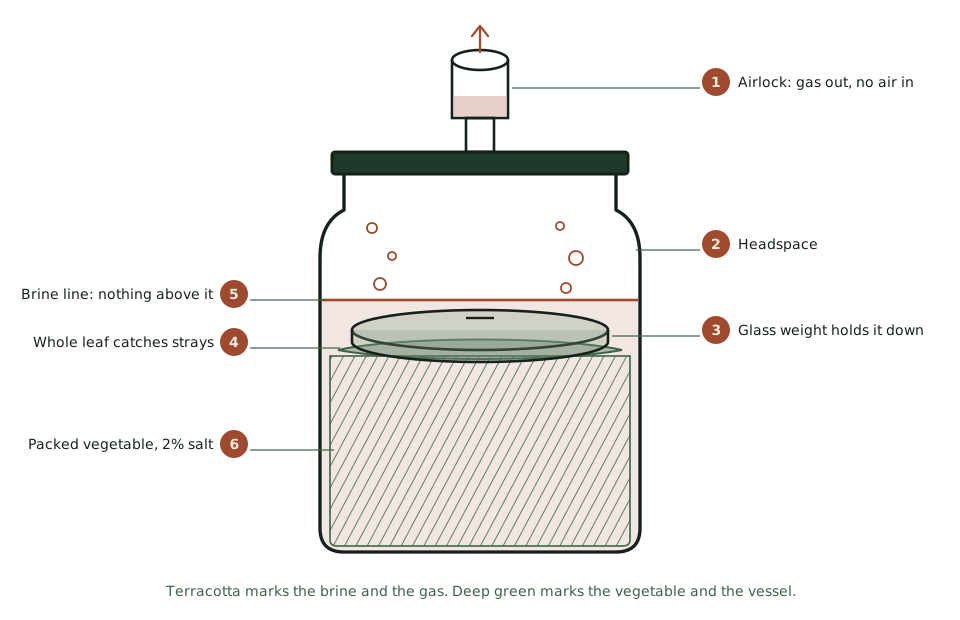
Pack the jar, pressing firmly. A handful at a time, pushed down hard with a fist or the end of a wooden spoon. Compressing it forces the brine up. Keep going until the jar is full to about three centimetres below the rim.
Pour in every drop of liquid from the bowl.
Fold the reserved leaf over the surface and tuck the edges down the sides.
Add the weight and press. Brine should rise to cover it. If it does not, wait ten minutes and press again, since the cabbage continues to release liquid.
Fit the lid or airlock, and stand it on a tray.
The first week
Knowing what to expect removes almost all the anxiety of a first batch.
Day one. Nothing visible. Brine may look slightly cloudy at the base.
Day two to three. Small bubbles cling to the glass and begin rising. The brine level rises and often overflows, which is why the tray is there. This is peak activity.
Day four to five. Bubbling slows. The colour dulls from bright to a soft cream. The smell turns distinctly sour rather than cabbagey.
Day six or seven. Taste it with a clean fork. It is recognisably sauerkraut: mild, still crunchy, pleasantly sour. Some people stop here.
Week two. Sourness deepens. Texture softens slightly. Bubbling nearly stops.
Week three to four. The flavour rounds and becomes more complex, less sharply acidic and more savoury. This is where most people find their preference.
Push everything back under the brine each time you open it, and use a clean utensil.
Getting the texture right
Crunch is the main quality difference between a good kraut and a disappointing one, and three things control it.
Salt percentage. Higher salt gives a firmer result. If your kraut comes out soft, try 2.5 percent next time rather than changing anything else.
Temperature. Cooler is crunchier. A ferment at eighteen degrees holds its texture better than one at twenty five. If your kitchen runs warm, a cooler cupboard is the free fix.
Cabbage choice. Dense, heavy, tight heads give better texture than loose light ones. Late season cabbage is usually firmer than early. Pick up two of similar size and take the heavier.
Shred thickness matters less than people expect. Thicker shreds stay marginally crunchier and take longer.
Variations
Once the base method is familiar, the variations are where it becomes interesting.
Caraway kraut. A teaspoon of caraway seed per cabbage. The classic and still the best.
Red cabbage. Same method, dramatic colour, slightly sweeter. The brine turns deep magenta.
Curtido style. Cabbage with carrot, onion, and oregano. Lighter and good with rich food.
Kraut with apple. A grated apple adds sweetness that ferments out into complexity. Use one apple per cabbage at most.
Ginger and turmeric. Grated fresh, a thumb of each. Colours the jar and adds warmth.
Beetroot and cabbage. Roughly one part beetroot to three parts cabbage, both shredded. Earthy and striking.
Keep the salt calculation on the total weight of everything, not just the cabbage.
When it is ready
There is no fixed end point. Sauerkraut is ready when it tastes right to you, and the useful practice is to taste from day five onward.
Signs it has finished its active phase: bubbling has stopped, the colour has fully dulled, the smell is clean and sour rather than sharp, and the flavour has stopped changing much between tastings.
If you want it sourer, leave it longer at room temperature. If it is where you want it, refrigerate.
A batch left too long does not become unsafe. It becomes very sour and eventually soft. That is a preference issue rather than a problem.
Storage
Refrigerate once it tastes right. Cold slows fermentation to a crawl rather than stopping it, so the flavour holds roughly where you left it and drifts slowly sourer over months.
Keep everything submerged in storage too. Press the kraut down under its brine before it goes in the refrigerator, and again whenever you take some out.
Several months is realistic, and many batches improve over the first few weeks in the cold.
Do not discard the brine when the jar empties. It goes into dressings, it seasons soup, and a splash of it into your next batch introduces an established population and speeds the start.
Why the squeeze matters
The five minutes of massaging is the step most often shortened, and understanding what it does makes it easier to commit to.
Salt draws water out of plant cells through osmosis. The salt concentration outside the cell is higher than inside, so water moves outward to equalise. That water is the brine, and there is no other source of it in this method.
Squeezing accelerates that process mechanically by rupturing cell walls, which is why massaged cabbage releases liquid in five minutes rather than the hour it would take standing still. The physical damage also softens the shreds enough to pack tightly, which excludes air.
Two practical consequences. Cabbage that has been squeezed properly reduces in volume noticeably, often by a third, which is how a whole cabbage fits into a one litre jar. And a batch that produced very little liquid was almost certainly under-squeezed rather than short of salt.
If your hands tire, an alternative is to salt the cabbage, leave it for thirty minutes, and then squeeze for two minutes. The resting period does part of the work for you.
Older cabbage releases less liquid than fresh, so a head that has been in the refrigerator for a fortnight may genuinely need a brine top up regardless of technique.
RUN THE NUMBERS
Illustrative figures. Timing varies considerably with temperature.
| Detail | |
|---|---|
| Cabbage | 1 small head, about 900 g shredded |
| Salt | 18 g at 2 percent, weighed not measured |
| Working time | About 15 minutes |
| Vessel | 1 litre wide mouth jar |
| Temperature | 18 to 22 C |
| First bubbles | Day 2 to 3 |
| First taste | Day 5 to 7 |
| Ready | 2 weeks, better at 3 to 4 |
| Yield | About 1 litre |
| Keeps refrigerated | Several months |
The consumable cost is one cabbage and eighteen grams of salt. Compared against retail live sauerkraut, which is priced as a speciality item, a single batch covers the cost of a weight and an airlock several times over.
WHAT GOES WRONG
Not enough brine to cover. The cabbage did not release enough, usually because it was not squeezed hard enough or the head was old and dry. Top up with a two percent brine, meaning twenty grams of salt per litre of water, rather than plain water.
Fuzzy mould on the surface. Something was above the brine. Discard and use a weight plus a leaf cover next time. The troubleshooting guide covers telling mould from harmless surface yeast.
Soft, limp kraut. Too warm, too little salt, or a loose headed cabbage. Try 2.5 percent salt and a cooler spot.
No bubbles by day four. Too cold, or too much salt. Move it somewhere warmer and be patient rather than intervening.
Overwhelmingly salty. Salt measured by volume rather than weighed.
Slimy texture early on. Sometimes a transient stage in the first week that resolves as acidity develops. If it persists past ten days, or smells wrong, discard.
DO THIS NOW
- Buy one small dense cabbage, choosing the heavier of two similar sized heads.
- Reserve an outer leaf, shred the rest, and weigh it before adding anything.
- Add exactly two percent of that weight in salt and squeeze hard for a full five minutes.
- Pack, weight, cover, and leave it on a tray at room temperature. Taste on day six.
Next
If you are improvising a weight or wondering which airlock to buy, fermenting equipment and what you can skip sorts the useful from the unnecessary.
Every question about surface film, cloudy brine, and smells that seem wrong is answered in reading a fermenting jar.