Guide
Reading a Fermenting Jar
Which films, smells, and cloudiness are normal, which mean discard, and how to tell the difference with confidence.
As an Amazon Associate this site earns from qualifying purchases. Links to products may be affiliate links. This costs you nothing extra and does not change what gets recommended. Nothing here is medical advice.
Almost everyone who starts fermenting reaches day four, sees something on the surface, and cannot find a straight answer about whether to throw it away.
That uncertainty is the main reason people stop. This page exists to remove it, and the good news is that the distinctions are visual and reliable rather than subtle. The fermenting hub covers why the method protects itself as it goes.
The one distinction that matters
Flat film: harmless. Fuzzy growth: discard.
Everything else is detail. If you remember one thing from this page, remember that a wrinkled, flat, white skin lying on the surface is a yeast and can be skimmed, while anything raised, textured, or coloured is mould and means the jar goes in the bin.
Look at it from the side through the glass rather than from above. A film sits flat on the liquid. Mould has height.
Kahm yeast
This is the flat white film, and it is the single most common cause of unnecessary discarding.
What it looks like. A thin white or cream skin across the surface, often wrinkled or with a crazed pattern like a dry lakebed. Sometimes patchy rather than continuous. It does not stand proud of the liquid.
What it is. A group of wild yeasts that tolerate acid and need oxygen. They are not harmful.
What it means. Your surface has oxygen contact, which usually means the weight is not holding everything down, the brine level has dropped, or the ferment is in a warm spot.
What to do. Skim it off with a spoon, taking as little brine as possible. Check the weight is submerged. Continue.
Does it affect flavour? Left for a long time, yes. It can add a slightly musty or yeasty note. Skimmed promptly, it makes no difference.
Kahm yeast is a nuisance rather than a failure, and a well weighted jar rarely develops it.
Mould
What it looks like. Raised, fuzzy, or velvety. Grows in discrete circular colonies rather than as a continuous skin. Coloured: blue, green, black, grey, or pink. Sometimes starts white and develops colour and texture within a day.
What to do. Discard the whole jar.
There is a widely repeated claim that you can scoop mould off and continue. Filaments extend below what is visible, and the safe assumption for a home cook is that a moulded ferment is finished. A cabbage costs very little and this is not the place to economise.
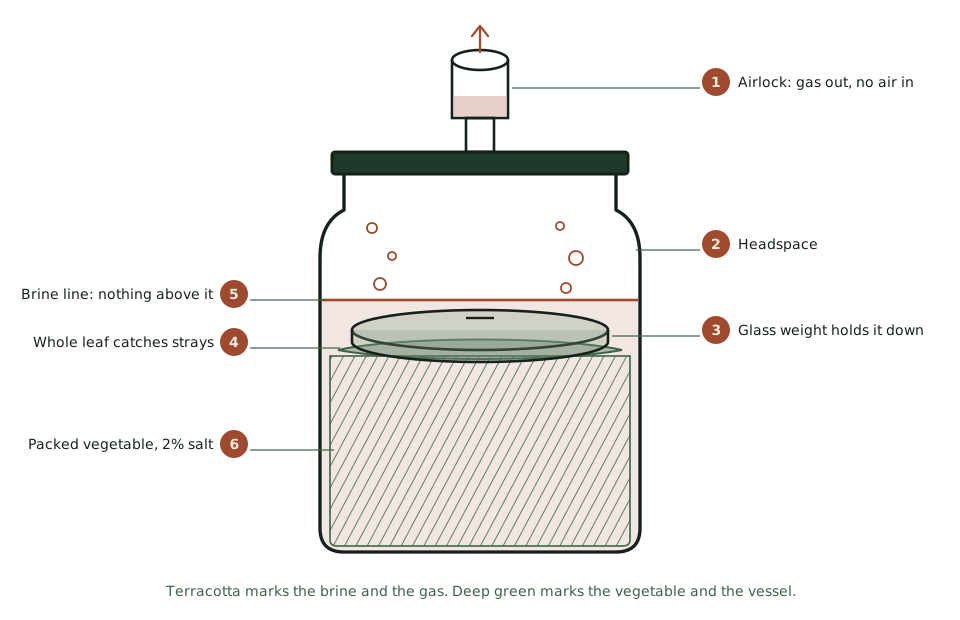
Why it happened. Something was above the brine. In almost every case it is that simple. A stray shred floating on the surface, a weight that rose as the vegetable settled, or a brine level that dropped.
How to prevent it. Weight everything with glass fermentation weights sized for wide mouth jars, cover the surface with a whole leaf, check on day two when settling occurs, and top up with a two percent brine if the level falls.
The normal signs
Everything in this list is expected and means the ferment is working.
Bubbles, especially days two to seven. Clinging to the glass, rising through the brine, or fizzing when you open the lid.
Cloudy brine. Bacterial population plus released starches. Clear brine early on often means nothing is happening yet.
Overflow. The jar will push brine out in the first days. This is why the tray exists.
A sour smell. It should smell tangy and clean, like a pickle. Early on it may smell strongly of the vegetable, which fades.
Colour dulling. Bright green cabbage turns cream. Red cabbage turns magenta. Radish loses its intensity. All normal.
A white sediment at the bottom. Yeast and bacteria settling out. Harmless.
Softening. Vegetables soften as they ferment. Significant sliminess is different, and covered below.
When to discard
Six signals, any one of which means the jar goes.
Fuzzy or coloured mould, as above.
A putrid, rotten, or faecal smell. Ferments smell sour. They never smell rotten. Trust this immediately.
A strongly yeasty, beery, or solvent smell. Suggests the wrong organisms took hold.
Slimy or ropy brine that strings when poured, persisting past the first ten days. Brief sliminess in the first week sometimes occurs and resolves; persistent stringiness does not.
Any pink or orange coloration through the vegetable rather than just on the surface, unless you fermented something naturally that colour.
Anything that makes you hesitate. This sounds unscientific and is the right instinct. The cost of discarding is one vegetable.
Problems that are not spoilage
No bubbles after four days. Too cold, or too much salt. Move it somewhere warmer, around twenty degrees, and wait. Cold ferments can take a week to show signs.
Very slow, or seems stalled. Same causes. Patience rather than intervention.
Too salty. Measured by volume rather than weighed. It is edible and it will ferment slowly. Rinse before serving and weigh next time. The equipment guide makes the case for a scale over any fermenting accessory.
Not salty enough, ferments too fast, goes soft. Below about 1.5 percent the balance tips toward soft textures and off flavours. Correct on the next batch.
Mushy texture. Too warm, too little salt, or a vegetable that never had the structure. Cucumbers are the usual culprit and are covered in the brine pickles guide.
Brine level dropped. Evaporation or absorption. Top up with a two percent brine, not plain water, which would dilute the salt.
Hollow or bloated pieces. Common with cucumbers, caused by gas trapped inside. Cosmetic.
Too sour. Fermented longer than you like. Refrigerate earlier next time. Not a fault.
Smell as the main instrument
Your nose is the most reliable tool here, and it is worth trusting.
A healthy vegetable ferment smells sour, clean, and appetising. Increasingly so as it develops. If you would happily eat something that smelled like this, it is fine.
A spoiled one smells wrong in a way that requires no expertise to identify. Rotten, putrid, or chemically off. Humans are well equipped to detect this and the reaction is usually immediate.
The middle ground barely exists. People who describe a ferment as smelling slightly odd are almost always describing a normal early stage smell of the vegetable itself, which fades by the end of the first week.
Smell it at the same time each day for the first week and you will learn the arc quickly.
Tasting safely
Taste from day five onward with a clean utensil, never a used one and never your fingers.
Take a small amount. If it tastes sour and pleasant, it is working. If it tastes actively unpleasant in a way that is not simply too salty or not sour enough, stop.
Push everything back under the brine afterward, and re-weight.
Do not taste a jar showing any of the discard signals above. The visual and olfactory checks come first.
The first batch, and what usually happens
Most anxiety about fermenting comes from a first batch, so it is worth setting expectations honestly.
The overwhelming majority of first batches work. The method is thousands of years old and it was developed by people without thermometers, scales, or airlocks, which tells you how tolerant it is.
What usually happens is that nothing dramatic occurs for two days, the jar starts bubbling on day three, brine goes over the side of the jar on day four, and by day six it tastes like a slightly mild version of the thing you were trying to make.
What sometimes happens is a white film appears around day five, particularly if the weight has risen or the kitchen is warm. That is kahm yeast and it is not a failure.
What rarely happens is mould, and when it does there is nearly always a visible cause: a shred floating on the surface, or a weight that came loose.
The single most useful habit for a first batch is to look at it once a day at the same time. You learn the normal arc quickly, and after two batches the entire contents of this page become obvious rather than something you need to consult.
Keep the first batch small. One cabbage in one jar. If it goes wrong you have lost very little, and if it goes right you have learned everything.
RUN THE NUMBERS
A quick reference for the first fortnight.
| Observation | Meaning | Action |
|---|---|---|
| Bubbles, days 2 to 7 | Normal, active | Nothing |
| Cloudy brine | Normal | Nothing |
| Brine overflowing | Normal | Keep the tray |
| Flat white wrinkled film | Kahm yeast | Skim, check weight |
| Fuzzy coloured spots | Mould | Discard |
| Sour smell | Normal | Nothing |
| Rotten or yeasty smell | Spoiled | Discard |
| Sediment at the bottom | Normal | Nothing |
| Brine level dropped | Evaporation | Top up with 2 percent brine |
| No bubbles by day 4 | Cold or salty | Move somewhere warmer |
| Ropy brine past day 10 | Wrong organisms | Discard |
| Softening | Normal | Cooler, more salt next time |
Roughly one batch in ten develops kahm yeast in a well weighted jar, and far fewer develop mould. Most reported failures are misidentified kahm yeast.
WHAT GOES WRONG
Discarding a perfectly good jar. By far the most common error in fermenting. Flat film is yeast.
Keeping a moulded jar. The opposite error, and the one that matters. Fuzzy and coloured means discard.
Opening the jar constantly. Every opening introduces air. Check once a day at most.
Topping up with plain water. Dilutes the salt and the acidity. Always use a two percent brine.
Tasting with a used fork. The main way a good jar is contaminated in the second week.
Waiting for certainty. There is no test that removes all doubt at home. Use the film-versus-fuzz rule, use your nose, and discard when in doubt.
DO THIS NOW
- Look at your jar from the side rather than from above. Flat means yeast, raised means mould.
- Skim any flat film and check that the weight is holding everything under the brine.
- Smell it. Sour and clean is right, rotten or yeasty is not.
- If the brine level has fallen, top up with a two percent brine rather than water.
Next
Nearly every problem on this page traces back to submersion, and the weight is what solves it. Fermenting equipment and what you can skip covers what is worth buying.
Cucumbers produce more soft and hollow results than anything else, and the fixes are specific. Brine pickles that stay crunchy covers them.