Guide
Brine Pickles That Stay Crunchy
Whole vegetables need a brine rather than dry salting, and cucumbers need three specific things to avoid going soft.
As an Amazon Associate this site earns from qualifying purchases. Links to products may be affiliate links. This costs you nothing extra and does not change what gets recommended. Nothing here is medical advice.
Sauerkraut makes its own brine because shredding and salting draws liquid out of the cabbage. Whole or chunked vegetables will not do that, so they need a brine poured over them instead.
That is the only structural difference between the two methods, and everything else in this hub applies unchanged. What does change is the failure mode, because cucumbers in particular go soft in a way cabbage never does.
These are not vinegar pickles
Worth clearing up, since the word covers two entirely different things.
Vinegar pickles are preserved by adding acetic acid. They are quick, they are shelf stable, and no fermentation occurs. Most supermarket pickles are this.
Brine pickles are fermented. Salt water selects for lactic acid bacteria, which produce lactic acid, which preserves the vegetable. They take one to two weeks, they contain live cultures, and they taste completely different: rounder and more complex than the sharp bite of vinegar.
If you have only eaten vinegar pickles, a fermented one is a surprise. The fermenting hub covers why the acid the vegetable produces itself is what makes the method safe.
Brine strength
Two to three percent salt by weight of water.
Twenty grams of salt per litre gives a two percent brine. Thirty grams per litre gives three percent.
Two percent for most vegetables. Faster, milder, and slightly softer.
Three percent for cucumbers and anything you want to stay firm. Higher salt slows fermentation and preserves texture, which is exactly the trade cucumbers need.
Dissolve the salt in a little warm water first, then top up with cold. Pouring warm brine over vegetables softens them, so let it come back to room temperature before using it.
Make more brine than you think you need. Vegetables absorb it and the level drops over the first days.
Weigh the salt. This matters as much here as anywhere in the hub.
Cucumbers, and the three things that keep them crunchy
Soft pickles are the defining failure of this category, and three specific interventions prevent it.
Remove the blossom end. This is the most important and the least known. The blossom end of a cucumber, opposite the stem, contains enzymes that break down pectin and turn a pickle to mush. Cut three to five millimetres off that end. If you cannot tell which end is which, trim both.
Add a tannin source. Tannins inhibit those same softening enzymes. A grape leaf, oak leaf, blackcurrant leaf, horseradish leaf, or simply a black tea bag in the jar all work. One per jar is enough. This is traditional practice with a real mechanism behind it.
Use them fresh and cold. Cucumbers begin softening from the moment they are picked. Pickle them the same day if you can, and keep them refrigerated until you do. A cucumber that has been in a warm shop for four days will never make a crunchy pickle.
Two supporting measures. Use pickling varieties rather than long salad cucumbers, since they have denser flesh and thinner skins. And ferment somewhere cool, since warmth accelerates softening more than it accelerates the ferment.
What works well in brine
Excellent. Carrot sticks, cauliflower florets, green beans, radishes, turnip, whole garlic cloves, peppers, and asparagus. All hold their texture and take the sourness well.
Very good with the cucumber measures above. Cucumbers, either whole small ones or spears.
Good. Beetroot, though it colours everything in the jar. Onions and shallots, whole or halved.
Difficult. Courgettes and summer squash, which go soft almost regardless of technique. Mushrooms, which turn slippery.
Avoid. Anything already soft, and leafy greens other than cabbage.
Cut to a uniform size so everything ferments at the same rate, and cut large pieces rather than small, since surface area accelerates softening.
Building the jar
Pack tightly. Vegetables float, and a tightly packed jar has less tendency to rise. Fit them in vertically where the shape allows, which both packs more densely and looks better.
Aromatics at the bottom and top. Garlic, dill heads, mustard seed, black peppercorns, coriander seed, chilli, and bay all work. Dill and garlic is the classic combination for cucumbers.
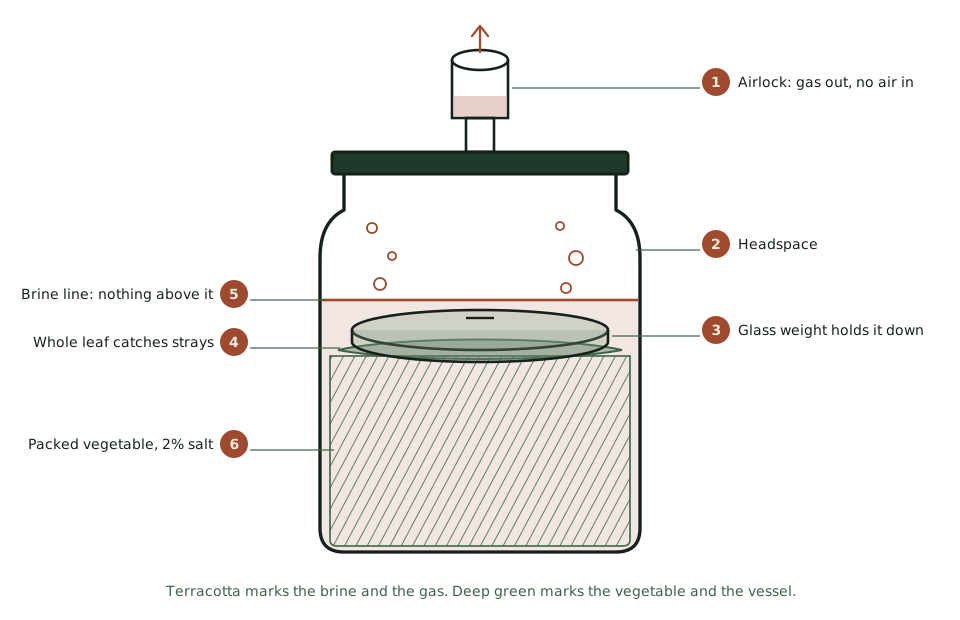
Leave headspace. Three centimetres below the rim. Brine pickles bubble vigorously and will overflow.
Pour the brine to cover completely, then weight.
Weighting matters more than with kraut. Whole vegetables are buoyant and float persistently. glass fermentation weights sized for wide mouth jars are close to essential here, and a folded cabbage leaf or grape leaf over the top helps hold small items down.
Fit an airlock or plan to burp daily.
Timing
Faster than sauerkraut, because the pieces are larger and the brine is already liquid.
Radishes are ready in five to ten days and are the fastest thing in this category.
Carrots, cauliflower, and beans take one to two weeks.
Cucumbers take one to two weeks and are best watched closely, since the window between properly sour and going soft is narrower than for other vegetables.
Whole garlic takes three to four weeks and mellows enormously, losing its harshness entirely.
Taste from day four with a clean utensil. Refrigerate when it is where you want it.
Cucumbers in particular should not be left to run long. Once they taste right, get them cold.
Reading the jar
Brine pickles show the same signs as any vegetable ferment, with two specific to this method.
Hollow or bloated cucumbers. Gas trapped inside during fermentation. Cosmetic and harmless, more common with large cucumbers and warm conditions.
Brine turning thick or slightly viscous early on. Sometimes occurs in the first week and usually resolves. If it persists past ten days or the brine strings when poured, discard.
Everything else follows the standard signs, and reading a fermenting jar covers the film versus fuzz distinction that decides most questions.
The one that catches people out here: cucumbers naturally develop a white sediment and a cloudy brine much faster than cabbage does. Both are normal.
Storage
Refrigerate once they taste right. Cold slows fermentation and, importantly for cucumbers, slows the softening too.
Keep everything under the brine in storage. Whole vegetables float persistently, so a weight in the storage jar is worth keeping.
Realistic life: several months refrigerated, though texture declines before flavour does. Cucumbers are the shortest lived and are best eaten within a couple of months.
The brine is genuinely valuable. Pickle brine is excellent in a dressing, in a potato salad, as a marinade for chicken, and as a starter for the next batch.
Reusing brine, and second batches
Pickle brine is worth keeping, and a finished jar leaves you with most of a litre of it.
As a starter. A splash of live brine into a new jar introduces an established bacterial population and starts the ferment noticeably faster. Perhaps a quarter cup per litre jar. This is the traditional way of speeding a batch and it works well.
A full second batch in the same brine is possible and gives declining results. The salt has been partly absorbed by the first batch and the acidity is already high, so the second batch ferments quickly and often ends up soft. Fine for a quick refrigerator pickle, poor for anything you want to keep.
In cooking. Pickle brine is genuinely useful. It goes into potato salad, coleslaw dressing, and vinaigrettes. It makes an excellent marinade for chicken, since the salt and acid both tenderise. A splash lifts a bean soup.
In drinks. The savoury cocktail use is well established, and a chilled glass of pickle brine is a traditional recovery drink in several countries.
Do not reuse brine from a jar that showed any problem. If you skimmed kahm yeast repeatedly or the batch was borderline, start fresh. Brine is cheap.
Strain reused brine through a fine sieve to remove sediment and spices, which lets you season the new batch deliberately rather than inheriting the last one.
RUN THE NUMBERS
Illustrative figures. Times vary with temperature and vegetable size.
| Vegetable | Brine | Prep | Typical time |
|---|---|---|---|
| Cucumber | 3 percent | Trim blossom end, add tannin | 1 to 2 weeks |
| Carrot sticks | 2.5 percent | Cut to uniform sticks | 1 to 2 weeks |
| Cauliflower | 2.5 percent | Small florets | 1 to 2 weeks |
| Green beans | 3 percent | Whole, trimmed | 1 to 2 weeks |
| Radish | 2 percent | Whole or halved | 5 to 10 days |
| Garlic cloves | 2.5 percent | Peeled, whole | 3 to 4 weeks |
| Peppers | 2.5 percent | Whole or sliced | 1 to 2 weeks |
A litre jar takes roughly seven hundred grams of vegetables and five hundred millilitres of brine, which is ten to fifteen grams of salt. The consumable cost is essentially the vegetable.
WHAT GOES WRONG
Soft, mushy cucumbers. Blossom end left on, no tannin source, cucumbers not fresh, or fermented too warm. All four are fixable and the blossom end is the biggest single factor.
Vegetables floating above the brine. Pack tighter and use a heavier weight. Whole vegetables are far more buoyant than shredded ones.
Brine level dropped below the vegetables. Absorption. Top up with fresh brine at the same percentage, never plain water.
Hollow cucumbers. Trapped gas. Cosmetic.
Too salty. Brine mixed by volume rather than weight, or left too long in a strong brine.
Bland and barely sour. Refrigerated too early. Give the next batch more days at room temperature.
Garlic turning blue or green. A harmless reaction between compounds in garlic and trace minerals, more common with young garlic. Perfectly safe and startling the first time.
DO THIS NOW
- Trim three to five millimetres off the blossom end of every cucumber, which is the end opposite the stem.
- Mix a three percent brine: thirty grams of salt per litre of water, weighed, dissolved warm and cooled.
- Pack the jar tightly with a grape leaf or a black tea bag included, add garlic and dill, and pour brine to cover.
- Weight everything down firmly, since whole vegetables float far more than shredded ones, and taste from day four.
Next
For the dry salted method where the vegetable makes its own brine, and the fifteen minute batch that teaches everything, see sauerkraut from one cabbage.
Cloudy brine and surface film show up faster with cucumbers than with anything else. Reading a fermenting jar covers what each sign means.