Guide
The First Loaf From Fresh Flour
Five hundred grams of grain, one loaf you have made before, and one variable changed. That comparison answers the question better than any argument.
As an Amazon Associate this site earns from qualifying purchases. Links to products may be affiliate links. This costs you nothing extra and does not change what gets recommended. Nothing here is medical advice.
The most useful thing to do with a new mill is a controlled comparison, and almost nobody does it.
Make a loaf you have made before, from grain you milled that morning, and make the same loaf the following week from a bag. One variable changed, everything else held. That comparison tells you what fresh flour actually gives you, in your kitchen, with your hands.
This page walks through that bake and the adjustments fresh flour needs, because a recipe transferred unchanged will disappoint you and it will not be the flour's fault. The milling hub covers why the grain keeps and the flour does not.
The five hundred gram bake
Mill five hundred grams of hard red or hard white wheat berries, fine setting. organic hard red spring wheat berries in bulk in bulk is the sensible way to buy them. This yields close to five hundred grams of flour, since milling loses very little.
Let the flour cool if it came off an impact mill warm. Twenty minutes on the counter.
Weigh out four hundred grams for the loaf and set the rest aside.
Add three hundred and forty grams of water, which is eighty five percent hydration and higher than most recipes specify. Fresh whole flour takes more, and this is the single most common adjustment.
Autolyse. Mix flour and water only, no salt and no leaven, and rest for forty five minutes. This lets the bran hydrate fully before gluten development begins.
Add eight grams of salt and your leaven, whether that is yeast or a sourdough starter.
Develop, ferment, shape, and bake exactly as you normally would, watching the dough rather than the clock.
That is the bake. Everything below explains why each step differs from a shop flour recipe.
Why you need more water
Fresh whole flour absorbs more than white flour and more than most bagged wholemeal, for two reasons.
Bran is thirsty. Whole flour contains all the bran, and bran absorbs a great deal of water. Bagged wholemeal has usually been sitting long enough to reach equilibrium with the air; fresh flour has not.
Absorption continues. Bran keeps taking up water for the first half hour or more. A dough that feels correctly hydrated at mixing will feel noticeably stiffer twenty minutes later, which catches people out repeatedly.
The practical answer is to err wet. Add five to ten percent more water than the recipe states, then assess after the autolyse rather than at the mixer. A dough that seems slightly too slack at mixing is usually right; a dough that seems right at mixing is usually dry.
Add water gradually and hold some back. It is easy to add and impossible to remove.
Why the autolyse matters more here
An autolyse is a rest of flour and water alone before salt and leaven are added. It is a good idea with any flour and closer to essential with fresh whole flour.
Three things happen during it. Bran hydrates fully, which is the main reason. Gluten begins forming without mechanical work. And enzymes begin breaking starch into sugars the yeast will use.
Forty five minutes to an hour is a reasonable range. Longer is possible and with very active fresh flour can go too far, leaving a slack dough.
The difference is easy to feel. Dough that has autolysed is smoother, more extensible, and considerably easier to handle than the same dough mixed all at once.
Why the ferment moves faster
Freshly milled flour is enzymatically lively in a way bagged flour is not.
The germ carries enzymes, and milling breaks it open. Those enzymes go to work immediately, converting starch to sugar. More available sugar means faster yeast activity, which means a dough that rises quicker than the recipe predicts.
Two consequences. Judge by the dough rather than by the clock, since a recipe's timings were written for a less active flour. And expect a slacker, stickier dough as fermentation progresses, because enzyme activity also degrades gluten over time.
If your dough consistently overproves or goes slack, two fixes work. Shorten the bulk ferment. Or rest the flour for a day or two after milling before using it, which allows some of the initial enzymatic burst to settle and improves handling noticeably.
That second option surprises people who assume fresher is always better. For bread specifically, flour rested a day often handles better than flour milled an hour ago, and both taste far better than a bag.
What to expect from the loaf
Being specific, so the comparison is fair.
Flavour will be clearly better. Sweeter, nuttier, more complex. This is the least arguable difference and it will be obvious side by side.
The crumb will be denser than a white loaf. Fresh milling does not stop bran from interfering with gluten. A hundred percent wholemeal loaf is a dense loaf whatever flour you use, and sifting is the answer if you want it lighter.
Colour will be a warmer brown than bagged wholemeal, which often looks greyer.
Keeping quality will be shorter. Fresh whole flour loaves stale a little faster.
Results will vary between bakes. Grain varies by variety, harvest, and moisture. This is a feature for anyone who enjoys the craft and a nuisance for anyone who wants consistency.
Expect the first three or four bakes with a new grain to be calibration rather than results. That is normal and it is why the comparison loaf matters.
Grain choice for a first bake
Hard red wheat is the bread default: high protein, strong gluten, assertive flavour.
Hard white wheat is the same protein range with a milder flavour and lighter colour, and it is usually the easier introduction for anyone accustomed to shop white bread.
Do not start with spelt, einkorn, or rye. All three have fragile or absent gluten and behave nothing like modern bread wheat. They are worth exploring and they are a poor first comparison, because you will not know whether the difference came from the freshness or the grain.
The grains guide covers the full range once the baseline is established.
If you do not bake bread
The comparison works with something simpler, and for many households it is the better first test.
Pancakes. Mill wheat, make pancakes that morning, and make the same batter from a bag next week. Gluten development is irrelevant here, which strips the comparison down to flavour alone, and flavour is the least arguable thing about fresh flour.
Flatbreads. Chapati or tortilla, mixed and cooked within the hour. No proving, no shaping, and a very direct taste of the grain.
Muffins or scones. Chemically leavened and tolerant of variable flour.
Porridge from cracked grain. Any burr mill on a coarse setting, cooked in ten minutes.
Any of these answers the question that matters without requiring you to already be a bread baker. If the pancake is clearly better, the mill has earned its place and bread can wait.
Bread is where fresh flour is most rewarding and most technically demanding at the same time. Starting there when you have not baked before conflates two learning curves, and a disappointing first loaf gets blamed on the flour when the technique was the variable.
Common first attempt problems
The dough was stiff and dry. Not enough water. Add ten percent more next time.
The dough was slack and sticky and would not hold shape. Either too much water for that grain, or enzyme activity ran ahead. Try resting the flour a day before using it.
It overproved. Fresh flour ferments faster. Watch the dough.
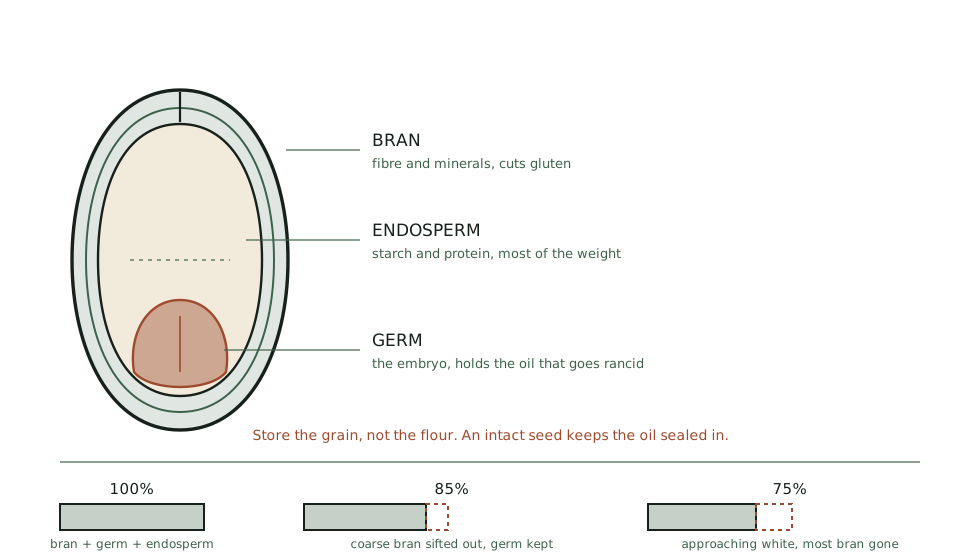
The loaf was very dense. Full wholemeal is dense. Sift to eighty five percent extraction and try again.
The crust was pale. Sometimes a sign of a long ferment that consumed the available sugars. Shorten it.
It tasted better but looked worse. Extremely common on a first attempt, and the right trade to be making at this stage. Shape and structure improve with calibration; flavour was there from the first loaf.
Beyond the first loaf
Once the comparison is done, a few habits turn milling from a novelty into a routine.
Mill the morning you bake. The flavour advantage is largest in the first hours and this is the whole point of owning the machine.
Mill only what the bake needs. Batching a large quantity puts you back in the position of storing flour, which is the problem milling was meant to solve.
Keep notes for the first month. Grain variety, extraction rate, hydration, and how the dough behaved. Fresh flour varies more than bagged, and three or four recorded bakes get you to a reliable formula far faster than memory does.
Change one thing at a time. Switching grain and hydration and extraction together tells you nothing about which change mattered.
Expect seasonal drift. A new sack of grain from a different harvest will behave slightly differently. This is normal and it is why judging the dough beats following the clock.
Let the flour rest when the dough misbehaves. A day or two between milling and mixing settles the initial enzyme burst and is the standard fix for doughs that go slack.
None of this is complicated. It is the difference between a mill that gets used weekly and one that produced two interesting loaves and then stopped.
RUN THE NUMBERS
Illustrative figures for the comparison bake.
| Fresh flour loaf | Same recipe, shop flour | |
|---|---|---|
| Flour | 400 g, milled that morning | 400 g wholemeal |
| Water | 340 g, about 85 percent | 300 g, about 75 percent |
| Salt | 8 g | 8 g |
| Autolyse | 45 minutes | Optional |
| Bulk ferment | Shorter, watch the dough | As written |
| Expected flavour | Sweeter, nuttier | Flatter |
| Expected crumb | Dense | Dense |
| Milling time | 2 to 4 minutes electric | None |
Five hundred grams of berries costs a fraction of a bag of decent wholemeal when bought in bulk, so the comparison is cheap to run and worth running twice.
DO THIS NOW
- Mill five hundred grams of hard red or hard white wheat and let the flour cool completely.
- Use four hundred grams with three hundred and forty grams of water, which is more than your recipe says.
- Autolyse for forty five minutes before adding salt and leaven.
- Bake the same recipe with shop flour the following week and taste them within an hour of each other.
Next
If you have not chosen a mill yet, or your flour is coming out warm or coarse, impact, stone, or burr covers the three mechanisms and which suits which baker.
If the loaf came out denser than you wanted, that is bran doing what bran does. Sifting and extraction rate covers how to lighten it without buying white flour.