Guide
Sifting and Extraction Rate
One sieve turns dense wholemeal into a loaf people actually want to eat, and eighty five percent is the number most home bakers should know.
As an Amazon Associate this site earns from qualifying purchases. Links to products may be affiliate links. This costs you nothing extra and does not change what gets recommended. Nothing here is medical advice.
The most common disappointment with home milled flour is a loaf that tastes wonderful and comes out like a brick.
That is not a milling problem or a technique problem. It is bran doing exactly what bran does, and the fix is a sieve and about a minute of work.
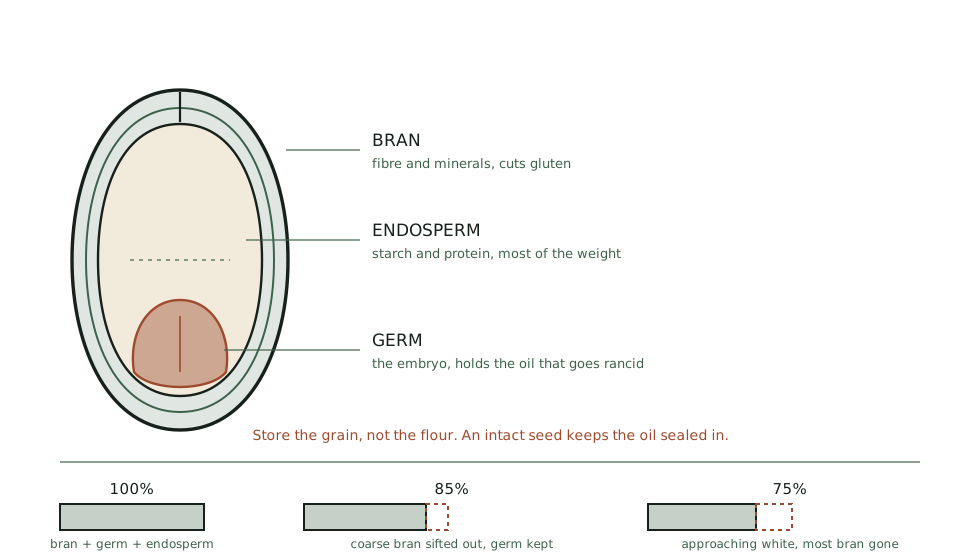
What extraction rate means
Extraction rate is the percentage of the milled grain you keep.
One hundred percent extraction is whole grain flour. Everything that went into the mill comes out into the bowl: bran, germ, and endosperm.
Eighty five percent means you sifted out fifteen percent by weight, which is mostly the largest bran flakes.
Seventy five percent approaches commercial white flour, with most of the bran gone.
Around seventy percent is roughly where roller milled white flour sits, and at that point most of the germ has gone too.
Home sifting is cruder than industrial roller milling, which separates the parts of the grain mechanically before recombining them. A home sieve removes particles by size, and bran flakes are simply the largest particles. That is why a home eighty five percent flour still contains the germ, which the milling hub explains is the perishable and interesting part.
Why bran makes bread dense
Two mechanisms, and both matter.
Bran particles cut gluten strands. Bran flakes have sharp edges. As dough is stretched, those edges physically sever the gluten network that would otherwise trap gas. Less intact network means less rise and a tighter crumb.
Bran absorbs water that gluten wanted. Bran is thirsty. Water bound up in bran is water not hydrating the protein, which weakens development further.
The result is that a hundred percent wholemeal loaf is denser than a white loaf made from the same wheat, regardless of how fresh the flour is or how good the baker is.
Removing the largest flakes removes the sharpest cutting edges, which is why a modest amount of sifting gives a disproportionate improvement in rise.
Eighty five percent, the useful number
If you remember one figure from this page, this is it.
Sifting a fresh whole flour down to around eighty five percent extraction removes the coarsest bran while keeping the germ, most of the fine bran, and nearly all of the flavour.
The loaf is noticeably lighter. The crumb opens up. The flavour is still unmistakably wholemeal, because most of what carries that flavour is not in the fraction you removed.
This is where a great deal of good home baking sits, and it is roughly what traditional stone ground bread flours were before roller milling.
Below about seventy five percent you are approaching white flour and losing the reason you milled at home. Above ninety five percent you have barely changed anything.
How to sift
A fine mesh sieve works. A standard flour sieve is about right; a tea strainer is too fine and a colander is too coarse.
A drum sifter or tamis is faster for volume and worth having if you sift regularly.
Two passes beat one. The first pass removes the obvious flakes and the second catches what the first pushed through. The difference in consistency is noticeable.
Tap the sieve rather than pushing. Forcing material through with a spoon defeats the purpose, since you are forcing the bran you wanted to remove.
Weigh both fractions. This is how you know your extraction rate rather than guessing. Five hundred grams in, seventy five grams of bran out, is eighty five percent.
Sift when cool. Warm flour from an impact mill clumps slightly and sifts less cleanly.
The whole operation takes about a minute for a loaf's worth of flour.
Do not throw the bran away
The fraction you remove is useful, and there are better places for it than the bin.
A soaker. Combine the bran with an equal weight of water, leave it while you make the dough, and add it back after the gluten has developed. The bran is softened so its edges do less damage, and you keep the fibre. This is a genuinely good technique and it is how you get most of the benefit of both approaches.
Porridge. Straight into the pot with oats.
Crackers. Bran, flour, oil, salt, and water, rolled thin and baked crisp.
Muffins and quick breads, where gluten development is irrelevant.
Sprinkled on a banneton or on the counter for shaping, where it prevents sticking.
Compost, which is a legitimate outcome rather than a failure.
Refrigerate or freeze bran if you are not using it within a week or two, since it carries some of the germ and the oil that comes with it.
Adjusting a recipe for sifted flour
Sifted flour behaves differently from the whole flour it came from, and two adjustments follow.
Less water. You removed the thirstiest fraction. A dough that wanted eighty five percent hydration at full extraction may want seventy eight at eighty five percent. Reduce and assess.
Slightly stronger dough. With less bran cutting the network, gluten develops further and holds better. Expect a more extensible dough and a better rise, and mix a little less if it becomes tight.
Effective protein rises. Bran is not protein. Removing it concentrates what remains, which is why sifted flour behaves closer to a bread flour than the wholemeal it came from.
Pastry flour without buying it
A useful application that has nothing to do with bread.
Mill soft white wheat fine, sift to around seventy five percent extraction, and you have a pastry flour. Low protein, fine texture, and tender results in cakes, biscuits, and shortcrust.
Good pastry flour is not always easy to buy, and this is one of the clearer everyday wins from owning a mill. Grains worth milling covers which soft wheats to look for.
Sift finer than you would for bread here. Texture matters more in pastry and bran flakes are more noticeable in a delicate crumb.
Sifting equipment
The tool matters less than the habit, and a few things make the job faster.
A standard flour sieve is the baseline and entirely adequate for a loaf's worth of flour. Any fine mesh kitchen sieve works.
A drum sifter or tamis is a flat drum with mesh stretched across it. Considerably faster for volume, easier to control, and worth buying if you sift every bake. The mesh grade determines your extraction, so a single drum gives you one consistent number.
Stacked sieves of different grades let you separate into fractions rather than two piles, which is how commercial milling thinks about it. Overkill for most people and genuinely interesting if you enjoy the craft.
A large bowl and a bench scraper matter more than they sound. Sifting is messy and a wide bowl catches what a narrow one throws.
A scale is the only way to know your extraction rate rather than guessing, and it is the same scale the rest of this site keeps recommending.
Mesh grade is the variable that sets your number. A coarser mesh removes less and gives a higher extraction; a finer mesh removes more. If you settle on one sieve and one mill setting, your results become repeatable, which is worth more than owning several.
RUN THE NUMBERS
Illustrative figures. Yields vary with grain, mill fineness, and sieve.
| Extraction | Bran removed | Result | Best for |
|---|---|---|---|
| 100% | None | Dense, strongest flavour | Rustic loaves, flatbreads |
| 90% | Coarsest flakes only | Slightly lighter | Everyday wholemeal |
| 85% | Most coarse bran | Noticeably lighter, full flavour | The useful default |
| 75% | Most bran | Close to white, milder | Pastry, tender crumb |
| 70% | Bran and some germ | White-ish, least interesting | Rarely worth it at home |
Five hundred grams of grain sifted to eighty five percent gives roughly four hundred and twenty five grams of flour and seventy five grams of bran. The bran is not lost; it is a separate ingredient.
Mill setting and sifting together
These two variables interact, and understanding how saves a great deal of confusion.
Mill fineness determines particle size distribution. A fine setting produces more small particles and fewer large ones.
Sifting separates whatever distribution you produced into two piles by size.
So milling finer means less material stays behind in the sieve at the same mesh grade, and therefore a higher extraction rate for the same effort. Milling coarser leaves more bran in flakes large enough for the sieve to catch, and gives a lower extraction.
Two practical consequences follow.
If your extraction is coming out higher than you want, mill coarser rather than sifting harder. Coarse milling keeps bran in larger flakes that a sieve can actually catch, which is a cleaner separation than trying to force fine bran out of fine flour.
If your flour feels gritty after sifting, mill finer. Sifting removes large particles; it cannot create small ones.
Some home millers deliberately mill coarse for a first pass, sift, then re-mill the sifted fraction fine. That is closer to what commercial milling does, it gives a cleaner separation, and it costs an extra step.
WHAT GOES WRONG
A very dense loaf despite good technique. Full extraction. Sift to eighty five and try again.
Sifted flour that still feels coarse. Mill setting too coarse. Sifting removes large particles; it does not make small ones.
A stiff dough after sifting. You removed the thirsty fraction and kept the same hydration. Reduce the water.
Bran pushed through by force. Tap the sieve rather than pressing with a spoon.
Inconsistent results between bakes. Extraction rate not measured. Weigh both fractions.
Bran gone rancid in the cupboard. It carries germ fragments and their oil. Refrigerate or freeze it.
A loaf that lost its character. Sifted too far. Below seventy five percent you are giving up what you milled for.
DO THIS NOW
- Sift your next batch of fresh flour once through a standard flour sieve and weigh what stays behind.
- Aim to remove about fifteen percent by weight, which is eighty five percent extraction.
- Reduce the water in your recipe by five percent or so, since you removed the thirstiest fraction.
- Keep the bran, soak it in an equal weight of water, and add it back after the gluten has developed.
Next
For the controlled comparison that shows what fresh flour gives you, and the hydration and autolyse adjustments it needs, see the first loaf from fresh flour.
Which grain you sift changes what the bran fraction is worth keeping. Grains worth milling covers hard, soft, ancient, and gluten free.