Guide
Grains Worth Milling
Hard wheat for bread, soft for pastry, ancient grains for flavour and frustration, and the gluten free set that behaves nothing like any of them.
As an Amazon Associate this site earns from qualifying purchases. Links to products may be affiliate links. This costs you nothing extra and does not change what gets recommended. Nothing here is medical advice.
Owning a mill gives you access to grains that are simply not sold as flour in most places, and that access is arguably a better reason to own one than freshness is.
This page covers what each grain does, which are forgiving and which are projects, and what to buy first.
Protein, and what it means here
One concept explains most of the differences below.
Wheat protein forms gluten when hydrated and worked. More protein means more gluten, which means a dough that traps gas and rises high with an open crumb. Less protein means a weaker structure, a denser result, and a tenderness that suits cakes and pastry rather than bread.
Grains are sold as hard or soft on roughly this basis. Hard wheats are higher protein and for bread. Soft wheats are lower protein and for everything else.
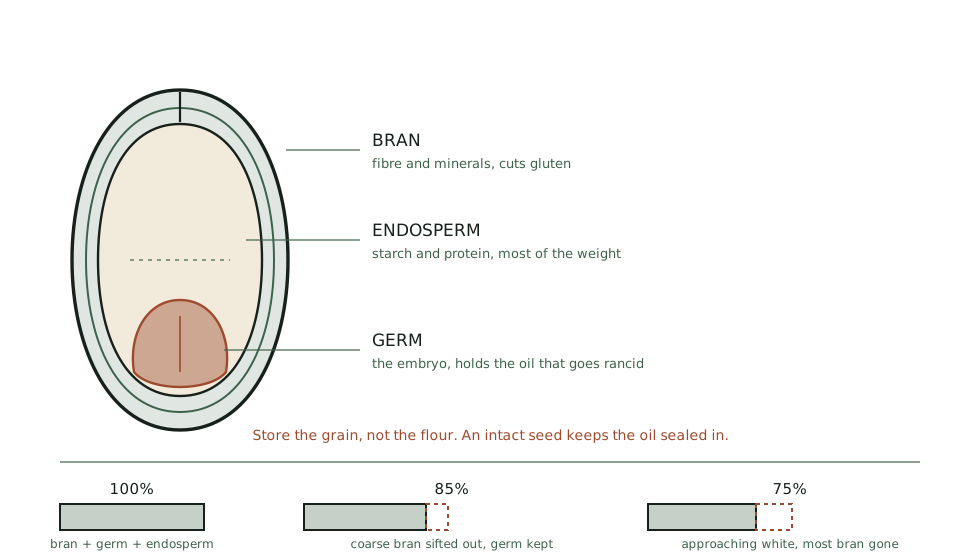
The milling hub covers the three parts of a grain. Protein sits in the endosperm, which is why sifting out bran raises the effective protein of what remains.
The wheats
Hard red wheat. The bread default. High protein, strong gluten, and a robust slightly bitter flavour that many people associate with proper wholemeal. Winter and spring varieties differ slightly, with spring usually a little higher in protein. organic hard red spring wheat berries in bulk is the bulk form.
Hard white wheat. Same protein range, milder flavour, lighter colour. Often the better introduction for a household used to shop white bread, since the loaf looks and tastes less aggressively wholemeal. Increasingly the default for home millers.
Soft white wheat. Low protein, for pastry, cakes, biscuits, and pancakes. Milling your own pastry flour is one of the underrated benefits of owning a mill, since good pastry flour is not always easy to buy.
Durum. Very hard, high protein, and the pasta wheat. Milled fine it makes semolina flour for fresh pasta. Not for bread, where its gluten behaves differently.
Buy one hard wheat and one soft wheat and you have covered the large majority of home baking.
The ancient wheats
Worth knowing that all three are genuinely different to handle, not merely different in flavour.
Spelt. An older relative of wheat with a sweet, nutty flavour that many people prefer outright. Its gluten is fragile: it develops quickly and then breaks down quickly if overmixed or overproved. Handle gently, mix less, prove shorter, and expect a slightly denser crumb. Widely available and the easiest of the three.
Einkorn. The oldest cultivated wheat. Distinctive flavour, deep yellow flour, and gluten so fragile that conventional bread technique produces poor results. Very high absorption in some respects and it slackens dramatically. Treat it as a project rather than a substitution, and start with flatbreads or pancakes rather than a boule.
Kamut, also sold as khorasan. Large golden kernels, buttery flavour, moderate protein with reasonably workable gluten. The most forgiving of the ancient wheats for bread and a good second grain after standard wheat.
Emmer, or farro. Nutty and dense, with weak gluten. Good blended into a wheat loaf at twenty to thirty percent.
A general rule for all of these: blend rather than substitute at first. Twenty to thirty percent of an ancient grain in a standard wheat loaf gives you its flavour with none of its handling problems.
None of these is gluten free. Spelt and einkorn are sometimes described as tolerable for people with sensitivity, and anyone with coeliac disease should treat them as wheat.
Rye
Rye deserves its own section because it works differently from every wheat.
It contains very little functional gluten. What structure a rye loaf has comes largely from pentosans, which are gums that hold water and give rye dough its characteristic stickiness. This is why rye bread is dense and why a hundred percent rye loaf is a specialist technique rather than a variation.
Rye also has high enzyme activity, which is why traditional rye baking is almost always sour. Acidity from a sourdough culture suppresses those enzymes, and without it a rye loaf can turn gummy inside.
Blend it. Ten to thirty percent rye in a wheat loaf adds noticeable flavour and improves keeping, with no handling difficulty.
Light, medium, and dark rye refer to how much bran remains, which for a home miller is a sifting decision rather than a purchase.
Rye is also the fastest and most reliable flour for starting a sourdough culture.
Oats, corn, and rice
Oats. Groats mill easily into oat flour, which is excellent in pancakes, biscuits, and blended into bread at low percentages. The germ is oily, so mill small quantities and use them promptly. Oat flour has no gluten and contributes tenderness rather than structure.
Corn. Mill at whatever coarseness the dish wants: coarse for polenta, medium for cornbread, fine for masa style applications. Dent corn is the field corn used for meal; popcorn also mills and gives a different texture. Some mills struggle with corn, so check the rating.
Rice. Mills easily and finely, and home milled rice flour is dramatically cheaper than the packet version. Brown and white rice both work. This is one of the clearest cost cases in the whole hub.
The gluten free set
Buckwheat, despite the name, is unrelated to wheat and contains no gluten. Strong earthy flavour, excellent in pancakes, crepes, and noodles.
Millet. Mild and slightly sweet. Mills easily and goes rancid faster than most, so mill small.
Sorghum. Neutral, and the workhorse base of many gluten free blends.
Quinoa. Distinctive and slightly bitter unless rinsed before drying. Assertive in quantity.
Amaranth. Very small seeds, strong flavour, best blended.
Chickpeas and lentils. Both mill into flour and both are hard on a mill. Check your model's rating before attempting, and expect to work in small batches.
Cross contamination matters here. A mill used for wheat retains wheat flour in its burrs and seams, so anyone with coeliac disease needs a dedicated mill rather than a cleaned one.
Buying grain
Check it is food grade. Seed grain sold for planting is frequently treated and is not for eating. This is the same distinction that applies to sprouting seed.
Check moisture. Grain should be dry, loose, and rattle in the hand. Damp grain jams mills and will not store.
Buy five kilograms of an unfamiliar grain before committing to a sack. A twenty five kilogram bag of a wheat you dislike is a long relationship.
Store it sealed, cool, and dark. Whole grain keeps for years; the intact seed protects the germ's oil. Pantry moths are the main threat and a sealed container is the whole prevention.
Blending, which is where this gets interesting
Owning a mill means you can build a flour rather than buy one, and blending is the most useful skill it unlocks.
A base plus a character grain. Seventy to eighty percent hard wheat for structure, twenty to thirty percent of something interesting for flavour. This is the reliable formula and it works with spelt, kamut, emmer, rye, or oats.
Rye in small amounts. Ten percent rye in a wheat loaf adds noticeable depth and improves keeping, with no handling penalty. This is the single best blend to start with.
Oats for tenderness. Ten to fifteen percent oat flour softens a crumb without collapsing it. Good in sandwich loaves.
Durum for colour and chew. Twenty percent durum in a wheat loaf gives a golden crumb and a firmer bite.
Soft into hard for pastry-adjacent baking. Blending soft wheat into hard lets you dial protein to whatever a recipe wants, which is not something you can do with two bags of shop flour.
Weigh the ratios and write them down, exactly as with any blend. A flour you liked and cannot reproduce is a genuinely annoying loss, and grain varies enough between sacks that memory is not reliable.
Start at ten percent of anything unfamiliar and work up. Character grains are assertive and it is easier to add than to dilute.
RUN THE NUMBERS
Illustrative guide. Protein figures vary considerably by variety and season.
| Grain | Protein | Gluten | Best for | Difficulty |
|---|---|---|---|---|
| Hard red wheat | High | Strong | Bread | Easy |
| Hard white wheat | High | Strong | Bread, milder | Easy |
| Soft white wheat | Low | Weak | Pastry, cakes | Easy |
| Durum | Very high | Different | Pasta | Easy for pasta |
| Spelt | Moderate | Fragile | Bread, blended | Moderate |
| Kamut | Moderate | Workable | Bread, blended | Moderate |
| Einkorn | Moderate | Very fragile | Flatbread, pancakes | Hard |
| Rye | Moderate | Minimal | Sourdough, blends | Moderate |
| Oats | Moderate | None | Pancakes, blends | Easy |
| Rice | Low | None | Gluten free base | Easy |
| Buckwheat | Moderate | None | Pancakes, noodles | Easy |
Start with hard red or hard white for bread and soft white for everything else. Add rye third, since a little transforms a loaf and it is the best starter flour.
WHAT GOES WRONG
A spelt loaf that collapsed. Overmixed or overproved. Its gluten breaks down quickly.
An einkorn loaf that was a brick. Conventional technique on a grain that does not accept it. Start with flatbreads.
Gummy rye bread. Not acidic enough. Rye wants a sourdough culture.
Rancid oat or millet flour. Both go off faster than wheat. Mill small quantities.
A jammed mill on corn or chickpeas. Check the rating first.
A twenty five kilogram sack you dislike. Buy five kilograms of anything unfamiliar first.
Cross contamination in a gluten free household. A cleaned mill is not a dedicated mill.
DO THIS NOW
- Buy hard red or hard white wheat for bread and soft white for pastry, and stop there for the first month.
- Add rye third, at ten to twenty percent of a wheat loaf, and notice what it does to flavour and keeping.
- Blend any ancient grain at twenty to thirty percent before attempting a hundred percent loaf.
- Buy five kilograms of anything unfamiliar before committing to a sack.
Next
Which mill you own limits which grains you can put through it, particularly the oily and the hard. Impact, stone, or burr covers what each mechanism handles.
Bran interferes with gluten regardless of grain, and sifting is how you control it. Sifting and extraction rate covers the numbers.