Guide
Fruit Leather From Whatever You Have
The most forgiving thing a dehydrator makes, and the best answer to a bowl of fruit that is going soft.
As an Amazon Associate this site earns from qualifying purchases. Links to products may be affiliate links. This costs you nothing extra and does not change what gets recommended. Nothing here is medical advice.
Fruit leather is the most forgiving thing in this whole hub. There is no slicing, no uniform thickness to achieve, no blanching decision, and no acid dip. You purée fruit, spread it, and wait.
It is also the single best answer to fruit that is going soft in the bowl, which makes it the guide most likely to save you money rather than cost you any. Texture stops mattering the moment fruit goes into a blender, so the batch that is too bruised for a lunchbox is exactly right here.
The basic method
Purée fruit until completely smooth. Add a squeeze of lemon. Spread to about three millimetres on a solid sheet. Dry at fifty five to sixty degrees for six to eight hours. Peel while warm, cut into strips, roll in parchment.
That is the whole thing. Everything below is refinement.
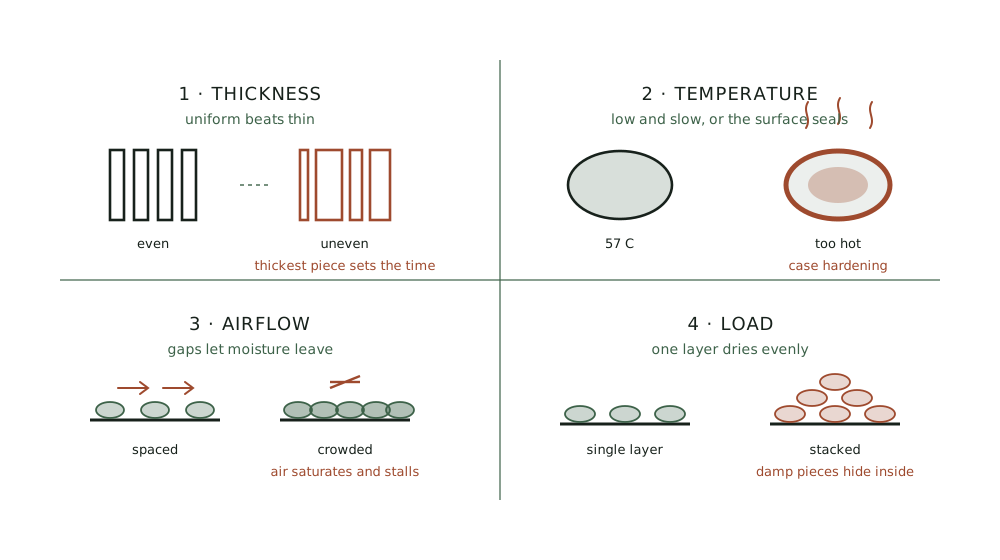
The drying hub covers the four variables that govern every batch in the machine, and leather obeys three of them. Thickness and airflow and temperature all matter. Uniformity of individual pieces does not, because there are no pieces.
Choosing fruit
Excellent on its own. Apple, pear, plum, apricot, peach, mango, and berries of most kinds. All have enough body to set into something with structure.
Needs a base. Very watery fruit like melon and very tart fruit like rhubarb or cranberry both benefit from being blended with apple or pear. Apple is the workhorse here. It adds pectin and body, it is cheap, and it takes on the flavour of whatever it is mixed with rather than dominating.
Difficult. Citrus flesh turns bitter. Banana on its own goes dark and dense, though a small amount in a blend adds sweetness and body.
The best candidate of all is a mixture. Two apples, a handful of tired strawberries, and half a mango is a better leather than any of them alone, and it is a genuinely good use of three things that were each not quite enough for anything.
Fruit that has begun to spoil goes on the compost rather than into the blender. Drying preserves what is present.
The purée
Blend until completely smooth. Any lumps remaining will show up as thick spots that never dry while the surrounding area turns brittle. This is the one place where thoroughness pays, and a high powered machine such as a Vitamix 5200 gets there faster.
Cook first if the fruit is very firm. Apples and pears benefit from ten minutes of gentle simmering before blending, which softens them and makes the purée smoother. Soft fruit needs no cooking at all.
Lemon, always. A squeeze per batch. It brightens the flavour, it keeps the colour from browning, and it adds a little acidity that most fruit purées want.
Sweeten only if the fruit genuinely needs it. Drying concentrates the sugar that is already there, so a purée that tastes correctly sweet before drying will taste noticeably sweeter after. Taste before adding anything, and if you do sweeten, use half what you first think.
Spices work well. Cinnamon with apple, cardamom with pear, vanilla with berry, a little ginger with mango. Add sparingly, since the flavour concentrates along with everything else.
Thickness of purée matters. It should pour slowly rather than run. Very thin purée spreads too far and dries to something fragile. If it is watery, simmer it down for ten minutes before spreading.
Spreading
Use a solid sheet. Mesh will not hold purée. Most machines include a fruit roll sheet, and stainless replacement trays give you more of them if you are making several trays. Baking parchment works and sticks more.
Three millimetres, slightly thicker at the edges. This is the one technique worth learning. Edges dry faster than the middle because they are exposed on more sides, so a leather spread perfectly evenly will have brittle edges and a tacky centre. Building the edges up slightly compensates.
Do not spread to the rim. Leave a couple of centimetres of clear sheet all round. Purée that runs off the edge is difficult to clean and easy to avoid.
Tap the tray on the counter after spreading to settle the surface and release air bubbles. Bubbles become holes.
Drying and doneness
Fifty five to sixty degrees. Six to eight hours is typical for three millimetres, and a thicker spread can take twelve.
The doneness test is specific and easy once you know it. Touch the centre with a finger. Correct leather is tacky but not sticky, meaning your finger feels the surface grip slightly and comes away clean. If purée transfers to your finger it needs longer. If the surface is hard and crackly it has gone too far.
Check the centre, never the edge. The edge is always ahead.
Lift a corner. Finished leather peels away from the sheet in one piece. If it tears or leaves purée behind, it is not ready.
Peel while still warm. A cooled leather bonds much harder to the sheet, and reheating for five minutes will release it if you have left it too long.
Cutting and storing
Cut into strips with kitchen scissors while still warm and pliable. Scissors work far better than a knife.
Roll each strip in a piece of baking parchment slightly longer than the strip. The parchment stops the roll sticking to itself and makes it a self contained snack.
Store the rolls in an airtight container. Conditioning is less critical for leather than for sliced fruit, because a leather is one continuous piece rather than a batch of varying pieces, but a week in a sealed jar with a watch for condensation is still worthwhile if you are storing beyond a month.
Realistic life: about a month at room temperature, several months refrigerated, and up to a year frozen. Leather holds more residual moisture than dried slices by design, which is what makes it pliable and what limits its shelf life. The storage guide covers the containers that extend it.
Variations worth making
Layered leather. Spread one purée, dry it partially for two hours, then spread a second colour on top and finish. Produces a striking two tone strip and is genuinely easy.
Seeds and texture. Scatter sesame, chia, or finely chopped nuts onto the surface before drying. They embed as it sets. Do not add them to the purée, where they interfere with drying.
Yoghurt swirl. A few spoonfuls of thick yoghurt swirled into the purée before spreading. Reduces shelf life considerably, so make small batches and refrigerate.
Vegetable leather. Carrot, beetroot, and pumpkin all work when blended with apple. Sounds unlikely and is genuinely good.
Savoury leather. Tomato purée with herbs dries into something closer to a concentrated sheet than a snack, and it dissolves into sauces beautifully.
Baby food leather. Any single fruit, no sweetener, no spice. A practical way to use a glut for a household with small children.
Making it for children
Fruit leather is the item in this hub most likely to be made for someone else, and a few adjustments make it work better for a lunchbox.
No added sugar at all. Drying concentrates what is already there, and a leather made from ripe fruit is sweet enough that most children will not notice the absence. Starting without sugar also means you are not competing with the shop versions on sweetness, which is a competition worth losing.
Single fruit is easier to sell. Mixed purées taste better to an adult palate and children are frequently suspicious of them. Apple, strawberry, and mango each on their own are safe starting points.
Cut smaller than feels right. A strip about two centimetres wide and ten long is a portion. Large sheets get half eaten and abandoned.
Roll each one individually in parchment. This makes it a self contained item that can go straight into a bag, and it stops the strips welding together in the container.
Keep it thin. Thicker leather is chewier and harder work for small jaws. Two to three millimetres rather than four.
One honest note: fruit leather is concentrated fruit sugar and sticks to teeth in a way whole fruit does not. It is a genuinely better snack than most packaged equivalents and it is not the same thing as eating an apple.
RUN THE NUMBERS
Illustrative figures. Times vary with humidity, machine, and how thickly you spread.
| Detail | |
|---|---|
| Fruit | About 700 g prepared, per standard tray |
| Purée thickness | 3 mm, slightly thicker at the edges |
| Temperature | 55 to 60 C |
| Typical time | 6 to 8 hours |
| Done when | Tacky at the centre, not sticky; peels in one piece |
| Yield | One tray makes roughly 8 to 10 strips |
| Keeps | About a month at room temperature |
Fruit leather is the highest yield use of fruit in this hub, because you keep everything except the water. Sliced fruit loses volume to trimming and coring; a purée keeps the lot.
WHAT GOES WRONG
Brittle edges, tacky centre. Spread evenly rather than thicker at the edges. Build the rim up slightly next time.
Holes in the finished sheet. Air bubbles in the purée. Tap the tray on the counter before drying.
It will not peel off. Either not dry enough, or cooled too much. Test the centre, and warm it for five minutes if it has gone cold.
Sticky after a week in the jar. Underdried. It should be tacky when you touch it and not transfer to your finger.
Thin and fragile. Purée too watery. Simmer it down before spreading.
Much sweeter than expected. Sweetener added before drying. The sugar concentrates. Taste the purée and add less than feels right.
Mould within a fortnight. Underdried, or stored somewhere warm. Leather holds more moisture than sliced fruit and is less tolerant of a warm cupboard.
DO THIS NOW
- Gather whatever fruit is going soft in the bowl. Two apples plus anything else is a viable batch.
- Simmer the firm fruit for ten minutes, blend everything completely smooth with a squeeze of lemon, and taste before adding any sweetener.
- Spread to three millimetres on a solid sheet, slightly thicker at the edges, and tap the tray to release bubbles.
- Test the centre with a finger at six hours, and peel while still warm.
Next
For fruit dried as slices rather than purée, and the thickness and acid dip that job needs, see drying fruit properly.
Leather holds more residual moisture than anything else in this hub, which makes storage matter more. Storing dried food so it lasts years covers containers and conditioning.