Guide
Buying and Storing Grain
Whole grain keeps for years and flour does not. Storing the grain instead is the entire practical argument for owning a mill.
As an Amazon Associate this site earns from qualifying purchases. Links to products may be affiliate links. This costs you nothing extra and does not change what gets recommended. Nothing here is medical advice.
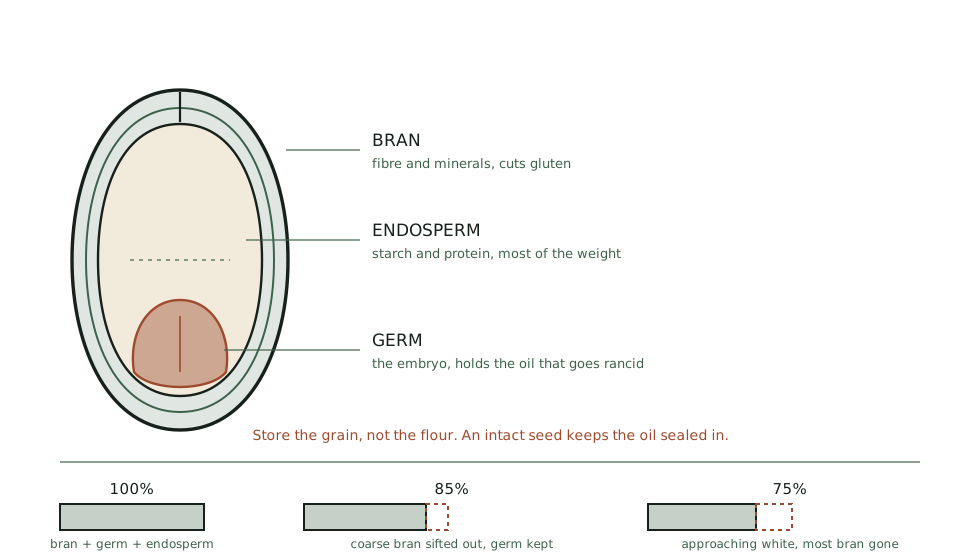
The argument for milling rests on one asymmetry. A sealed wheat berry keeps for years because its germ, and the oil in it, is protected inside an intact seed. Break that seed open and the oil begins oxidising within hours.
So the home miller stores grain and makes flour, rather than storing flour. Everything on this page follows from that, and the milling hub explains the grain anatomy behind it.
Buying in the right quantity
The economics of milling live in the purchase, and they collapse if you buy grain the way you buy flour.
Bulk is the whole point. Grain in kilogram bags at supermarket prices costs more than bagged flour and removes the financial argument entirely. Twenty five kilogram sacks from a mill, a farm, or a wholesaler cost a fraction per kilogram. organic hard red spring wheat berries in bulk is that kind of quantity.
Buy from a mill or a farm where you can. Many working mills sell whole grain alongside their flour, small growers increasingly sell direct, and both usually offer more interesting varieties than a general retailer. You can also ask questions about variety, protein, and harvest.
Test before committing. Five kilograms of an unfamiliar grain before a sack. A twenty five kilogram bag of a wheat you dislike is a long relationship, and grain varies enough between varieties that this is a real risk.
Check it is food grade. Seed grain sold for planting is frequently treated with fungicide and is not for eating. The distinction is the same one that applies to sprouting seed and it matters for the same reason.
Check moisture. Grain should be dry and loose and should rattle in the hand. Damp grain jams mills, will not store, and is a mould risk. A handful that feels soft or clumps is a problem.
Check cleanliness. Some chaff is normal. Stones, significant debris, or insect damage are not.
How long grain actually keeps
Considerably longer than most people assume, which is what makes bulk buying sensible.
Whole wheat berries kept cool, dry, dark, and sealed remain perfectly usable for years. Under genuinely good conditions, meaning low moisture and low oxygen, storage life extends much further, which is why grain is a staple of long term food storage.
Rye, spelt, kamut, and other whole grains behave similarly.
Oats are the exception among common grains. They are oilier than wheat and go rancid faster, so buy them in quantities you will use within a year rather than several.
Corn stores well whole and poorly once cracked.
Rice stores well as brown rice for a year or so and much longer as white, since brown rice retains the oily germ.
The practical rule: intact seeds keep, broken ones do not. Anything cracked, rolled, or milled is on a much shorter clock.
Containers
Airtight, food grade, and opaque or dark. Buckets with gasket lids, sealed bins, or large glass jars for smaller quantities.
Keep the original sack sealed until you decant, then decant fully rather than leaving a partly open bag.
Portion into working and reserve. A smaller container by the mill for the current few weeks, and the bulk sealed elsewhere. Every opening of the main container exchanges air and admits humidity, so opening it monthly rather than daily matters.
Do not store in the bag it arrived in. Woven sacks are not airtight, they are attractive to pests, and they tear.
Label with variety and purchase date. Hard red and hard white are not obvious by eye once decanted, and knowing the age of a sack explains a lot when a bake behaves oddly.
Oxygen absorbers, for long term storage
For grain you intend to keep for years rather than months, removing oxygen extends life substantially.
An absorber contains iron powder that reacts with the oxygen inside a sealed container, dropping the concentration to a fraction of a percent. 300cc oxygen absorbers in individually sealed packs are the same product used for dried food, and the sizing logic is the same: match absorber capacity to container volume, and over-sizing is harmless.
Three practical points. Work quickly, since absorbers begin reacting the moment the pack is opened, and reseal any remainder immediately. Use them only with genuinely dry grain, because removing oxygen from damp material favours the organisms that do not need it. And expect the container to pull inward slightly over the following day, which is a good sign.
Oxygen removal also kills insect eggs over time, which is a useful secondary benefit covered below.
For grain you will use within a year, absorbers are unnecessary. A sealed container in a cool cupboard is enough.
Pests
The main practical threat to stored grain, and entirely preventable.
Pantry moths and grain weevils arrive in the grain rather than finding it. Eggs are frequently present in bulk agricultural products at levels that are harmless and invisible, and they hatch when conditions suit.
A genuinely airtight container is the whole prevention. Moth larvae chew through paper, thin plastic film, and woven sacks. They do not get through a gasketed bucket or a sealed glass jar.
Freezing new grain for a week kills eggs before they hatch. Put the sack or a decanted portion in a freezer for seven days, then bring it to room temperature fully before opening, to avoid condensation. This is the standard treatment and it is worth doing with any bulk purchase.
Oxygen absorbers achieve a similar result over a longer period, since insects cannot survive at very low oxygen.
Inspect on decanting. Webbing, small moths, or fine dust at the bottom of a sack are the signs. A contaminated sack should be dealt with promptly, since moths spread to other stored goods readily.
Keep the storage area clean. Spilled grain in a cupboard is a breeding site.
Where to store it
Cool, dry, dark, and stable.
Temperature matters most for long term storage. Every increase accelerates the slow degradation of the grain and speeds up any insect life cycle present.
Humidity is the other main variable. Grain absorbs moisture from the air, and grain above a certain moisture content will not store. A sealed container solves this for a dry starting point and cannot rescue damp grain.
A cool cupboard, a pantry, a cellar, or an unheated room all work. A garage that swings between freezing and thirty degrees is worse than a stable indoor cupboard.
Off the floor in any space that might get damp.
Away from the mill's heat if the mill lives on a counter that gets warm.
For most households a couple of sealed buckets in a cool cupboard covers everything.
Cracked grain and flour, which do not keep
Worth restating, because it is the whole reason for the arrangement above.
Fresh flour holds for weeks at room temperature, a few months refrigerated, and longer frozen. If you find yourself storing flour rather than grain, the advantage has been inverted.
Cracked grain for porridge sits between the two: better than flour, far worse than whole. Crack what you will use in a week.
Sifted bran carries germ fragments and their oil, and it goes rancid faster than flour. Refrigerate or freeze it.
Rolled oats are already broken open, which is why they have a shorter life than whole oat groats.
Working out how much to buy
The most common planning mistake is buying for an imagined baking schedule rather than an actual one, and the arithmetic is straightforward.
A standard loaf takes four hundred to five hundred grams of flour, and milling loses very little, so that is roughly the same weight of grain.
A weekly loaf is about twenty five kilograms a year. One sack.
Two loaves a week plus pancakes and pasta is closer to sixty kilograms, so two or three sacks.
Occasional baking, once or twice a month, is five to ten kilograms a year, and a sack would sit for three years.
Grain stores well enough that overbuying is not a disaster, and it does occupy space and it does tie up money. Two sealed buckets hold twenty five kilograms and take up a corner of a cupboard.
Buy for a year at first. You will know your real consumption after six months, and adjust then. The temptation with bulk pricing is to buy three years of a grain you have used twice, which is how a good economic argument turns into a storage problem.
If you are splitting a sack with another household, agree the split before it arrives. Decanting fifty pounds of wheat on a kitchen floor is a two person job either way.
RUN THE NUMBERS
Illustrative figures. Actual life depends heavily on temperature, moisture, and container.
| Item | Sealed, cool, dark | Notes |
|---|---|---|
| Whole wheat berries | Years | Longer with oxygen removed |
| Spelt, rye, kamut | Years | Similar to wheat |
| Whole oat groats | About a year | Oilier, shorter life |
| Whole corn | Years | Poor once cracked |
| Brown rice | About a year | Retains oily germ |
| Cracked grain | Weeks | Crack what you need |
| Fresh flour | Weeks | Refrigerate or freeze |
| Sifted bran | Weeks | Refrigerate |
A twenty five kilogram sack of wheat is roughly fifty loaves' worth of flour and stores in two buckets. That ratio is what makes bulk buying practical rather than aspirational.
WHAT GOES WRONG
Moths in the cupboard. Grain stored in its sack, or eggs that came with the grain and were never killed. Freeze new purchases and decant into gasketed containers.
Grain that will not mill properly. Damp. Spread it out for a day, and store it sealed thereafter.
A sack of grain you dislike. Buy five kilograms of anything unfamiliar first.
Flour going rancid. Storing flour rather than grain. Mill weekly.
Condensation in a container from the freezer. Opened before reaching room temperature. Let it warm fully.
Absorbers that did nothing. The pack was opened previously and they were spent. Buy small individually sealed packs.
Grain stored in a hot garage. Heat is the main long term enemy. A cool indoor cupboard beats a convenient warm one.
DO THIS NOW
- Buy five kilograms of an unfamiliar grain before committing to a sack, and check it is sold food grade rather than for planting.
- Freeze any bulk purchase for a week before decanting, then let it reach room temperature before opening.
- Decant into gasketed buckets or sealed jars, and label with variety and date.
- Keep a small working container by the mill and open the bulk container as rarely as possible.
Next
Which grain to buy in the first place, and which are worth a sack rather than a bag, is covered in grains worth milling.
Damp or oily grain is also the main thing that damages a mill. Impact, stone, or burr covers what each mechanism can and cannot handle.