Guide
Mushrooms and Tomatoes, the Two Worth Doing First
Both take longer than anything else in the machine and both repay it more, because drying concentrates them into something better than fresh.
As an Amazon Associate this site earns from qualifying purchases. Links to products may be affiliate links. This costs you nothing extra and does not change what gets recommended. Nothing here is medical advice.
Most drying preserves food. These two improve it.
Mushrooms and tomatoes both concentrate on drying into something with more savoury depth than the fresh version, which is why dried porcini and sun dried tomatoes are sold as ingredients in their own right rather than as preserved leftovers. Neither is a compromise.
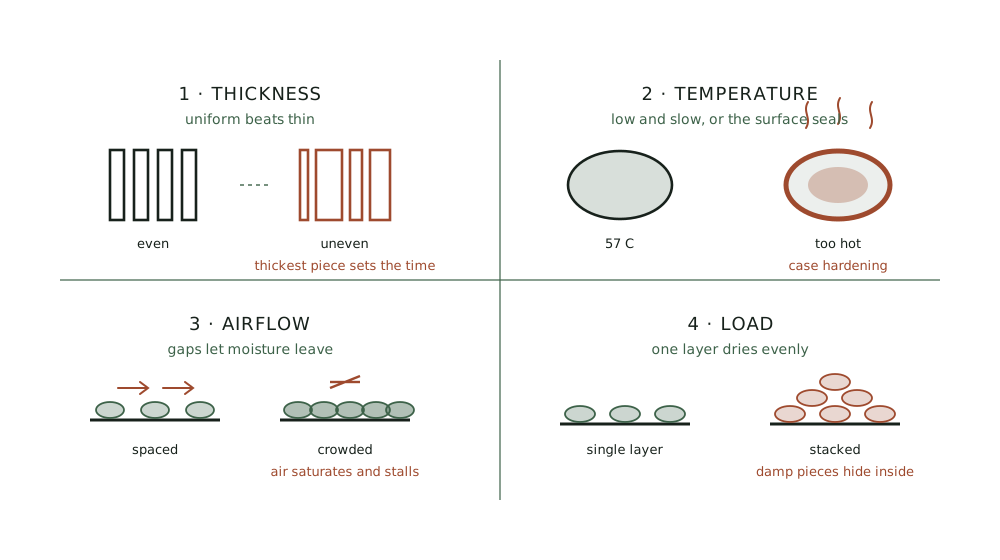
They also take longer than anything else in the machine, hold more water than they appear to, and reward a little technique. Worth grouping together for exactly those reasons, and the drying hub covers the four variables both of them obey.
Why they concentrate rather than merely preserve
Both foods are unusually high in glutamates and related compounds, which are what the palate reads as savoury depth.
Drying removes water without removing those compounds, so what remains is the same quantity of flavour in a fraction of the volume. A dried tomato tastes considerably more of tomato than a fresh one does. A dried mushroom tastes more of mushroom, and in the case of some varieties develops notes that were not detectable before.
This is the opposite of what happens to, say, courgette, which dries into something bland that is useful mainly as bulk.
The practical consequence is that these are the two most likely to change how you cook rather than simply extending what you already had.
Mushrooms
No blanching. Mushrooms have low enzyme activity and blanching would waterlog them badly. Straight into the machine.
Do not wash them. Mushrooms are absorbent and washing adds water you are about to spend hours removing. Brush off soil with a dry brush or a dry cloth. If something genuinely needs a rinse, do it fast and pat dry immediately.
Slice five millimetres. Thicker than most vegetables, since mushrooms shrink dramatically and thin slices turn to fragments. Uniform, as always.
Stems too. Stems dry well and are excellent in powder even when they are too tough to eat sliced.
Fifty to fifty five degrees, six to ten hours. They are done when brittle and they snap cleanly.
Which varieties. Almost all work. Field and chestnut mushrooms are cheap and reliable. Shiitake is outstanding dried and arguably better than fresh. Oyster mushrooms dry well and rehydrate to a slightly odd texture, so they are better in powder.
One safety note that applies to foraging rather than shopping: drying does not make an inedible mushroom edible, and identification is a matter for expertise rather than a website.
Mushroom powder, which is the real prize
Blitz dried mushrooms into powder and you have the single most useful thing in this hub.
A spoonful adds considerable savoury depth to stock, gravy, stew, risotto, pasta sauce, or a burger mix, and it dissolves entirely so nobody knows it is there. It is the closest thing home preserving offers to a shortcut.
Dry until genuinely brittle, then blitz in a spice grinder or small blender. Sieve out anything coarse and either re-blitz it or keep it as pieces.
Powder absorbs humidity far faster than slices, so it needs a genuinely airtight jar and turns over best within a couple of months. Keep the bulk as slices and grind small batches.
The economics are the strongest argument. Dried mushroom is expensive to buy and mushrooms are frequently reduced when they start to open, at which point they are perfect for drying.
Tomatoes
The longest job in the machine. Ten to eighteen hours is normal, and a full load of large tomatoes can exceed that. They hold far more water than they look like they should, and this catches everyone out once.
Cut for the type. Cherry and small plum tomatoes halved, cut side up. Larger tomatoes into five millimetre slices, or quartered with the seed jelly scooped out to shorten drying considerably.
Seeds and jelly are optional to remove. Leaving them in is fine and adds hours. Removing them speeds things up and loses a little flavour. For large tomatoes it is usually worth removing.
Salt lightly before drying. A light sprinkle draws moisture to the surface and improves both flavour and drying time. Do not overdo it, since drying concentrates the salt too.
Fifty seven degrees. Slightly higher than most vegetables because of the sugar content.
Skin on. Tomato skin becomes leathery but holds the piece together. Peeling is possible and mostly not worth it.
Cut side up, always. Cut side down means the liquid pools against the tray and the piece takes considerably longer. stainless replacement trays stop the sugary cut surfaces welding to mesh.
The tomato doneness question
Tomatoes are the exception to the vegetable rule. They do not go brittle, because sugar keeps them pliable.
Test them like fruit. Leathery and pliable, no beads of moisture when torn, no soft wet centre. A tomato that still feels squashy in the middle is not done regardless of how long it has been in.
This trips people up constantly, because every other vegetable in the machine snaps and tomatoes never will.
Some people deliberately dry tomatoes to a softer, oilier state and store them submerged in oil. That is a genuinely different product with different storage requirements, and it needs refrigeration rather than a cupboard.
Storage for both
Both keep well, and both are worth treating carefully because of the effort invested.
Condition in a clear jar for a week, as with everything else in this hub, watching for condensation. Tomatoes in particular hide moisture well and this step catches it.
Store airtight, dark, and cool. Both hold a year or more, and mushroom powder rather less.
Tomatoes stored in oil are a different case entirely. Refrigerate them, use them within a few weeks, and be aware that oil storage of low acid foods carries considerations that dry storage does not.
The storage guide covers oxygen absorbers, which are worth it for both if you are keeping a large harvest.
Rehydrating
Mushrooms. Cover with boiling water for fifteen to thirty minutes. Keep the soaking liquid, always. It is more flavourful than the mushrooms and pouring it away is the most common waste in this whole category. Strain it if grit is a concern and use it as stock.
Tomatoes. Cover with warm water for fifteen to twenty minutes, or add them dry to anything with enough liquid and cooking time. They rehydrate happily in a sauce.
Neither needs rehydrating for many uses. Dried mushroom goes straight into a slow cooked stew. Dried tomato goes straight into a braise, or gets chopped into a salad dressing where the oil softens it.
Tomato powder and paste
The same trick that makes mushroom powder useful works for tomatoes, and the result solves a specific everyday annoyance.
Blitz thoroughly dried tomato into powder. Stir a spoonful into a little warm water and you have tomato paste, made to whatever quantity you actually need.
This matters because an opened tube or tin of tomato paste is one of the more reliably wasted items in a kitchen. Recipes call for a tablespoon, the remainder goes into the refrigerator, and a fortnight later it is discarded. A jar of powder has no such problem.
The powder is also excellent used dry. A spoonful into a stew, a rub, a bread dough, or a spice mix adds colour and savoury depth without adding liquid, which is genuinely useful in things where extra moisture would be a problem.
Dry more thoroughly than you would for slices, since any remaining moisture will cause the powder to clump and cake. The pieces should snap rather than bend before grinding, which means taking tomatoes past the leathery stage described above.
Store in a small airtight jar, and grind in small batches. Like mushroom powder, it absorbs humidity quickly and loses aroma faster than the pieces it came from.
RUN THE NUMBERS
Illustrative figures. Times vary with humidity, load, and machine.
| Mushrooms | Tomatoes | |
|---|---|---|
| Blanch | No | No |
| Wash | No, brush only | Yes |
| Cut | 5 mm slices | Halved or 5 mm slices |
| Temperature | 52 C | 57 C |
| Typical time | 6 to 10 h | 10 to 18 h |
| Done when | Brittle, snaps | Leathery, pliable |
| Weight loss | Around 90 percent | Around 93 percent |
| Keeps | A year or more | A year or more |
| Best use | Powder, and stock | Sauces, dressings, braises |
Both are at their most economical when the fresh version is being reduced. Mushrooms that have started to open and tomatoes that have gone soft are ideal candidates, which makes this the best use of a reduced shelf in the whole hub.
When to buy for drying
Both of these are at their best economically when you buy at the wrong end of the shelf, and it is worth being deliberate about it.
Mushrooms are marked down as soon as the caps begin to open and the gills darken. At that stage they are past their best for a fresh dish and ideal for drying, since the flavour has developed and you are about to remove the water anyway.
Tomatoes are reduced when they soften. A soft tomato is a poor salad and an excellent candidate for the machine, because texture stops mattering the moment it is sliced.
Both are also worth buying in quantity at the seasonal peak, when field tomatoes and cultivated mushrooms are cheapest. A single large batch in late summer covers most of a year.
Two cautions. Anything already showing mould or a sour smell goes on the compost rather than in the machine, since drying preserves what is present rather than removing it. And very wet, over-soft tomatoes take even longer than the already long times above, so allow for it.
WHAT GOES WRONG
Mushrooms that dry unevenly. Washed rather than brushed, so they went in waterlogged.
Tomatoes still soft after twelve hours. Normal. They take far longer than anything else. Check the centre rather than the edge.
Tomatoes that took forever and stuck to the tray. Cut side down. Turn them over.
Mushroom powder that clumps in the jar. Humidity. Airtight container, and grind small batches rather than the whole harvest.
A grey, unappetising tomato colour. Dried too hot, or from a pale winter tomato that had little colour to start with.
Grit in a mushroom dish. Soaking liquid not strained. Pour it through a fine sieve or a cloth.
DO THIS NOW
- Brush mushrooms clean rather than washing them, and slice at five millimetres.
- Halve cherry tomatoes and lay them cut side up, with a very light sprinkle of salt.
- Expect tomatoes to take twice as long as you think, and test the centre rather than the edge.
- Blitz a small batch of dried mushroom into powder and put a spoonful into the next thing you cook with liquid.
Next
For the blanching rules that apply to everything else, and the soup base jar these two belong in, see drying vegetables and the blanching question.
Both of these repay careful storage more than anything else in the hub. Storing dried food so it lasts years covers conditioning, absorbers, and container choice.