Guide
Drying Vegetables and the Blanching Question
Which vegetables need blanching first, which do not, and how to build the one jar you will use more than any other.
As an Amazon Associate this site earns from qualifying purchases. Links to products may be affiliate links. This costs you nothing extra and does not change what gets recommended. Nothing here is medical advice.
Dried vegetables are less glamorous than dried fruit and considerably more useful. Fruit gets eaten as a snack. Vegetables go into food you were cooking anyway, which means they get used rather than admired.
They also have one extra step that fruit does not, and knowing which vegetables need it is most of what separates a good jar from a disappointing one.
Why blanch at all
Vegetables contain enzymes that keep working after harvest. Those enzymes degrade colour, flavour, and texture, and drying slows them without stopping them.
The result shows up in storage rather than immediately. A jar of unblanched carrot looks fine at week two and noticeably faded and hay-like at month six. The vegetable is safe to eat and it has lost most of what made it worth keeping.
Blanching deactivates those enzymes with heat, and the drying hub covers where it sits among the other preparation steps. Two to three minutes in boiling water, then straight into ice water to stop the cooking, then drained thoroughly and dried as normal.
It also does something else worth having. Blanching softens cell walls, which means the dried vegetable rehydrates far better later. Unblanched dried carrot can stay stubbornly firm no matter how long it sits in a stew.
Which need it and which do not
Blanch these. Carrot, green beans, peas, broccoli, cauliflower, corn, asparagus, Brussels sprouts, and most dense root vegetables. All of them hold enzymes that will cost you colour and flavour over months.
Do not blanch these. Onion, garlic, leek, pepper, chilli, mushroom, tomato, courgette, and herbs. Some because they have low enzyme activity, some because blanching ruins their texture, and some because their flavour compounds leave with the blanching water.
Onion and garlic in particular should never be blanched. You would pour away exactly what you are drying them for.
Optional. Beetroot and squash both keep acceptably without blanching and keep better with it. If you intend to store beyond six months, blanch. For a jar you will finish by spring, skip it.
Steam blanching works and takes slightly longer, three to five minutes. It loses fewer water soluble nutrients into the water. Either method is fine and the boiling version is faster.
Preparation
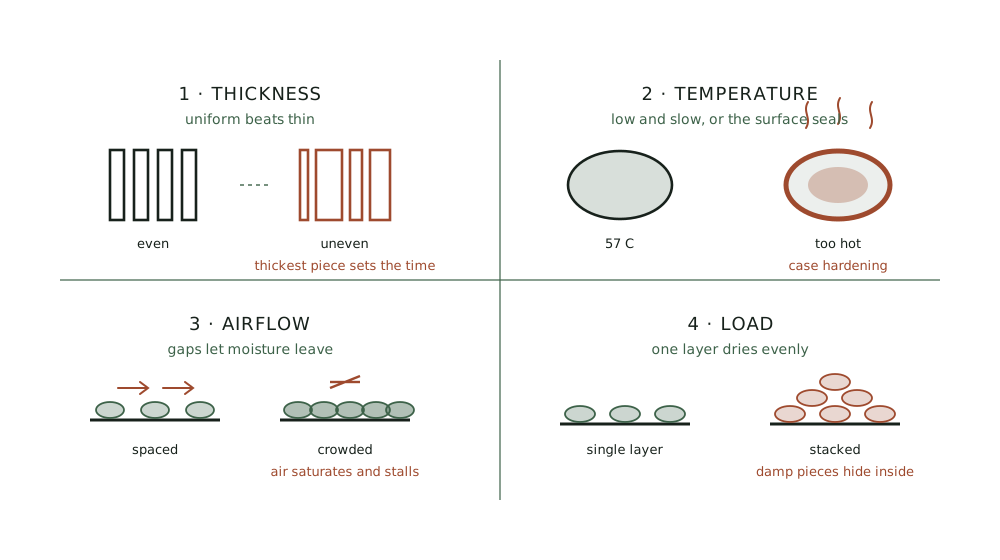
Uniform thickness, again. Three millimetres for slices, or small dice of consistent size. The thickest piece sets the drying time. a handheld mandoline with adjustable thickness does this quickly for anything sliceable, and a full size mandoline with a guard and cut-resistant gloves is the version to use when you are working through several kilograms.
Peel or do not, by vegetable. Carrot skin is fine and holds flavour. Beetroot skin is best removed. Tomato skin becomes leathery and unpleasant, so either peel or accept the texture.
Cut for how you will use it. This matters more than people expect. Diced onion goes into a soup base jar. Sliced onion rings do not. Decide the destination before you decide the cut.
Dry small pieces on a solid sheet or fine mesh. Diced vegetables fall straight through standard mesh trays, and retrieving them from the base of a machine is a genuinely irritating way to end an afternoon.
Temperature and time
Fifty to fifty five degrees Celsius for most vegetables, slightly below fruit.
Vegetables have less sugar and less structure than fruit, so they dry faster and scorch more readily. They also finish brittle rather than pliable, which makes the doneness test easier.
Six to ten hours covers most vegetables at three millimetres. Mushrooms and tomatoes take longer, since both hold a great deal of water.
Load matters here as much as anywhere. A full machine of onion will take half as long again as a half full one.
The doneness test
Vegetables should be brittle. They snap rather than bend, and a slice held between finger and thumb breaks cleanly.
This is a clearer test than the leathery-and-pliable standard for fruit, which is one reason vegetables are easier to get right.
Cool a piece before testing. Warm vegetable feels more flexible than it is.
Tomato is the exception and stays slightly leathery even when finished, because of its sugar content. Test it like fruit rather than like a vegetable.
Weight loss for vegetables is typically ninety percent or more, so a kilogram of onion yields around one hundred grams.
Conditioning and storage
Conditioning applies to vegetables exactly as it does to fruit, and it matters more, because brittle pieces disguise a damp one better than pliable pieces do.
Pack cooled vegetables loosely into a clear glass jar, two thirds full. Seal, leave a week somewhere visible, shake daily, and watch the glass for condensation. Any condensation means the batch goes back in the machine.
Store airtight, dark, and cool. Dried vegetables hold one to two years stored well, longer than fruit, because there is less sugar to degrade.
Label everything. Dried onion, dried leek, and dried celeriac are almost identical in a jar, and finding out which is which by tasting is not pleasant.
The soup base jar
This is the single most used jar in most dried pantries and the strongest practical argument for drying vegetables at all.
Dry onion, carrot, celery, and leek separately, since they take different times, then combine them in one jar in roughly equal parts by volume. Add a spoonful of dried garlic and a good pinch of dried herbs.
A handful of that jar plus water becomes a soup base, a stew foundation, a braise, or the start of a risotto. It needs no chopping, no defrosting, and no planning, and it turns a cupboard into something you actually cook from.
Make the jar small enough that it turns over every couple of months rather than large enough to last a year. Flavour declines gradually and a jar you finish is better than a jar you preserve.
Rehydrating
Most dried vegetables need no rehydration at all. Add them directly to anything with liquid and enough cooking time: soups, stews, sauces, braises, curries. They rehydrate in the pot and often taste more concentrated than fresh.
For anything you want to eat as a vegetable rather than dissolve into a sauce, cover with cold water and refrigerate for several hours, or use boiling water for fifteen to thirty minutes.
Roughly one part dried to two parts water by volume. Mushrooms take more.
Always keep the soaking liquid. It carries flavour that came out of the vegetable, and pouring it away discards the best part of the exercise. Mushroom soaking liquid in particular is worth more than the mushrooms.
Powders, which are the best trick here
Any dried vegetable can be blitzed into a powder, and powders are more useful than the slices they came from.
Onion and garlic powder made at home taste noticeably different from the commercial versions, which are often heavily processed and sometimes cut with anti-caking agents. Dry until brittle, blitz in a spice grinder or a small blender, and sieve out anything coarse.
Mushroom powder is the standout. A spoonful adds considerable savoury depth to almost anything, and it dissolves entirely so nobody knows it is there. Dried mushroom is expensive to buy and cheap to make when mushrooms are reduced.
Tomato powder rehydrates into paste with a little water and keeps far better than an opened tube.
Vegetable powder from mixed offcuts is a good use for peelings, stalks, and trimmings that would otherwise be composted. Dry them, blitz them, and stir the powder into stocks and sauces.
Two practical notes. Powders absorb moisture from the air far faster than slices, so they need genuinely airtight jars and benefit from a small desiccant sachet. And blitz only what you will use within a couple of months, keeping the rest as slices, since powders lose aroma much faster once ground.
RUN THE NUMBERS
Illustrative figures based on typical produce. Times vary with humidity, load, and machine.
| Vegetable | Blanch | Cut | Temperature | Typical time |
|---|---|---|---|---|
| Onion | No | 3 mm slices or dice | 52 C | 6 to 10 h |
| Garlic | No | 2 mm slices | 52 C | 6 to 8 h |
| Carrot | Yes, 3 min | 3 mm rounds | 52 C | 6 to 10 h |
| Mushroom | No | 5 mm slices | 52 C | 6 to 10 h |
| Tomato | No | 5 mm slices, halved cherry | 57 C | 10 to 18 h |
| Pepper | No | 5 mm strips | 52 C | 6 to 10 h |
| Green beans | Yes, 3 min | Whole or halved | 52 C | 8 to 12 h |
| Courgette | No | 3 mm rounds | 52 C | 6 to 10 h |
Vegetables lose around ninety percent of their weight. Two kilograms of onion becomes roughly two hundred grams, which is a modest jar and about a year of soup bases.
WHAT GOES WRONG
Faded, hay-like vegetables after six months. Not blanched. The enzymes kept working.
Dried carrot that never softens in a stew. Also not blanched. Blanching softens the cell walls that make rehydration possible.
Diced vegetables in the bottom of the machine. Mesh too coarse. Use a solid sheet or a fine mesh liner for anything small.
A whole batch smelling of onion. Plastic trays hold odours. Stainless or silicone solves it permanently.
Bland dried garlic. Blanched, when it should not have been, or dried too hot. Keep it at or below fifty two degrees.
Tomatoes that never seem done. Normal. They hold more water than anything else on this page and take twice as long as they look like they should.
DO THIS NOW
- Dry one tray of sliced onion at 52 C. It needs no blanching and it is the most useful single jar you can start with.
- Blanch carrots for three minutes and shock them in ice water before drying, and compare a small unblanched batch alongside to see the difference in six months.
- Use a solid sheet or fine mesh for anything diced.
- Combine onion, carrot, celery, and leek into one soup base jar in roughly equal parts, and keep it near where you cook.
Next
If batches are drying unevenly between trays, the machine design is probably the cause. Shelf or stackable covers the airflow difference and which one needs rotating.
Herbs sit alongside vegetables in the same soup base jar and need a much lower temperature. Drying herbs without losing the flavour covers why.