Guide
Drying Herbs Without Losing the Flavour
Herbs carry their flavour in volatile oils, and those oils leave with the water if you dry them like fruit.
As an Amazon Associate this site earns from qualifying purchases. Links to products may be affiliate links. This costs you nothing extra and does not change what gets recommended. Nothing here is medical advice.
Herbs are the fastest, cheapest, and most immediately rewarding thing in this whole category. A tray takes three hours rather than ten, costs almost nothing, and replaces a supermarket jar that is priced remarkably highly for a few grams.
They are also the thing most often dried badly, because they follow rules that would be wrong for everything else in the machine.
Why herbs are different
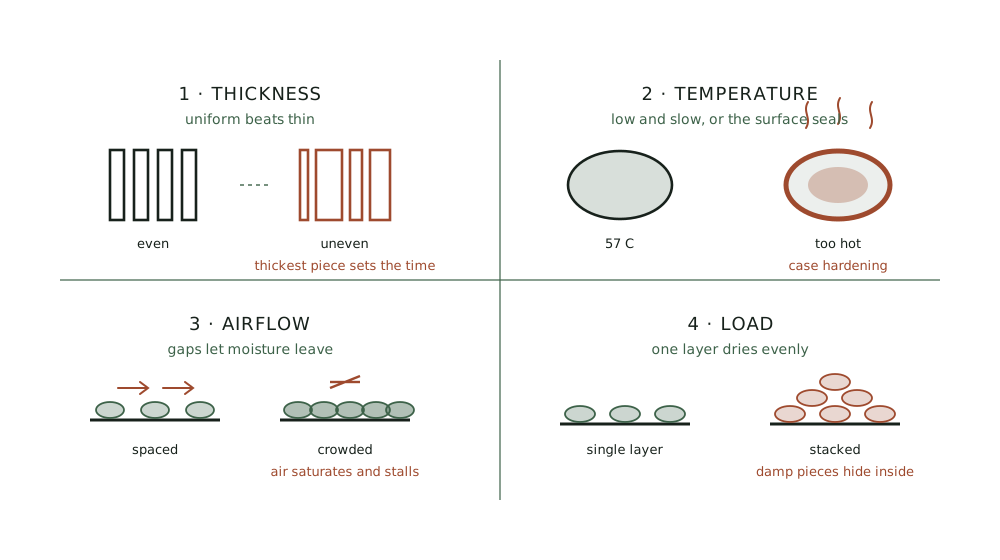
The flavour of a herb lives in volatile aromatic oils held in the leaf. Volatile means exactly what it sounds like: those compounds evaporate readily, and they evaporate faster as temperature rises.
Water also evaporates as temperature rises. That is the whole conflict. Dry a herb at the temperature you would use for apple, and you remove the water quickly and a great deal of the flavour along with it.
The result looks entirely successful. Green, dry, crumbles nicely, and tastes of very little. This is the most common disappointment in home drying and it is caused by a single dial setting.
The temperature
Thirty five to forty degrees Celsius. Considerably lower than anything else you will dry.
If your machine will not go that low, this is the specification that matters most. a stainless shelf dehydrator with rear-fan airflow reaches herb temperatures, and the drying hub treats a usable low end as non-negotiable for the same reason.
At that temperature most soft herbs finish in two to four hours. Hardy woody herbs take a little longer, up to six.
Check early. Herbs go from not quite ready to overdried faster than anything else in the machine, and there is no recovering flavour once it has gone.
Preparation
Harvest at the right moment. Mid morning, after dew has dried and before the day's heat. Oil content is highest then. Harvest just before flowering for most herbs, since flavour concentrates in the leaf up to that point and declines afterwards.
Wash only if necessary, and dry thoroughly. Wet leaves take longer and are more prone to going brown. Shake hard, then leave on a towel for an hour if you have washed them.
Leave them whole. Do not chop. Every cut surface is a route for oils to escape, and a chopped herb loses considerably more during drying than an intact leaf.
Dry on the stem where you can. Whole sprigs of thyme, rosemary, and oregano dry perfectly well with the leaves attached, and stripping dry leaves from a stem takes seconds. Stripping fresh leaves takes minutes and bruises them.
Single layer, loose. Herbs are light and will blow around in a machine with strong airflow. A mesh liner over the tray holds them in place, and it is worth doing before you find leaves in the fan housing.
Air drying, which still works
For hardy herbs, no machine is needed at all.
Tie small bunches with string, no more than eight or ten stems each, and hang them upside down somewhere dark, dry, and with moving air. A cupboard with the door ajar works. A kitchen above a stove does not, since steam and cooking heat both work against you.
One to two weeks. Dark matters, because light bleaches both colour and flavour.
This works well for rosemary, thyme, oregano, marjoram, sage, and bay. It works badly for basil, coriander, mint, parsley, and chives, all of which hold too much water and mould before they dry.
Bunches too large are the usual failure. Air has to reach the centre.
Storing whole, crushing at use
This is the habit that keeps herbs tasting like something a year later.
A whole dried leaf holds its oils inside intact cell structure. Crushing ruptures that structure and releases the aroma, which is exactly what you want in the pan and exactly what you do not want in month one of storage.
So store leaves whole and crush them between your fingers as you add them to the food. The difference at six months is not subtle.
This also means dried herbs take up more space than the commercial ground versions, which is a fair trade.
Store in airtight glass, dark and cool. Light is particularly damaging to herbs, and a clear jar on an open shelf will fade in weeks. If jars are on display, use dark glass or keep them in a cupboard.
Label with the date. Herbs remain safe indefinitely and lose flavour steadily, so a date tells you when to replace rather than when to discard.
Expect a year of good flavour. Woody herbs hold longer, soft herbs less.
Which herbs are worth it
Excellent dried. Oregano, thyme, rosemary, sage, marjoram, bay, mint, dill, and tarragon. Several of these are arguably better dried than fresh, since drying concentrates the flavour.
Acceptable dried. Chives, lovage, and lemon balm. They lose something and remain useful.
Poor dried. Basil, coriander, and parsley. All three depend heavily on volatile compounds that do not survive, and the dried versions taste like a distant relative of the fresh herb. Freeze these instead, or make them into oil or paste.
That is worth knowing before you dedicate a tray to basil and wonder why it tastes of hay.
Beyond leaves
Citrus zest dries beautifully at herb temperatures and keeps for a year. Peel with a vegetable peeler, avoiding pith, and dry until brittle. Excellent in baking, in rubs, and in tea.
Chillies dry well and can go slightly warmer, around fifty degrees. Whole small chillies take a long time. Halved is faster. Wear gloves and be careful about the airborne capsaicin when you open the machine.
Garlic and onion belong with vegetables rather than herbs, at around fifty two degrees.
Seeds like coriander, fennel, and dill seed need only brief drying and store extremely well.
Herb salt is a good use for a large harvest. Blend dried herbs with coarse salt, roughly one part herb to four parts salt, and it keeps indefinitely.
Herb blends worth making
Once you have several jars, blending them is where the time invested starts paying back properly.
Italian blend. Equal parts oregano, basil, thyme, and marjoram, with a little rosemary. Goes into tomato sauces, on focaccia, and through roast vegetables.
Herbes de Provence. Thyme, savory, rosemary, marjoram, and oregano, with a small amount of lavender if you like it. Excellent on chicken and lamb.
Za'atar style. Dried thyme and oregano with sesame seeds and a souring agent, traditionally sumac. Good on flatbread, eggs, and roast vegetables.
Poultry blend. Sage, thyme, marjoram, and a little rosemary. This is the one worth having in December.
Soup herbs. Bay, thyme, and parsley stems, which is worth keeping as a bundle rather than a powder so it can be fished out.
Blend in small quantities, since a blend ages at the pace of its most fragile component. And blend whole leaves rather than crushed, for the same reason whole storage beats ground.
Making blends is also how a herb harvest stops being four jars of oregano. A single productive plant produces far more than any household uses on its own, and blending is what turns a surplus into something you reach for.
RUN THE NUMBERS
Illustrative figures. Times vary with humidity, machine, and how fresh the harvest is.
| Herb | Temperature | Typical time | Air dry? | Verdict |
|---|---|---|---|---|
| Oregano | 38 C | 2 to 4 h | Yes | Excellent |
| Thyme | 38 C | 2 to 4 h | Yes | Excellent |
| Rosemary | 40 C | 3 to 5 h | Yes | Excellent |
| Sage | 38 C | 3 to 5 h | Yes | Excellent |
| Mint | 38 C | 2 to 4 h | No | Very good |
| Dill | 35 C | 2 to 3 h | No | Good |
| Basil | 35 C | 2 to 4 h | No | Poor, freeze instead |
| Parsley | 35 C | 2 to 3 h | No | Poor, freeze instead |
| Citrus zest | 40 C | 2 to 4 h | Yes | Excellent |
Herbs lose around eighty five percent of their weight, so a large bunch reduces to a small jar. One established plant produces more in a season than most households use in a year, which is the strongest economic case anywhere on this site.
Freezing, for the herbs that dry badly
Basil, coriander, parsley, and chives all dry poorly, and freezing preserves them far better. It is worth knowing the method, since these are also the herbs most people grow too much of.
Chopped in oil. Fill an ice cube tray with finely chopped herb, top with olive oil, and freeze. Drop a cube straight into a hot pan. The oil protects the herb from freezer burn and carries the flavour into the food.
Whole leaves, flat. Lay leaves in a single layer on a tray, freeze until solid, then transfer to a bag. They shatter rather than clump, so you can take what you need.
As paste. Blend with a little oil and salt and freeze in small portions. This is the best option for basil by a wide margin, and it is close to pesto without the cheese and nuts.
Frozen herbs lose their structure completely and keep their flavour almost entirely, which is the opposite trade from drying. They are excellent in anything cooked and useless as a garnish.
WHAT GOES WRONG
Dry, green, and tastes of nothing. Temperature too high. This is the defining herb failure and forty degrees is the ceiling.
Brown or blackened leaves. Too hot, or dried too long. Herbs need checking at two hours, not at eight.
Leaves in the fan housing. No mesh liner. Herbs are light enough to fly.
Mouldy air-dried bunches. Bunches too thick, or a soft herb that should not have been air dried. Eight stems maximum, and use the machine for basil and coriander.
Faded jars after two months. Light. Move them into a cupboard or use dark glass.
Flat flavour from a jar that started well. Crushed too early. Store whole, crush at use.
DO THIS NOW
- Set the machine to 38 C, not the fruit setting.
- Harvest mid morning, leave the leaves whole and on the stem, and lay them under a mesh liner.
- Check at two hours. They are ready when a leaf crumbles between your fingers.
- Store whole in an airtight jar in a dark cupboard, and crush between your fingers as you cook.
Next
For everything else in the machine, which runs twenty degrees hotter and takes three times as long, start with drying fruit properly.
Herbs earn their place in the soup base jar alongside dried onion, carrot, and celery. Drying vegetables and the blanching question covers building it.