Guide
Sourdough With Fresh Flour
Fresh flour ferments faster than bagged, which makes a sourdough timetable written for shop flour actively misleading.
As an Amazon Associate this site earns from qualifying purchases. Links to products may be affiliate links. This costs you nothing extra and does not change what gets recommended. Nothing here is medical advice.
Sourdough and fresh milling belong to the same project, and combining them changes the timings enough that a schedule written for shop flour will mislead you.
The short version: everything happens faster, the dough is slacker, and you should judge by the dough rather than the clock. This page explains why, and what to change.
The milling hub covers the flour side. Keeping a starter alive is its own craft and lives with the fermenting guides.
Why fresh flour ferments faster
Three things stack up, and the effect is larger than most people expect.
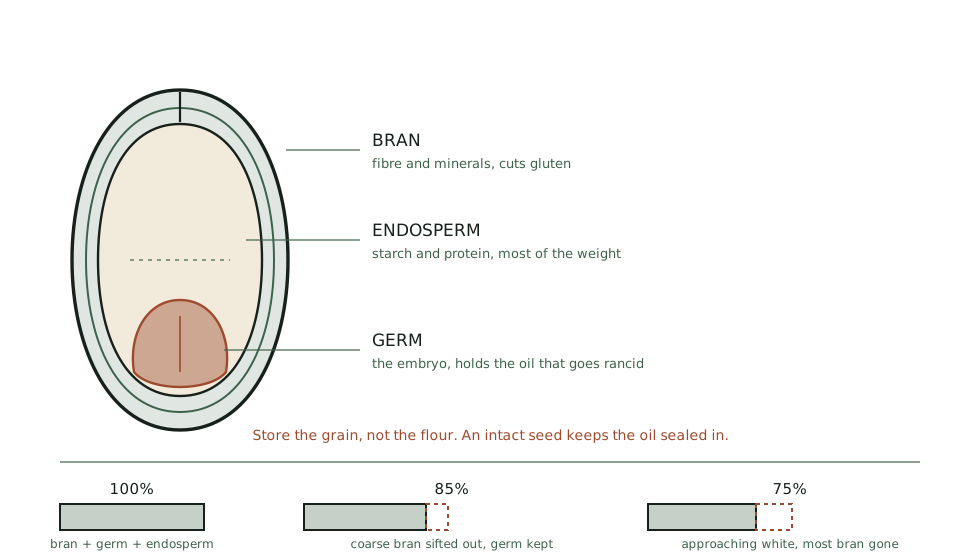
Enzymes. The germ carries them and milling breaks it open. Those enzymes convert starch into simpler sugars, which is exactly what the culture eats. Bagged flour has had weeks or months for that initial burst to settle.
More food overall. Whole flour retains everything, including the parts of the grain a roller mill would have removed. There is simply more for a culture to work with.
Wild organisms. Grain carries its own microbial population, and freshly milled flour introduces some of it into the dough. This contributes to flavour complexity and to speed.
The combined effect is a bulk ferment that can run noticeably shorter than a recipe suggests, and a starter fed on fresh flour that peaks sooner.
Feeding a starter on fresh flour
Worth knowing before you switch, because the behaviour changes.
It will become more active. Expect a faster rise and an earlier peak, sometimes dramatically so. A starter that doubled in six hours on bagged flour may do it in four.
It will need feeding more often at room temperature, for the same reason.
Flavour changes. Fresh whole flour, and particularly fresh rye, produces a more complex and often more sour culture.
Consistency changes. Whole flour absorbs more water, so a starter at the same hydration ratio will look stiffer. Either accept that or raise the water slightly.
Transition gradually if you like, over two or three feeds, though most starters take the change without complaint.
Rye is the standout. Fresh milled rye is the most reliable flour for both starting and maintaining a culture, and even a small proportion in the feed noticeably increases activity.
Adjusting the timetable
The practical changes, in order of importance.
Shorten the bulk ferment. Assume it will be faster and check early. A recipe calling for five hours may finish in three and a half.
Watch the dough, not the clock. Rise, dome, and jiggle tell you where you are. Timings in recipes were calibrated on a different flour.
Consider a cooler ferment. Dropping a few degrees buys back control and improves flavour. Many people who mill find they move to cooler, longer bulks specifically to slow things down.
Retard in the refrigerator. An overnight cold prove is the standard tool for regaining control, and it suits fresh flour particularly well since it slows enzyme activity along with everything else.
Do not extend the ferment hoping for more sourness. With fresh flour, over-fermenting degrades gluten faster than it builds acidity, and the result is a slack dough that will not hold shape.
Hydration and handling
Fresh whole flour is thirstier and slacker, which is a combination that catches people out.
Add five to ten percent more water than a recipe written for bagged flour specifies. The first loaf guide covers this in detail.
Autolyse. Forty five minutes to an hour of flour and water alone before salt and leaven. This matters more with fresh whole flour than with anything else, because bran needs time to hydrate.
Expect the dough to slacken during bulk. Enzyme activity degrades gluten over time. A dough that felt strong at the start of bulk can feel slack by the end.
Fewer, gentler folds. Over-handling a fresh whole dough is easier than over-handling a white one.
Shape a little tighter to compensate for the slackness, and expect less oven spring than a white loaf.
If the dough is consistently too slack to handle, the standard fix is to rest the flour for a day or two after milling before using it. That settles the initial enzyme burst and improves handling noticeably, which surprises people who assume fresher is always better.
Extraction, and how much bran to keep
This is the biggest lever on the finished loaf and it is entirely your choice.
One hundred percent extraction gives the fullest flavour and the densest crumb. Bran cuts gluten strands, which limits rise regardless of technique or freshness.
Eighty five percent is where most good home sourdough sits. Sift out the coarsest bran, keep the germ and the fine bran, and the loaf lightens considerably while keeping its character.
A bran soaker gets you both. Sift, soak the bran in an equal weight of water while the dough develops, and add it back after gluten formation. The bran is softened so its edges do less damage and the fibre stays in the loaf.
Sifting to a chosen extraction rate is covered in its own guide, and eighty five percent is the number to know.
Blending grains
Milling makes blending trivial and sourdough is where it pays off most.
Rye at ten to twenty percent adds depth, improves keeping, and increases fermentation activity. This is the single best blend to start with.
Spelt or kamut at twenty to thirty percent brings flavour with manageable handling, provided you mix less and prove shorter.
Durum at twenty percent gives a golden crumb and a firmer bite.
Einkorn as a small proportion only, since its gluten is too fragile to carry a loaf.
Keep the total blend simple. Two grains beats four, for the same reason a four ingredient spice blend beats a twenty ingredient one.
Grains worth milling covers the full range and what each contributes.
Discard, which is better here
Sourdough discard from fresh flour is worth more than discard from bagged flour, for the same reason the bread is.
It carries the full grain, including the germ, and it has the flavour that came with it. Pancakes and crackers made from fresh flour discard are noticeably better than the bagged equivalent, which makes the discard question less of a guilt problem and more of an opportunity.
Keep a discard jar in the refrigerator and add to it across the week. It sours as it sits, which suits crackers particularly well.
What to expect from the loaf
Being specific so the result is not a surprise.
Flavour will be better and more complex. The clearest and least arguable difference.
The crumb will be tighter than a white sourdough, and reasonably open at eighty five percent extraction.
The crust will colour well, since fresh flour has plenty of available sugar.
Sourness may be lower than expected despite the faster ferment, because speed means less time for acid to accumulate. A cooler, longer bulk builds more sourness than a fast warm one.
Results will vary between sacks of grain. This is normal and it is the price of the flavour.
The first three or four bakes are calibration. Keep notes: grain, extraction, hydration, bulk time, and how the dough felt.
Keeping notes, which matters more here
Sourdough with bagged flour is repeatable. Sourdough with fresh flour is repeatable only if you write things down, because you have added several variables that change between bakes.
Record the grain. Variety, and which sack. A new sack from a different harvest behaves differently and this is the most common cause of an unexplained change.
Record the extraction rate. Weigh the bran you sifted out. Guessing produces results you cannot reproduce.
Record hydration as a percentage, not as millilitres, so it scales.
Record how long bulk actually took, alongside how long you expected. After three or four bakes a pattern emerges for that grain at that temperature.
Record the room temperature. It moves more than people think between seasons, and it is one of the largest variables in fermentation speed.
Record how the dough felt, in your own words. Slack, strong, sticky, tight. This is often more useful later than any number.
Six lines in a notebook per bake. After a month you have a formula for your grain, your kitchen, and your starter, which is worth considerably more than any recipe written for someone else's flour.
This is also how you avoid the common trap of changing three variables at once and learning nothing from the result.
RUN THE NUMBERS
Illustrative adjustments against a recipe written for bagged flour.
| Variable | Bagged flour | Fresh milled |
|---|---|---|
| Hydration | As written | Add 5 to 10 percent |
| Autolyse | Optional | 45 to 60 minutes |
| Starter activity | As written | Faster, peaks earlier |
| Bulk ferment | As written | Expect 20 to 40 percent shorter |
| Folds | As written | Fewer, gentler |
| Dough feel at end of bulk | Holds | Slacker |
| Oven spring | As written | Somewhat less |
| Flavour | Baseline | Sweeter, nuttier, more complex |
The single most useful adjustment is to stop reading the clock. Every other change follows from watching the dough.
WHAT GOES WRONG
The dough overproved before you expected. Fresh flour ferments faster. Shorten bulk and watch the dough.
A slack dough that would not hold shape. Enzyme activity, over-fermentation, or both. Rest the flour a day before using it and shorten the bulk.
A dense loaf. Full extraction. Sift to eighty five percent or use a bran soaker.
Less sour than hoped. Fast ferment, little acid accumulation. Go cooler and longer, or retard overnight.
A stiff dough. Not enough water. Fresh whole flour is thirsty and keeps absorbing.
Inconsistent results between bakes. New sack, different harvest, or no notes. All three are addressed by writing things down.
A starter that suddenly seems hyperactive. You switched it to fresh flour. That is the expected behaviour, not a problem.
DO THIS NOW
- Assume your bulk ferment will be shorter than the recipe says, and check the dough an hour early.
- Add five to ten percent more water and autolyse for forty five minutes before adding salt and leaven.
- Sift to about eighty five percent extraction, and soak the bran to add back after gluten develops.
- If the dough is unmanageably slack, rest the flour for a day or two after milling before the next attempt.
Next
For the controlled comparison that establishes your baseline before you add sourdough to the variables, see the first loaf from fresh flour.
Rye is the grain that most changes a sourdough, in flavour and in activity. Grains worth milling covers it and the rest.