Guide
Kimchi Without a Recipe
Brine the cabbage, make a paste, combine, ferment. Once the structure is clear the ingredient list stops mattering.
As an Amazon Associate this site earns from qualifying purchases. Links to products may be affiliate links. This costs you nothing extra and does not change what gets recommended. Nothing here is medical advice.
Kimchi looks intimidating because the ingredient lists are long and often include things that are hard to source. The method underneath is simpler than sauerkraut in some ways, and once you can see its four stages the ingredients become substitutable.
This page teaches the structure rather than a single recipe, in the same way the fermenting hub teaches the two percent rule rather than a list of vegetables.
The four stages
Every version of napa cabbage kimchi does these in order.
Salt the cabbage. In a brine, or dry salted, until it softens and gives up water.
Rinse and drain. This is the step that distinguishes kimchi from sauerkraut, and the reason the salt maths works differently.
Make a paste. Chilli, garlic, ginger, something savoury, something sweet, and usually a starch to bind it.
Combine and ferment. Coat the cabbage in the paste, pack, weight, wait.
That is the whole thing. Everything below is detail on each stage.
Stage one: salting
Kimchi salts more heavily than sauerkraut and then rinses most of it away, which is why the final product is not overwhelmingly salty despite the quantity used.
Cut the napa cabbage lengthways into quarters, then into pieces roughly four centimetres across. Traditional whole leaf kimchi keeps the quarters intact, which looks impressive and is harder to pack.
Brine it. Dissolve salt in water at around five to eight percent and submerge the cabbage for two hours, turning every thirty minutes. This is considerably stronger than a fermenting brine because it is a preparation step rather than the ferment itself.
Or dry salt it. Scatter salt between the leaves, roughly three percent by weight, and leave for two hours, turning occasionally.
Test for readiness. A thick piece of the white stem should bend without snapping. If it still cracks, give it another thirty minutes.
Rinse thoroughly. Two or three changes of cold water. This removes most of the surface salt.
Drain properly. Twenty to thirty minutes in a colander. Water clinging to the leaves dilutes the paste and the ferment.
Cabbage that has not drained is the most common cause of a watery, weak kimchi.
Stage two: the paste
Here is where recipes diverge wildly and where substitution is entirely acceptable.
Chilli. Korean gochugaru is the correct ingredient: coarse, bright red, moderately hot, and more fruity than fiery. If you cannot get it, a mix of sweet paprika and a milder chilli flake approximates the colour and heat, though not the flavour. Quantity is a matter of preference and half a cup per large cabbage is a common starting point.
Garlic and ginger. Generous amounts of both, grated or blended. Garlic in particular is not the place to economise.
Something savoury. Traditionally fish sauce, salted shrimp, or both. For a vegan version, a splash of soy sauce, a spoonful of miso, or a piece of dried kelp blended in provides comparable depth. This ingredient matters more than people expect and a kimchi without it tastes thin.
Something sweet. A grated apple or pear is traditional and does two jobs, adding sweetness and providing sugars that feed the ferment. A spoonful of sugar works.
A starch binder. A thin paste of rice flour cooked with water, cooled, is traditional. It makes the paste cling to the leaves rather than sliding off, and it feeds the bacteria. Plain cooked rice blended smooth works, and so does skipping it entirely at the cost of a looser result.
Vegetables through the mix. Spring onion cut into lengths, julienned carrot, and Korean radish or daikon in batons. These add texture and are not optional in any version worth making.
Stage three: combining
Wear gloves. Chilli under fingernails and around the eyes hours later is a genuinely miserable experience.
Combine the drained cabbage with the paste and the additional vegetables in a large bowl. Work the paste into every surface, getting between the leaves rather than just coating the outside.
Taste at this point. It should be slightly saltier than you want the finished product, since fermentation mellows it. If it is bland now it will be bland later, and adding more fish sauce or salt at this stage is the correct time.
Stage four: fermenting
Pack tightly into jars, pressing down hard to eliminate air pockets. The paste is thick and traps air more than a brine does, so this matters.
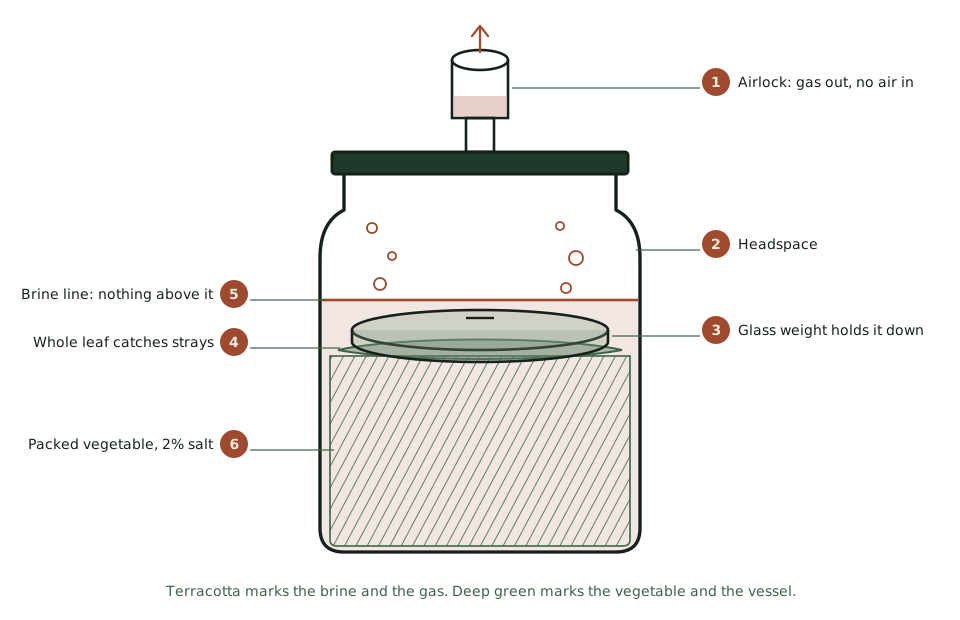
Leave real headspace. Kimchi is vigorous and expands more than most ferments. Five centimetres below the rim, which is easier in two litre fermenting jars with airlocks and weights than in a one litre jar.
Weight it if the mixture is loose. A tightly packed jar of kimchi is often self supporting, since the paste holds everything together, but a weight does no harm.
Room temperature for one to five days, then refrigerate. This is much shorter than sauerkraut.
Taste daily from day two. Kimchi ferments faster than a plain vegetable ferment because the paste contains sugars from the fruit and starch.
Then refrigerate and keep going. Kimchi continues fermenting slowly in the cold and many people prefer it at several weeks old. This is normal and intended.
How sour, and when
Kimchi is eaten across a wide range of fermentation, and different stages suit different uses.
Fresh, one to two days. Crunchy, bright, barely sour. Excellent as a side dish and a salad.
Young, one to two weeks refrigerated. Balanced and the most versatile.
Ripe, one to two months. Distinctly sour, softer, deeply savoury. This is where it becomes a cooking ingredient rather than a condiment.
Old, beyond three months. Very sour and soft. Not a failure. This is specifically what many Korean cooked dishes call for, including stews and pancakes, and old kimchi is prized for them rather than tolerated.
Knowing this removes the anxiety about kimchi getting away from you. It does not spoil, it changes role.
Variations without napa cabbage
The structure works on other vegetables and several traditional versions do exactly this.
Cucumber kimchi. Quick, crunchy, and eaten fresh rather than aged. Salt briefly, stuff with paste, eat within a week.
Radish kimchi. Cubed daikon or Korean radish. Holds its texture for a very long time and ferments slowly.
Spring onion kimchi. Whole spring onions in paste. Assertive and excellent with rich food.
White kimchi. No chilli at all, fermented in a light brine with fruit and aromatics. Mild, refreshing, and a good introduction for anyone who dislikes heat.
Green cabbage kimchi. Regular cabbage works when napa is unavailable. Firmer, takes longer, tastes slightly different and perfectly good.
The salting, rinsing, pasting, and fermenting sequence stays the same throughout.
Eating it
Kimchi is a condiment, a side dish, and a cooking ingredient depending on how old it is, and knowing which stage suits which use is most of getting value from a jar.
Fresh and young, as a side. A small dish alongside rice and a main course is the traditional presentation, and it works with almost any savoury meal rather than only Korean ones.
In sandwiches and burgers. The acidity cuts fat exactly as sauerkraut does, and the chilli adds something sauerkraut cannot.
Stirred through hot rice off the heat. Simple and very good. Do not cook it if you want the texture and cultures.
Kimchi fried rice. The classic use for older, sourer kimchi. Chop it, fry it in a little oil until the edges caramelise, then add day old rice.
Kimchi pancakes. Chopped kimchi and its juice in a simple flour and water batter, fried thin and crisp. This is specifically what very old kimchi is for.
Kimchi stew. Long simmered with pork or tofu. Again, old sour kimchi is the correct ingredient rather than a compromise.
In eggs. Folded through an omelette or scrambled at the last moment.
The juice at the bottom of the jar is intensely flavoured and belongs in dressings, marinades, and any of the cooked dishes above.
RUN THE NUMBERS
Illustrative figures for one large napa cabbage. Times vary with temperature.
| Stage | Detail |
|---|---|
| Cabbage | 1 large napa, roughly 1.5 kg |
| Salting brine | 5 to 8 percent, 2 hours |
| Rinse | 2 to 3 changes of cold water |
| Drain | 20 to 30 minutes |
| Chilli | Gochugaru, quantity to taste |
| Paste | Garlic, ginger, savoury element, fruit, rice starch |
| Extras | Spring onion, carrot, radish |
| Room temperature | 1 to 5 days |
| Then | Refrigerate, continues slowly |
| Best from | 2 weeks, and useful for months |
Napa cabbage is inexpensive and gochugaru keeps for a year in the freezer, so the marginal cost of a batch is low once the pantry items are in.
The vegan question
A substantial share of traditional kimchi recipes contain fish sauce, salted shrimp, or both, and replacing them well requires understanding what they are doing.
They provide glutamates, which the palate reads as savoury depth, and a salty complexity that plain salt does not deliver. A kimchi missing this element tastes noticeably thin, and simply omitting it is the usual reason a vegan version disappoints.
Several substitutions work. A spoonful of light miso brings fermented savoury depth. A piece of dried kelp blended into the paste, or steeped in a little hot water and the liquid used, contributes glutamates directly. Dried shiitake, soaked and blended, does the same. Soy sauce adds salt and depth together. A combination of two of these works better than any one alone.
The other consideration is the starch binder. Rice flour paste is already vegan and is the standard, so no change is needed there.
A vegan kimchi ferments identically, since the bacteria doing the work come from the cabbage rather than from any animal ingredient. Nothing about the timing or the method changes.
Worth being honest that the result tastes different rather than identical. It is a very good ferment on its own terms.
WHAT GOES WRONG
Watery, diluted kimchi. Cabbage not drained thoroughly after rinsing. Give it a full thirty minutes.
Too salty. Not rinsed enough after the salting stage. Two or three changes of water, thoroughly.
Bland. Missing the savoury element, or under-seasoned before fermenting. Taste before packing and correct then.
Paste sliding off the leaves. No starch binder. A cooked rice flour paste solves it.
Overflowing jar. Insufficient headspace. Kimchi is more vigorous than most ferments.
Chilli burns hours later. No gloves. This happens once to everyone.
Too sour. Not a fault. Use it in a stew or a pancake, which is what old kimchi is for.
DO THIS NOW
- Brine napa cabbage pieces at five to eight percent for two hours, turning every thirty minutes, until a thick stem bends without snapping.
- Rinse two or three times and drain for a full thirty minutes.
- Make a paste with chilli, garlic, ginger, a savoury element, grated apple, and a cooked rice flour binder.
- Wear gloves, combine thoroughly, pack tightly with five centimetres of headspace, and taste daily from day two.
Next
For the simpler dry salted ferment that teaches the same principles with one ingredient, see sauerkraut from one cabbage.
Cucumber kimchi and radish kimchi both sit close to the brined method. Brine pickles that stay crunchy covers brine strengths and the tannin trick for texture.