Guide
Milling for People Who Do Not Bake Bread
Pancakes, pasta, flatbreads, and porridge all show what fresh flour does without requiring you to prove, shape, or keep a starter alive.
As an Amazon Associate this site earns from qualifying purchases. Links to products may be affiliate links. This costs you nothing extra and does not change what gets recommended. Nothing here is medical advice.
Bread is the usual reason people buy a mill and it is the most demanding thing to do with one.
If you have never baked a loaf, starting there conflates two learning curves, and a disappointing first attempt gets blamed on the flour when the technique was the variable. Everything on this page shows what fresh flour does without asking you to prove, shape, score, or keep a starter alive.
The milling hub covers the case for milling at all. This page is what to make on the first weekend.
Pancakes, the fastest demonstration
The single best first thing to make, because gluten development is irrelevant and the comparison is purely about flavour.
Mill wheat that morning, make your usual pancake batter, and make the same batter from a bag the following week. The difference is immediate and it is the least arguable thing about fresh flour: sweeter, nuttier, more like a grain and less like a neutral powder.
Soft wheat if you have it, since low protein suits a tender pancake. Hard wheat works fine.
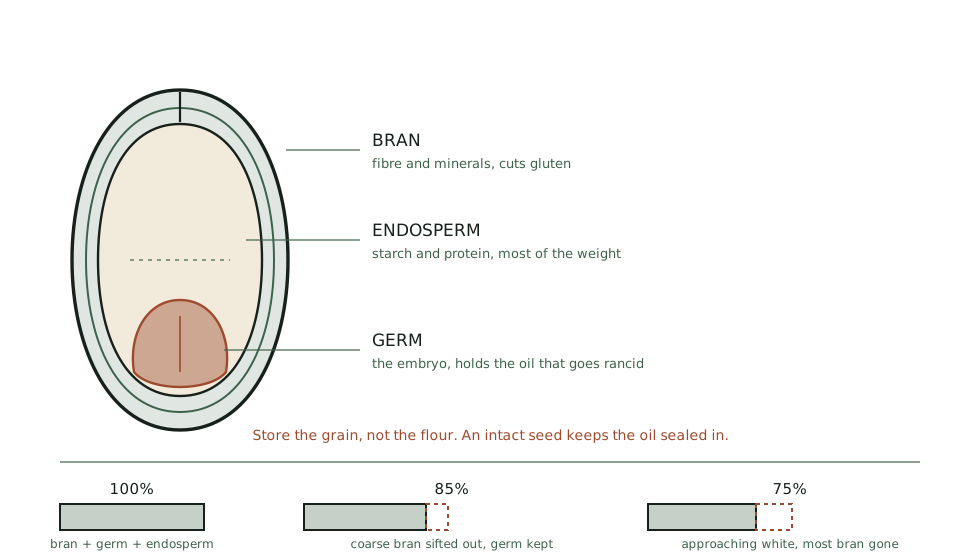
Wholemeal or sifted, both good. Sifted to eighty five percent gives a lighter pancake; full extraction gives more flavour and a denser one.
Rest the batter for twenty to thirty minutes. Fresh whole flour absorbs water for longer than bagged flour, and a batter that seems right immediately will thicken noticeably. Rest it, then adjust with a splash more milk.
Buckwheat blended at twenty five percent makes a considerably more interesting pancake and is the standard for crepes in much of Europe.
Waffles behave the same way and hold their texture well with fresh flour.
Flatbreads
Fast, forgiving, and a very direct taste of the grain.
Chapati and roti. Fresh wholemeal, water, a little salt, and a hot dry pan. No leavening, no proving, and about twenty minutes from grain to plate. This is arguably the truest test of a flour, since there is nothing else in it.
Tortillas. Wheat tortillas with fresh flour are noticeably better than shop ones. Corn tortillas need masa, which requires nixtamalised corn rather than plain cornmeal, and that is a separate project.
Pita. Needs a short prove and is otherwise straightforward. Fresh flour puffs well.
Naan and other enriched flatbreads. Yoghurt or milk in the dough, a short rest, and a very hot pan.
Flatbreads reward the higher hydration that fresh flour wants, and they are tolerant of variability in a way a shaped loaf is not. If a dough is slightly slack, a flatbread does not care.
Pasta
One of the strongest cases for a mill and one people rarely think of.
Durum wheat milled fine gives semolina flour, which makes a firmer, more golden pasta with better bite than plain wheat flour. Durum is easy to buy whole and difficult to buy freshly milled.
Soft or hard wheat both make perfectly good egg pasta. Blends of durum and soft wheat are common and worth experimenting with.
Hydration works differently here since eggs provide most of the liquid. Expect to need a little more egg or water than a recipe assumes.
Rest the dough for at least thirty minutes, and longer with fresh flour, for the same absorption reason as the pancake batter.
Extraction is a real choice. Sifted flour makes a smoother, more traditional pasta; full extraction makes a rustic, nuttier one with a rougher surface that holds sauce well.
Pasta is also forgiving of variability, which makes it a good early project.
Porridge and cracked grain
The simplest use of a mill and the one that needs no baking at all.
Any burr mill on a coarse setting cracks grain rather than milling it. Cracked wheat, rye, or oats cook in ten to fifteen minutes into a porridge with far more texture and flavour than rolled oats.
Crack coarse. You want pieces, not meal. Two or three passes at different settings gives a mix of sizes and a better texture.
Crack what you will use in a week. Cracked grain is broken open and on a much shorter clock than whole.
Soak overnight for faster cooking and a creamier result.
Toast the cracked grain in a dry pan for a few minutes before cooking. This is a small step with a disproportionate effect on flavour.
Impact mills generally cannot do this, since they are built to pulverise rather than crack. This is one of the few things a cheap burr mill does that an expensive impact mill cannot.
Quick breads and baking without yeast
Chemically leavened baking is tolerant of flour variability and shows fresh flour's flavour clearly.
Muffins, scones, and soda bread. All quick, all forgiving, and all better with fresh flour.
Cakes and biscuits. Soft wheat, milled fine and sifted to around seventy five percent extraction, gives a genuine pastry flour. Good pastry flour is not always easy to buy and this is one of the clearer everyday wins from owning a mill.
Shortcrust pastry. Same soft wheat, sifted. Fresh pastry flour makes a noticeably more flavourful crust.
Crumbles and streusels. Full extraction here, since texture and nuttiness are wanted.
The sifting guide covers producing pastry flour from soft wheat, which is worth reading before attempting cakes with wholemeal.
Thickening, coating, and everything prosaic
Unglamorous and constant.
Fresh flour thickens a sauce exactly as any flour does. It dredges and coats fried food, with more flavour than a neutral bagged flour. It goes into a roux, a batter, a dumpling, and a Yorkshire pudding.
None of this is a reason to buy a mill on its own, and it is the reason a mill gets used on ordinary weekdays rather than only on baking days.
Tortillas, dumplings, and noodles
Three more that need no proving and reward fresh flour, grouped because they share a technique: a stiff dough, a rest, and a rolling.
Wheat tortillas. Flour, fat, salt, warm water. Rest the dough thirty minutes, roll thin, cook fast in a dry pan. Fresh wholemeal makes a noticeably better tortilla than a shop one, and the rest matters more with fresh flour because of the absorption question that runs through this whole hub.
Dumpling wrappers. Flour and hot or cold water depending on the style. A stiff dough, a long rest, and thin rolling. Fresh flour gives a wrapper with more character, and the colour of a wholemeal wrapper is a genuine visual difference.
Hand cut noodles. Wheat noodles need only flour, water, and salt, and are among the most direct ways to taste a grain. Fresh milled durum or hard wheat both work.
Soba style noodles use buckwheat, usually blended with wheat for workability, and fresh milled buckwheat is a considerable step up from packet flour.
All four want a longer rest than a recipe written for bagged flour suggests. Thirty minutes minimum, an hour is better, and the dough becomes noticeably easier to roll.
None of them requires special equipment beyond a rolling pin and a sharp knife.
RUN THE NUMBERS
Illustrative guide to difficulty and payoff.
| Use | Difficulty | Shows fresh flour | Notes |
|---|---|---|---|
| Pancakes | Very easy | Clearly | The best first test |
| Chapati | Very easy | Very clearly | Nothing to hide behind |
| Porridge, cracked | Very easy | Moderately | Burr mills only |
| Muffins, scones | Easy | Clearly | Forgiving |
| Pasta | Easy | Clearly | Durum is worth it |
| Tortillas | Easy | Clearly | Wheat, not corn |
| Pastry | Moderate | Clearly | Sift to about 75 percent |
| Pita | Moderate | Clearly | Short prove |
| Bread | Hardest | Most | Two learning curves at once |
If a pancake made from grain you milled that morning is clearly better than one from a bag, the mill has earned its place. Bread can wait until you want it.
Milling as a household habit
The pages in this hub assume a baker. A mill can earn its place in a household that simply cooks, and the pattern looks different.
Mill on a fixed day. Sunday morning, enough for the week. Pancakes that day, a bag of flour in the refrigerator for whatever comes up.
Crack a jar of grain at the same time for porridge, which covers breakfasts without any further thought.
Keep the mill next to the grain. Both on the same shelf, so using it is one decision.
Do not aim for bread until you want bread. The mill is useful long before that point and there is no obligation to progress.
Involve whoever else cooks. A mill that only one person understands is a mill that stops when that person is busy. The operation is genuinely simple and worth showing.
Two minutes of milling on a Sunday covers a week of ordinary cooking for most households. That is a smaller commitment than the enthusiast literature suggests, and it is enough to make everything you cook from flour taste better.
WHAT GOES WRONG
A batter that thickened while resting. Normal. Fresh flour keeps absorbing. Thin it and expect this next time.
Tough chapati. Overworked, or hydration too low. Fresh wholemeal wants more water than a recipe written for bagged flour.
Gritty pasta. Milled too coarse. Mill finer or sift.
Cracked grain that turned to meal. Setting too fine, or an impact mill used for a job it cannot do.
Heavy cakes. Wholemeal in a recipe expecting pastry flour. Use soft wheat sifted to seventy five percent.
Cracked grain gone stale in a month. It is broken open. Crack weekly.
A first loaf that disappointed. Expected, and not a reason to conclude anything about the flour. Make pancakes, then come back to bread.
DO THIS NOW
- Mill wheat on a Saturday morning and make your usual pancakes with it.
- Rest the batter for twenty minutes and expect to thin it before cooking.
- Make the same batter from a bag the following week and taste them within an hour of each other.
- If you have a burr mill, crack a cup of wheat coarse and make porridge with it, toasting the grain in a dry pan first.
Next
When you do want to attempt bread, do it as a controlled comparison rather than a leap. The first loaf from fresh flour covers the hydration and autolyse adjustments fresh flour needs.
For pastry flour, and for lightening anything that came out denser than you wanted, see sifting and extraction rate.