Guide
Wheatgrass at Home
Growing your own wheatgrass on a tray, juicing it without ruining a machine, and what it actually tastes like.
As an Amazon Associate this site earns from qualifying purchases. Links to products may be affiliate links. This costs you nothing extra and does not change what gets recommended. Nothing here is medical advice.
Wheatgrass sits exactly between growing and juicing, which is why it appears in both halves of this site. It is grown like a microgreen and consumed like a juice, and anyone already running trays or already running a juicer is most of the way to it.
It is also the crop most often bought at absurd prices in shot form when growing it costs almost nothing. A tray of wheatgrass takes eight days, needs no special equipment beyond what a microgreen setup already includes, and produces more than most households will drink.
What it is
Wheatgrass is common wheat, harvested very young, at the point where the first blade has grown to roughly hand height and before the plant develops a second true leaf.
At that stage the grass is tender enough to press. Left another week it toughens considerably, the flavour turns harsher, and the yield drops. The window is narrow and it is the single thing that most affects whether the result is pleasant.
Humans cannot digest mature grass, which is why wheatgrass is juiced rather than eaten. The juicing removes the cellulose structure and leaves the liquid.
The honest position on the claims
Wheatgrass carries a long tail of strong health claims, and being clear about them is more useful than repeating them.
Uncontroversial. Wheatgrass juice contains chlorophyll, some vitamins and minerals, and a range of plant compounds. It is a green vegetable juice with a distinctive composition.
Frequently overstated. Comparisons claiming a small shot equals a large quantity of vegetables circulate widely and rest on selective measurement. Claims about blood building, detoxification, or the treatment of specific conditions run well ahead of the evidence supporting them.
Worth knowing. Wheatgrass is generally gluten free, since gluten develops in the grain rather than the grass, though anyone with coeliac disease should be careful about grain contamination during growing and should raise it with a clinician rather than relying on a general statement.
Nothing here is medical advice. Wheatgrass is a green juice with an unusual flavour and a very low production cost. That is enough reason to grow it.
Growing a tray
The method is the same as any soil-grown microgreen, and a soilless mat approach works too, with one difference in the harvest. The juicing hub covers where wheatgrass sits against everything else you might press.
Seed. hard wheat berries sold for wheatgrass are sold for exactly this. About one and a half cups covers a standard tray.
Soak. Eight to twelve hours in cool water, then drain. Wheat is a large seed and needs the full soak.
Sprout before sowing. Rinse and drain twice daily for a day until small root tips appear. This step is optional and improves germination evenness considerably.
Sow. Spread across a tray of damp soil or coir in a dense single layer, seeds touching but not stacked. Do not cover with soil.
Blackout. Cover for three days, either with an inverted tray or a lid. This drives the grass upward evenly.
Light. Uncover and give it light for the remaining days. A bright windowsill works in summer. A modest grow light removes the seasonal variable entirely.
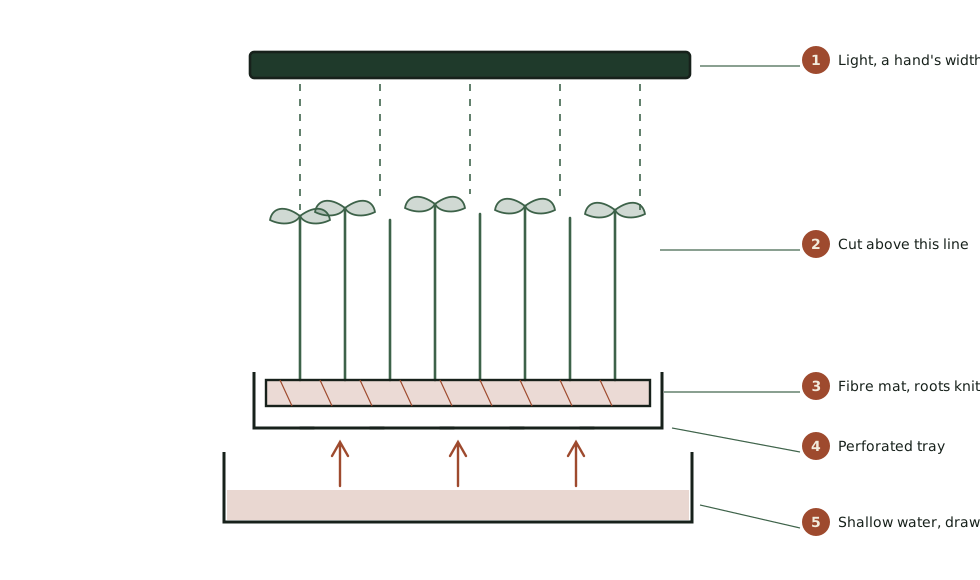
Water from below. Sit the growing tray in a solid tray and add water to the lower one. Wet blades under a cover are how mould starts, and wheatgrass is more prone to it than most crops because it is grown dense.
Harvest. Day eight to ten, when the blades are roughly fifteen to twenty centimetres and before a second leaf appears at the base. Cut with sharp scissors just above the soil line.
A single tray yields a good deal of grass. Most households find one tray every week or two is plenty.
Juicing it
This is where wheatgrass differs from everything else in this hub, and getting it wrong damages machines.
A centrifugal juicer cannot do this. Grass has no free liquid to fling and the blades pass straight through the mesh basket. You will get almost nothing, and the fine grass fragments pack the basket badly. This is not a matter of technique. The machine comparison covers why the two designs diverge so sharply on greens, and wheatgrass is the extreme case.
A masticating juicer handles it well. The slow auger crushes the blades against the screen and presses the liquid out. Horizontal designs are generally better at it than vertical ones, since the grass has a longer path under pressure.
Feed slowly and in small bunches. Gather a small handful, fold it, and feed gradually. Pushing a large mass in at once wraps the auger and stalls it.
Alternate with something firm. A piece of apple or carrot every few handfuls clears the screen and pushes the grass through. This single habit roughly doubles the practical yield.
Manual wheatgrass juicers exist and are hand-cranked augers built for exactly this. They are inexpensive and are worth considering if wheatgrass is the only thing you plan to press, since they take no counter space and clean in a minute.
Clean immediately. Grass fibre dries onto a screen faster than pulp does, and a wheatgrass screen left for twenty minutes becomes a genuine job.
Second cuts and resetting the tray
Wheatgrass is one of the few crops in this category that reliably gives a second harvest, which changes the economics considerably.
After the first cut, leave the tray in light and keep watering from below. The grass regrows from the base and a second cut is usually ready five to seven days later. It will be thinner and slightly less sweet than the first, and it is entirely usable.
A third cut is technically possible and rarely worth waiting for. Yield drops sharply, the flavour turns harsher, and the tray is by then more prone to mould as the roots exhaust the medium.
Reset after the second cut. Compost the whole mat of roots and seed together, wash the tray properly, and start again. Trying to push a tray to a fourth week produces a mouldy mat and a sour smell, and the seed cost of starting over is small.
One practical rhythm that works well: sow a new tray on the day you take the first cut from the previous one. That gives you a continuous supply from two trays running a week apart, with a second cut from each as a bonus.
Store cut grass rather than juice. A bag of cut wheatgrass holds about a week refrigerated, which means one harvest covers several mornings without the juice sitting around losing everything that made it worth pressing.
Taste, and how to drink it
Wheatgrass juice is intensely green, slightly sweet, and strongly vegetal in a way that surprises people who expected something mild. It is usually drunk in small quantities, and that is a sensible convention rather than an arbitrary one.
Start with about an ounce. Larger quantities are unpleasant for most people at first and occasionally cause mild nausea, which is worth knowing so nobody assumes something is wrong.
Three ways to make it easier. Chase it with water or a slice of citrus. Blend a small amount into a larger mixed vegetable juice, where it disappears entirely. Or add lemon directly, which cuts the sweetness and the grassiness at once.
The mixed approach is the most practical for regular drinking. An ounce of wheatgrass in the standard glass is undetectable and gets it into the routine without ceremony.
Storage
Wheatgrass juice oxidises faster than any other juice covered on this site. The colour shifts and the flavour flattens within the hour.
Drink it immediately. This is the one juice where the two hour rule is generous rather than strict, and where fresh genuinely means fresh.
The grass itself keeps far better than the juice. A cut tray of wheatgrass holds in a bag in the refrigerator for about a week, so the sensible pattern is to cut what you need each morning and leave the rest growing or refrigerated.
Freezing juice in ice cube trays works if you have a glut, and the thawed result is acceptable in a mixed juice though poor on its own.
RUN THE NUMBERS
Illustrative figures only, and yields vary with your seed, tray, and machine.
| Home grown | Bought as shots | |
|---|---|---|
| Input | About 1.5 cups wheat berries per tray | Nothing |
| Time to harvest | 8 to 10 days | None |
| Daily attention | Two minutes watering | None |
| Yield | Well beyond a household's weekly need | Per shot |
| Cost per ounce of juice | Very low | Among the highest in any juice bar |
| Freshness | Cut and pressed the same morning | Variable |
Wheatgrass has one of the widest gaps between home production cost and retail price of anything in this category. That gap, rather than any health claim, is the strongest practical argument for growing it.
WHAT GOES WRONG
Almost no juice. Wrong machine. A centrifugal juicer cannot press grass.
A stalled or wrapped auger. Too much grass fed at once. Small folded handfuls, alternated with something firm.
Mould on the tray. Sown too densely, watered from above, or left covered too long. Water from below and lift the cover daily during blackout.
Harsh, bitter juice. Harvested late. Cut before a second leaf appears at the base.
Nausea after drinking it. Usually too much at once. Start with an ounce.
DO THIS NOW
- Soak one and a half cups of hard wheat berries tonight for eight to twelve hours.
- Sow densely on damp soil or coir, cover for three days, then give it light.
- Cut at day eight to ten, before a second leaf appears.
- Feed small folded handfuls into a masticating juicer, alternating with a piece of apple, and drink it straight away.
Next
If your machine cannot press grass, that is a design limit rather than a fault. Masticating or centrifugal explains why the two diverge and which one handles greens.
For the mixed glass that hides an ounce of wheatgrass completely, see green juice built on vegetables.